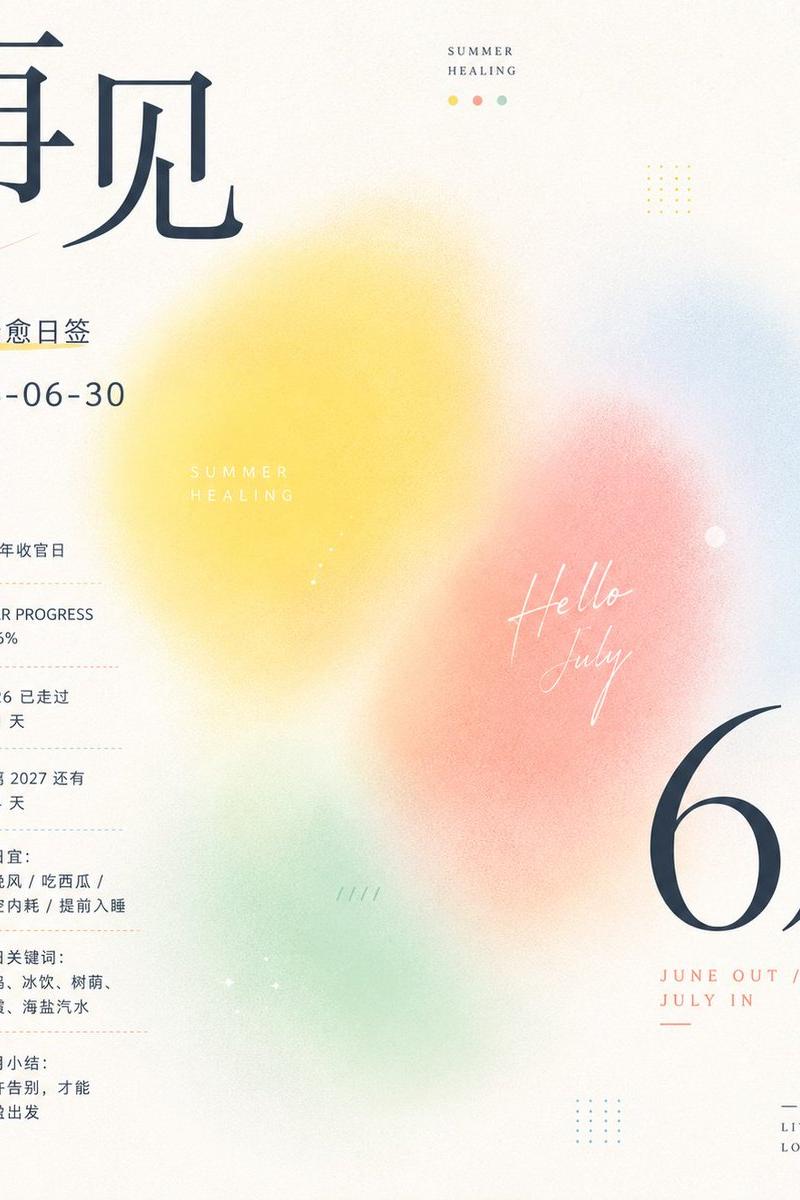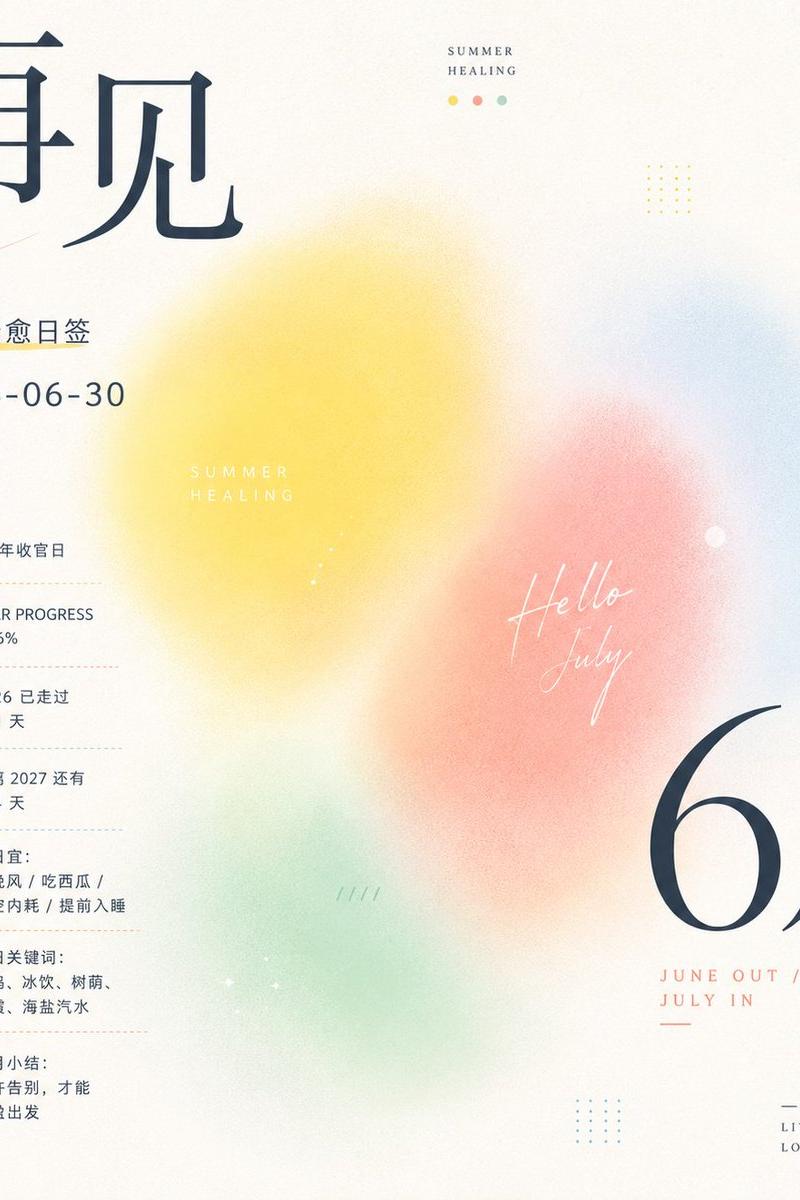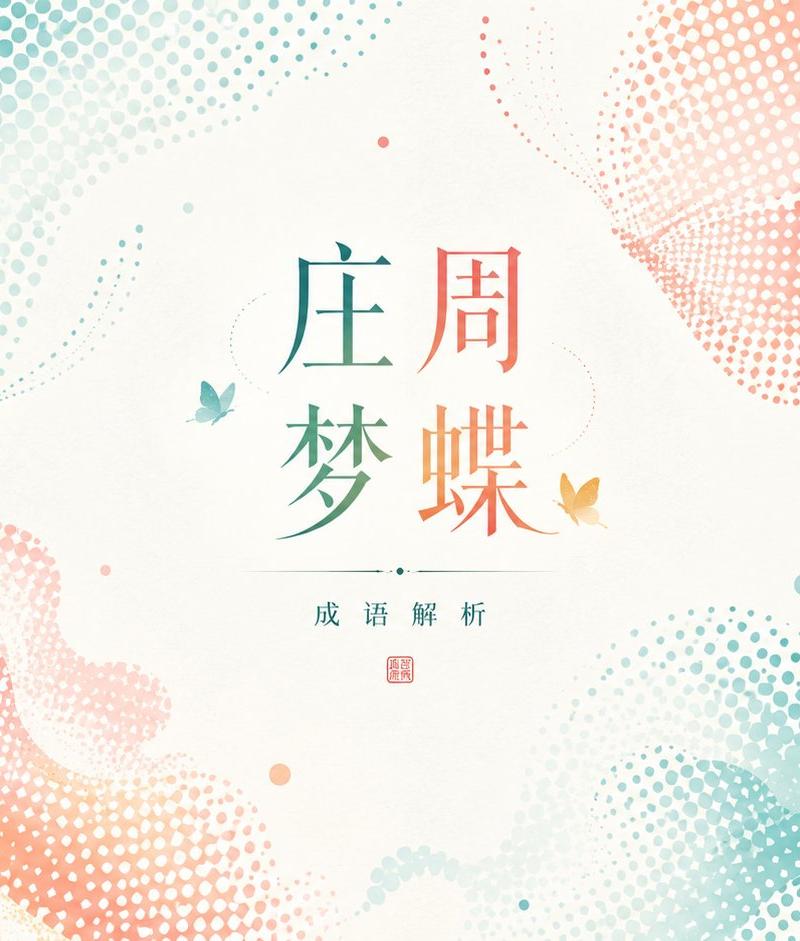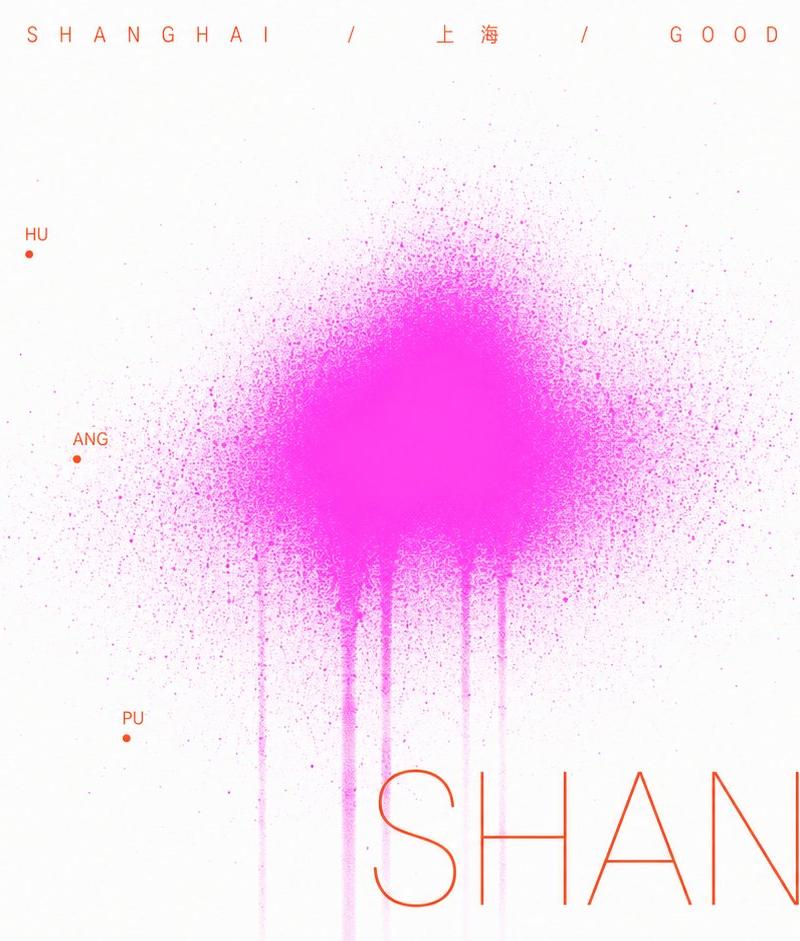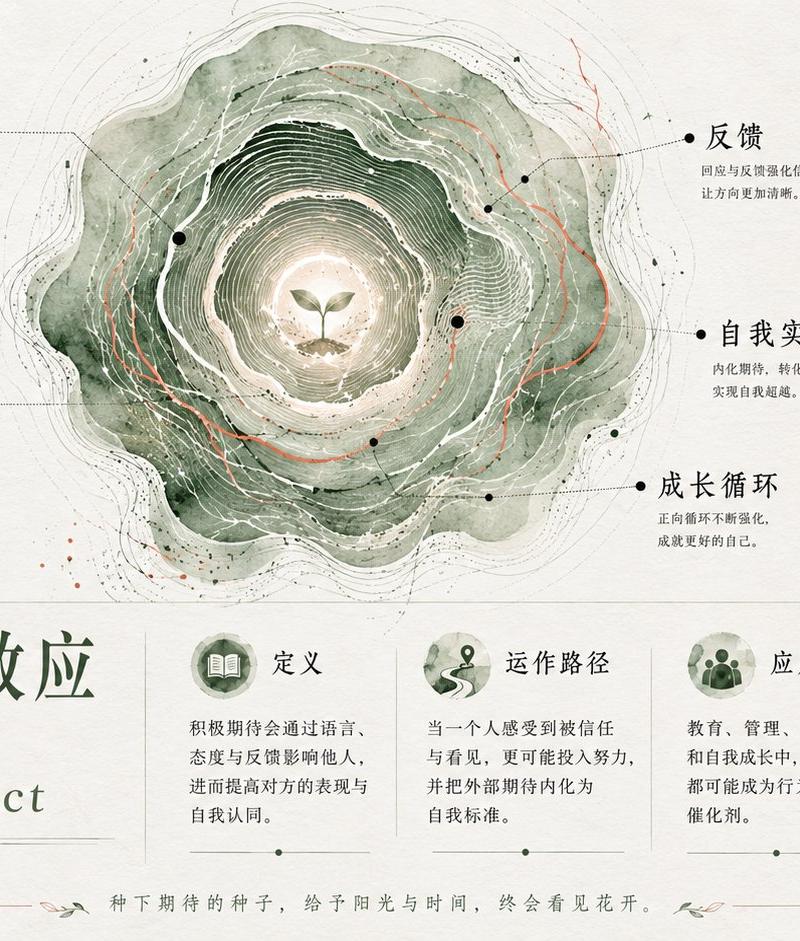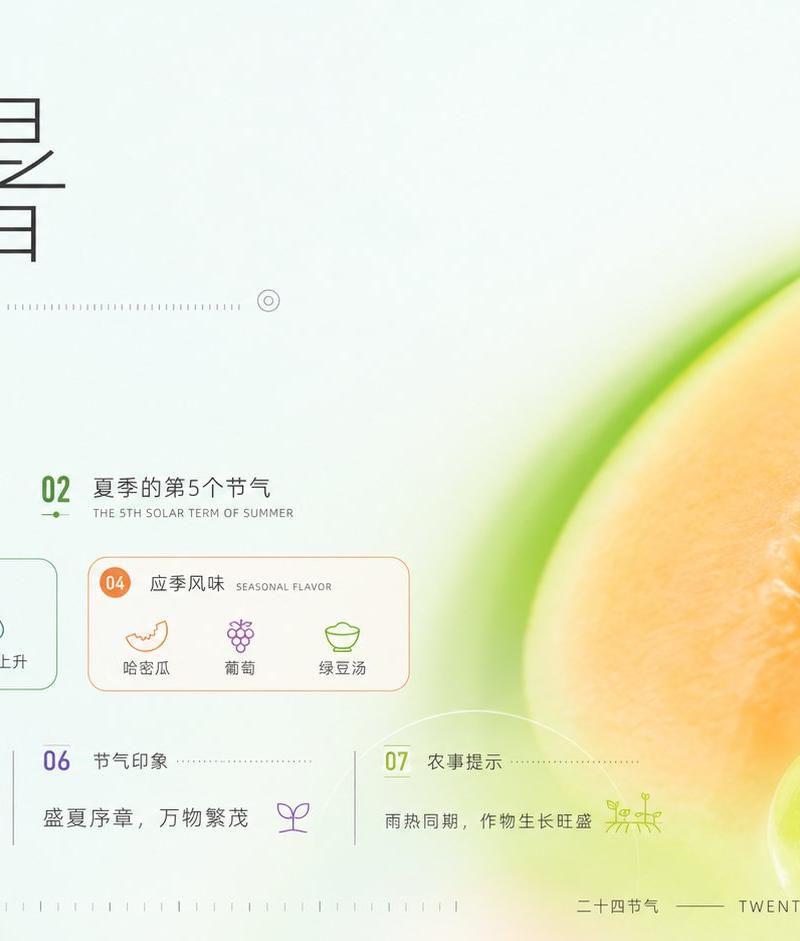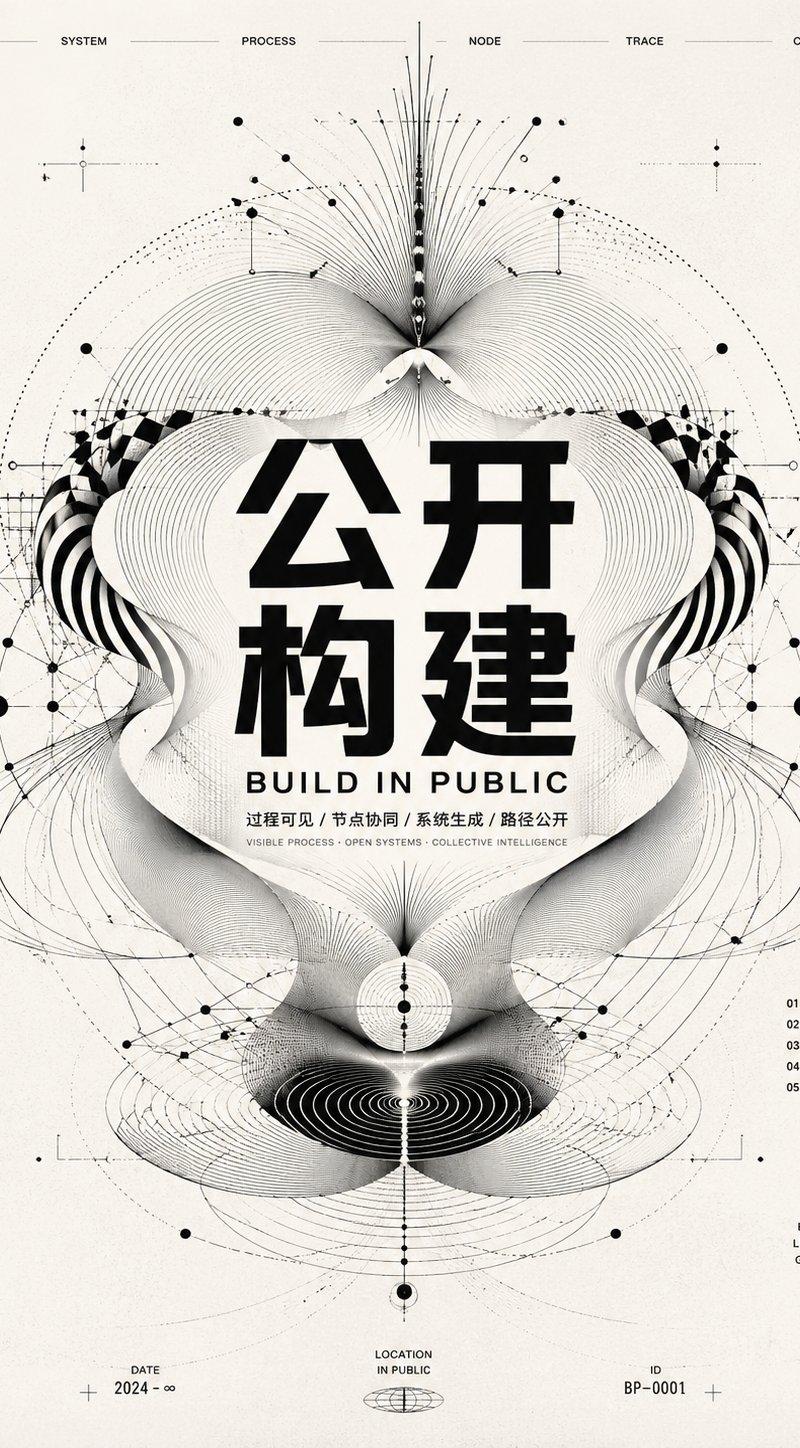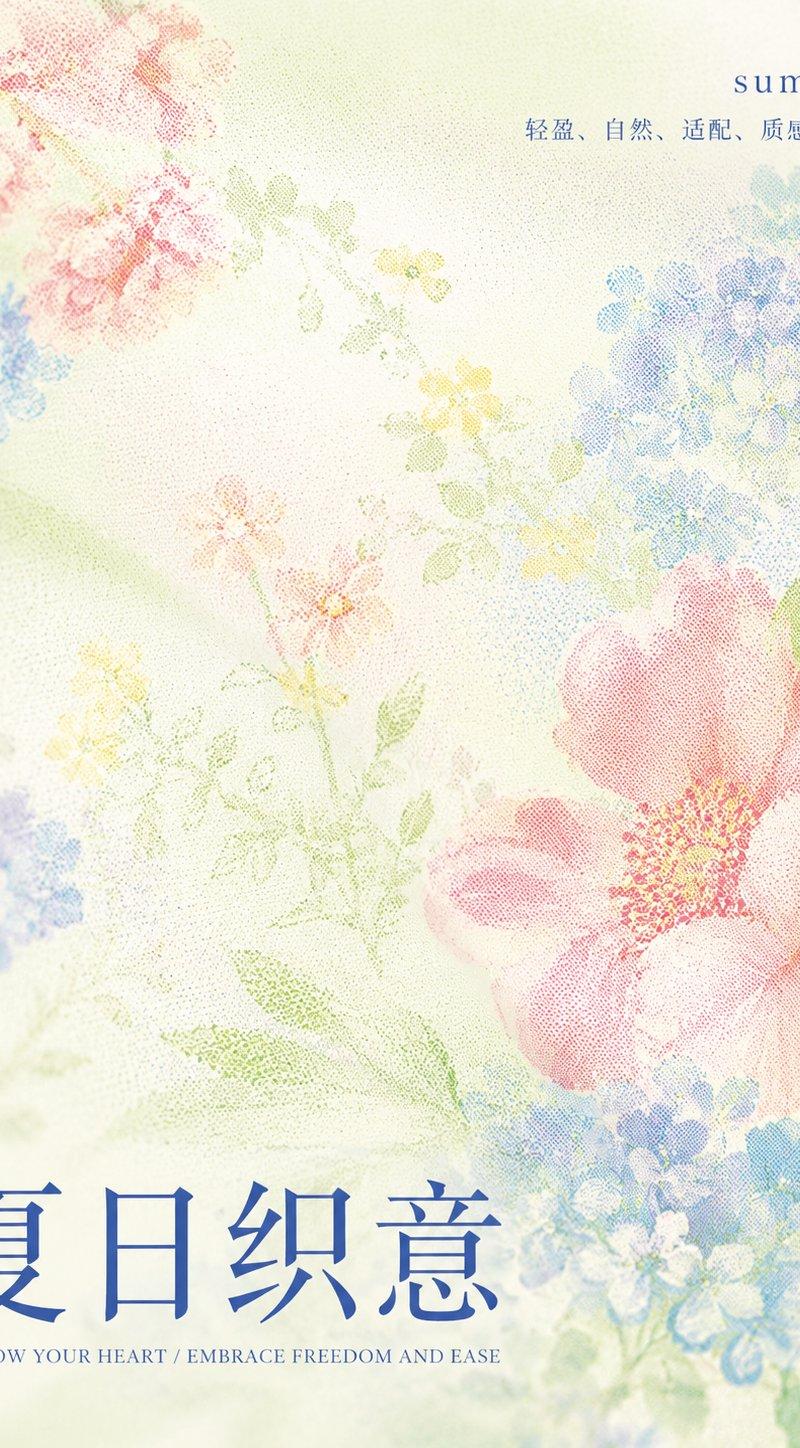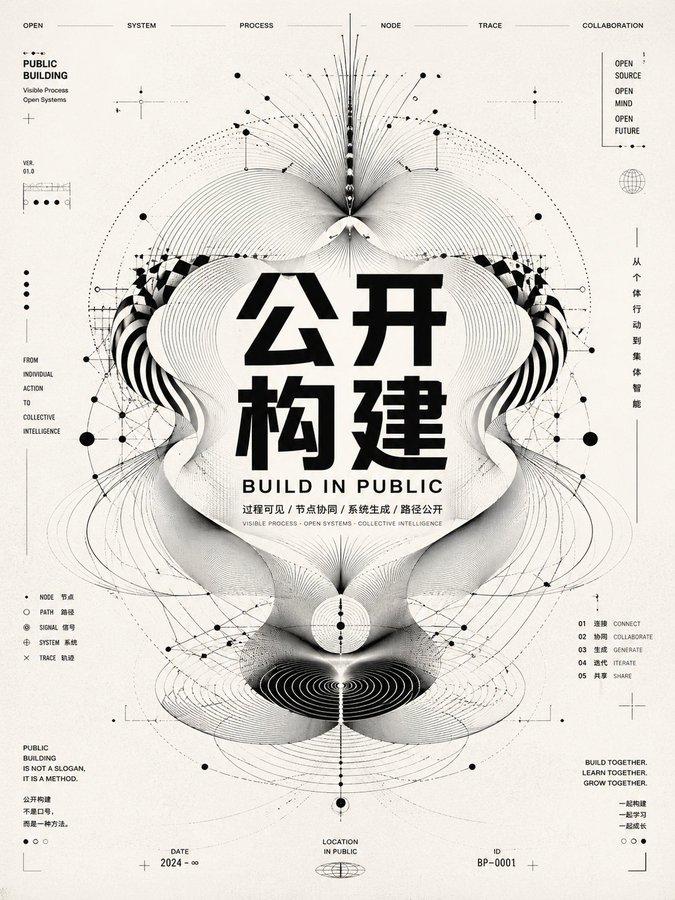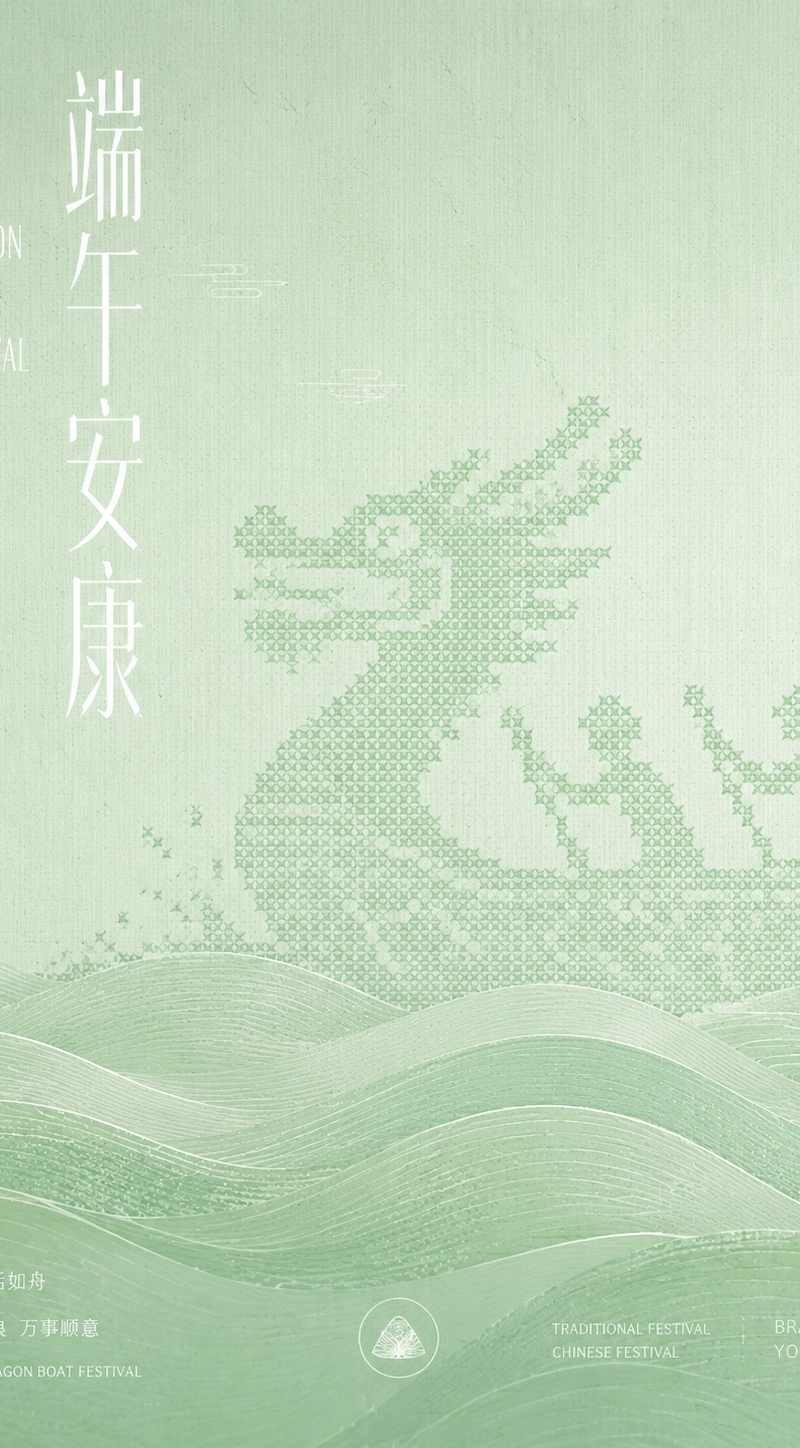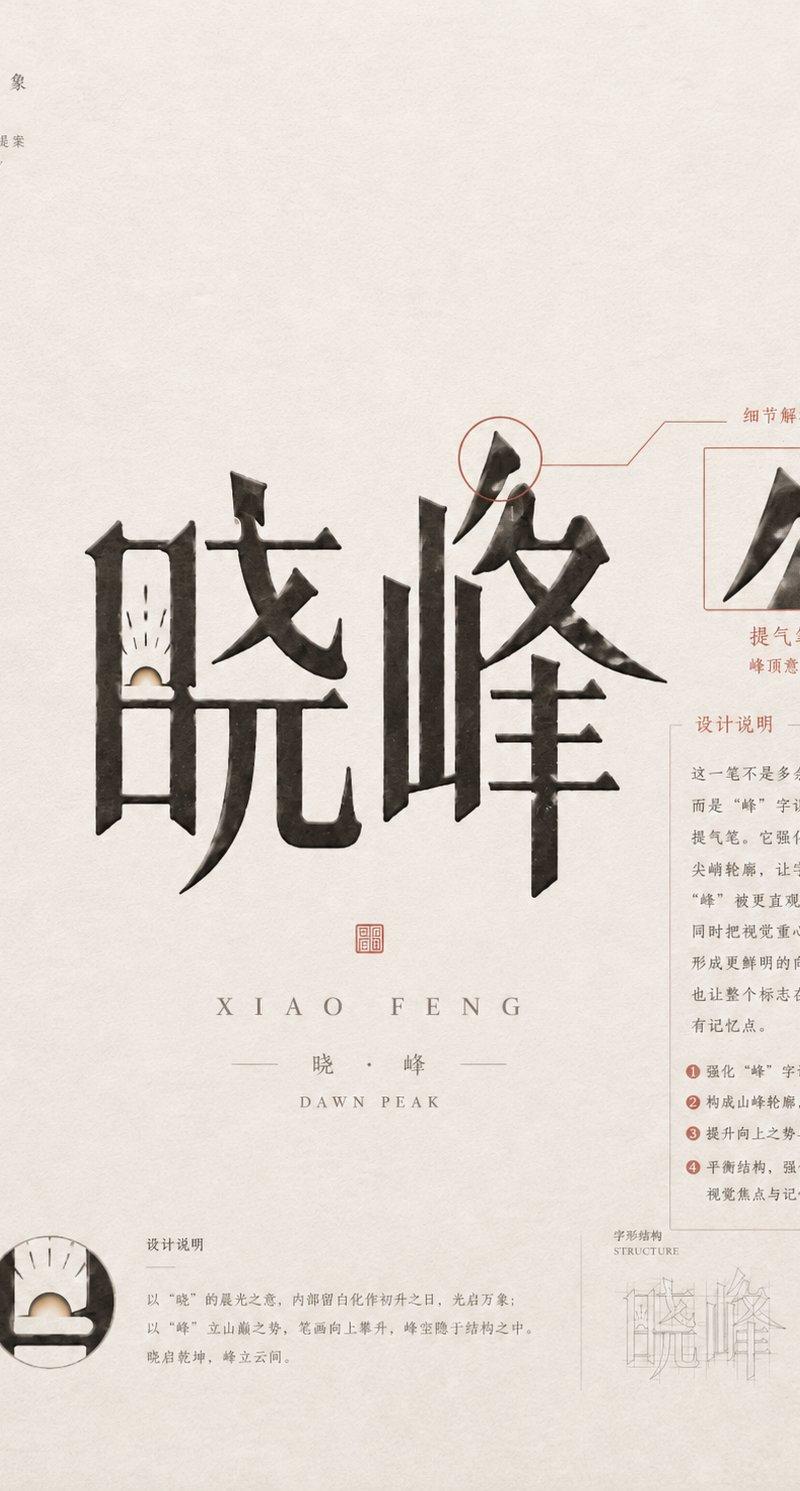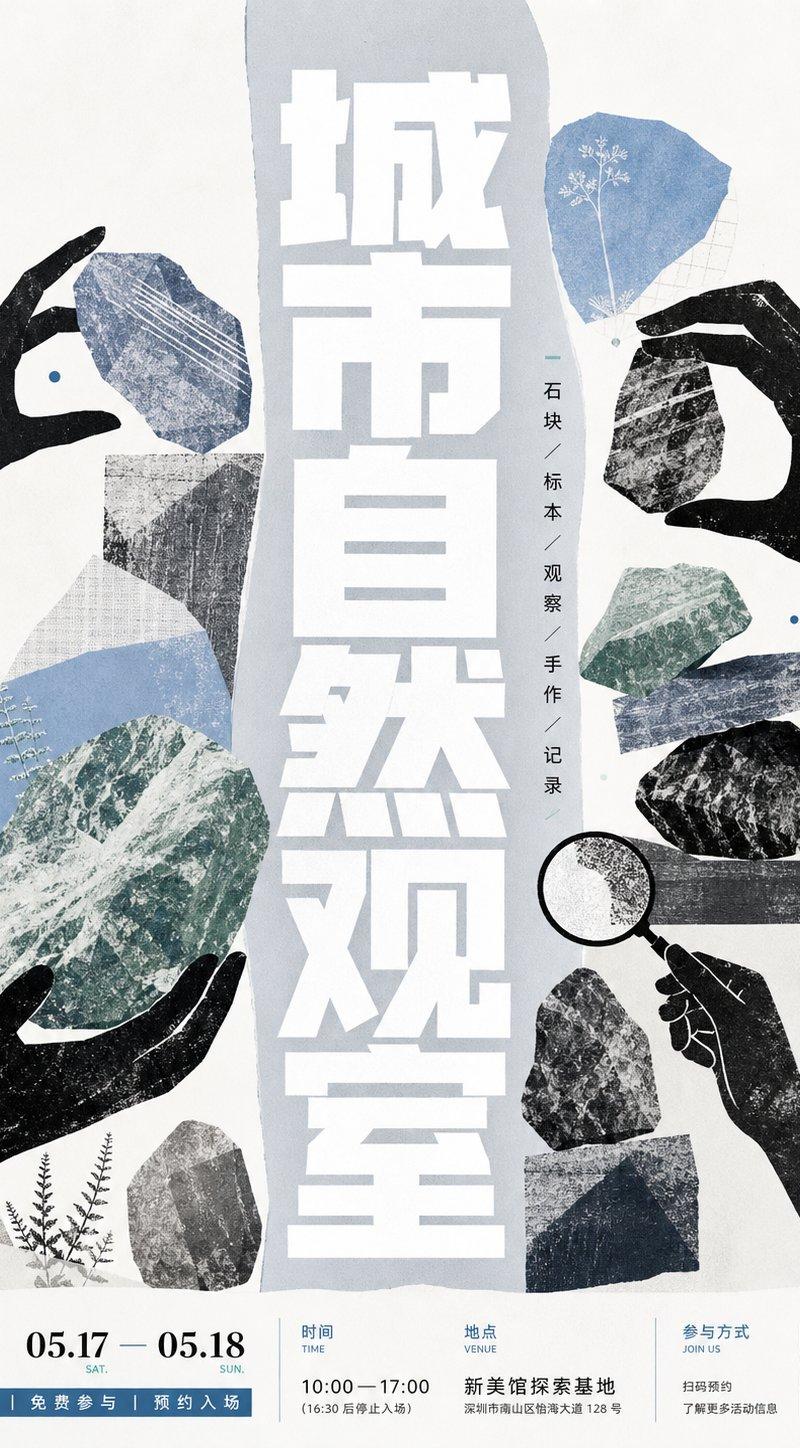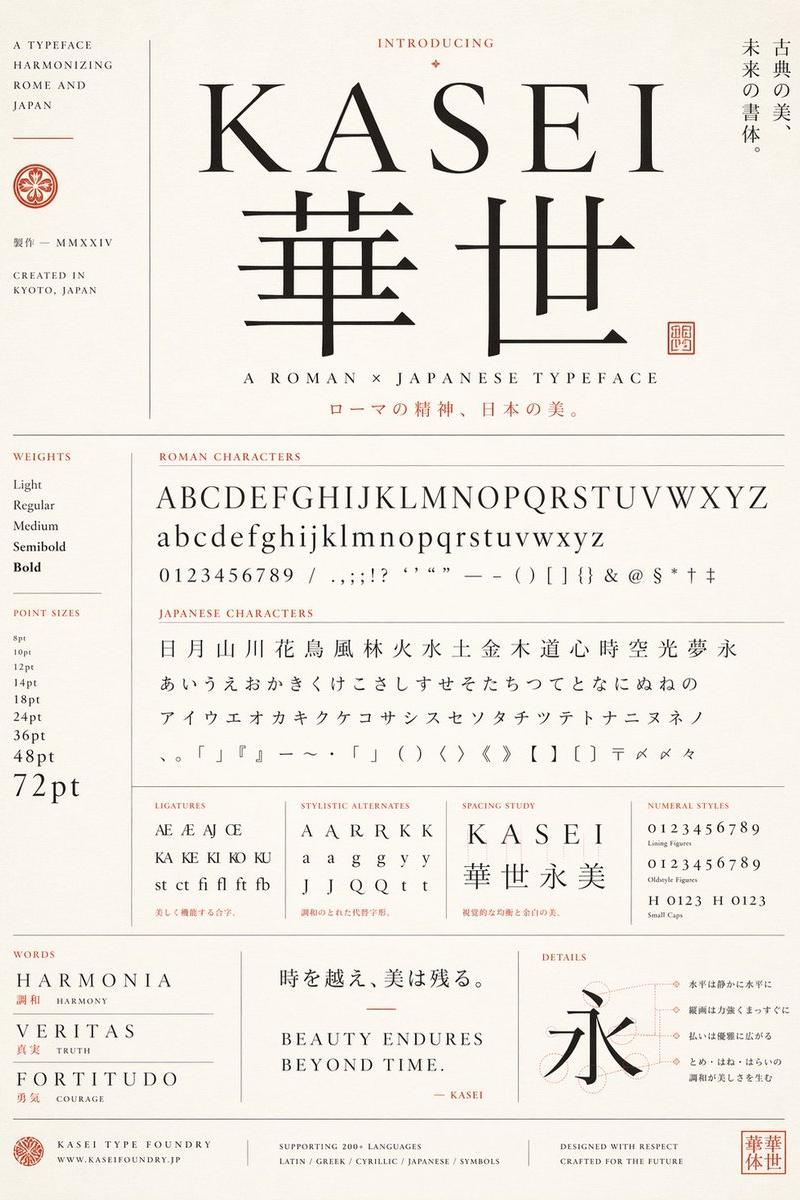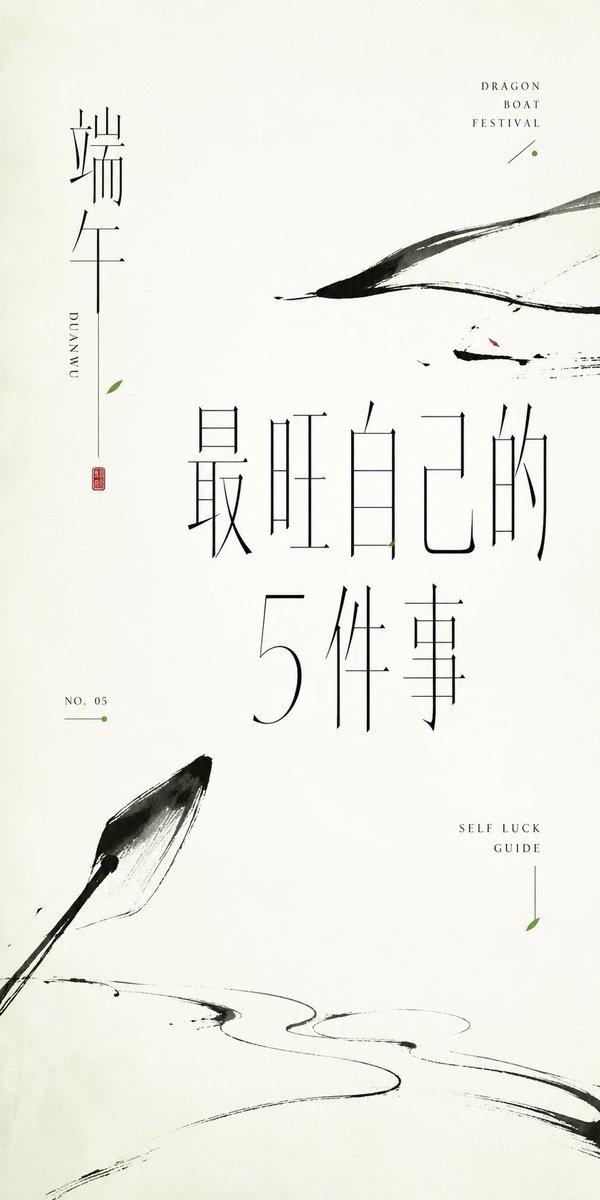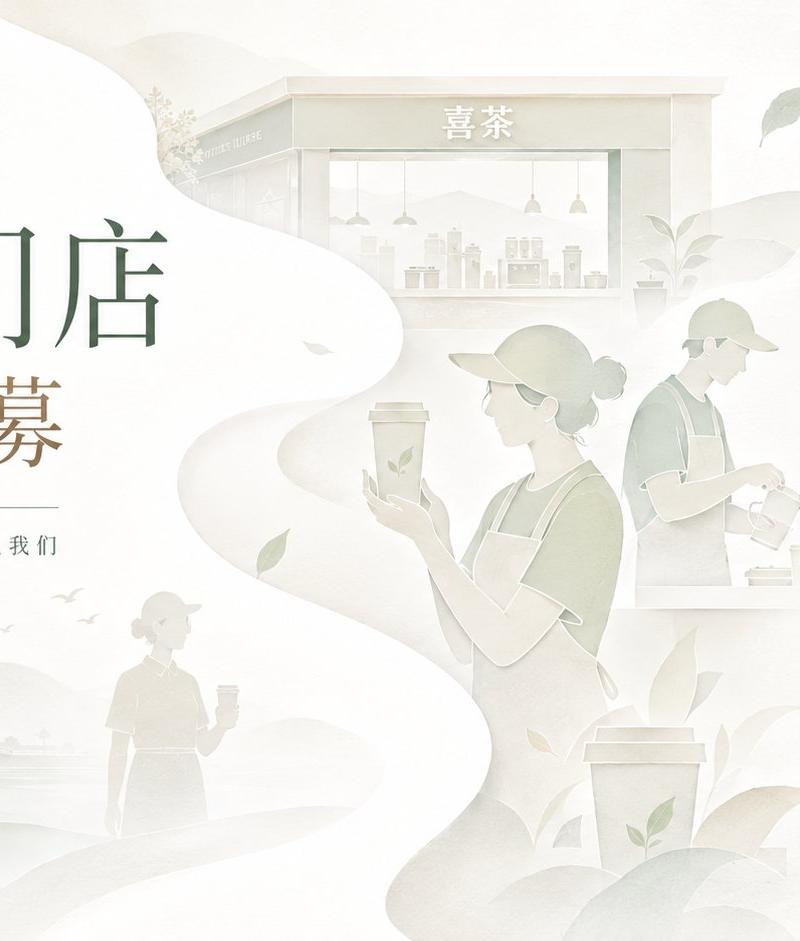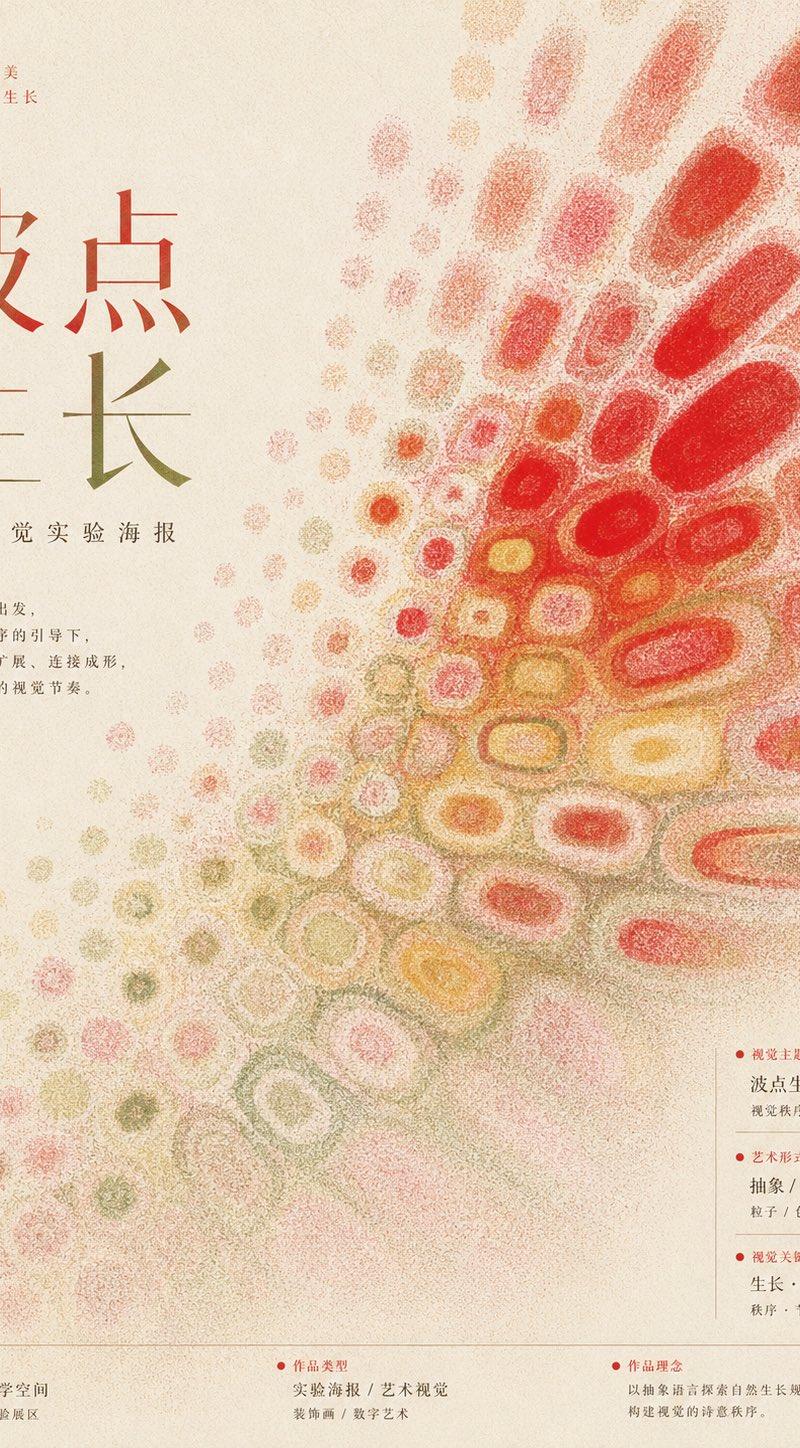
颗粒感抽象中文艺术展览海报
Prompt
Generate a vertical 3:4 Chinese abstract exhibition poster, it must be a finished poster with completed Chinese typography. The overall style is: contemporary abstract visual, particle noise, ripple diffusion, flowing composition, micro-texture, low-saturation warm colors, paper grain, Chinese exhibition poster design, quiet and high-end, with academic feel and art museum poster temperament. The background is warm off-white, cream white, or light apricot paper surface, with fine particles, slight noise, and soft fibrous paper feel. The main body of the image consists of a large number of abstract dot matrices, elliptical particles, diffusing ripples, arc-shaped streamlines, slice-like color blocks, and looping trajectories. The forms should be like growing, diffusing, extending, echoing, and flowing from microscopic particles, forming an orderly abstract structure. The main color palette is dominated by red, orange, yellow, pink, coral, olive green, and grayish green, overall low-saturation but with local highlights, not cheap or gaudy. Abstract forms in the image can present: dot matrix diffusing outwards, ripple loops, trajectory stretching, particle slicing, heatwave flow field, echo layering, growth structure, spectral vertical stacking, and microscopic garden-style reproduction. Typography requirements: The poster must have a clear Chinese main title "[Main Title]", Chinese subtitle "[Subtitle]", a small paragraph of descriptive body text, several small information blocks, annotations, keywords, sidebar info, and exhibition attribute descriptions. The overall text layout should be like an art exhibition poster, visual experiment poster, or design school poster, with restrained, clear typography and white space. The Chinese must be clear, accurate, and have a sense of design, no garbled characters, no typos. A small amount of English small print can be added as an auxiliary, but English should not dominate. No real brand logos, no watermarks, no commercial e-commerce feel, no old dates. Overall temperament keywords: abstract, flow, grain, echo, order, growth, diffusion, waveform, microscopic, experimental, archive, spectrum, heat, trajectory, visual research, art gallery poster.
- Category
- Charts & Infographics
- Model
- ChatGPT
- Creator
- @YangOnchain
- Source language
- zh-CN
- Source ID
- 16826
- Published
- Jun 28, 2026
Views41