武士狙击手动态战斗场景提示
Prompt
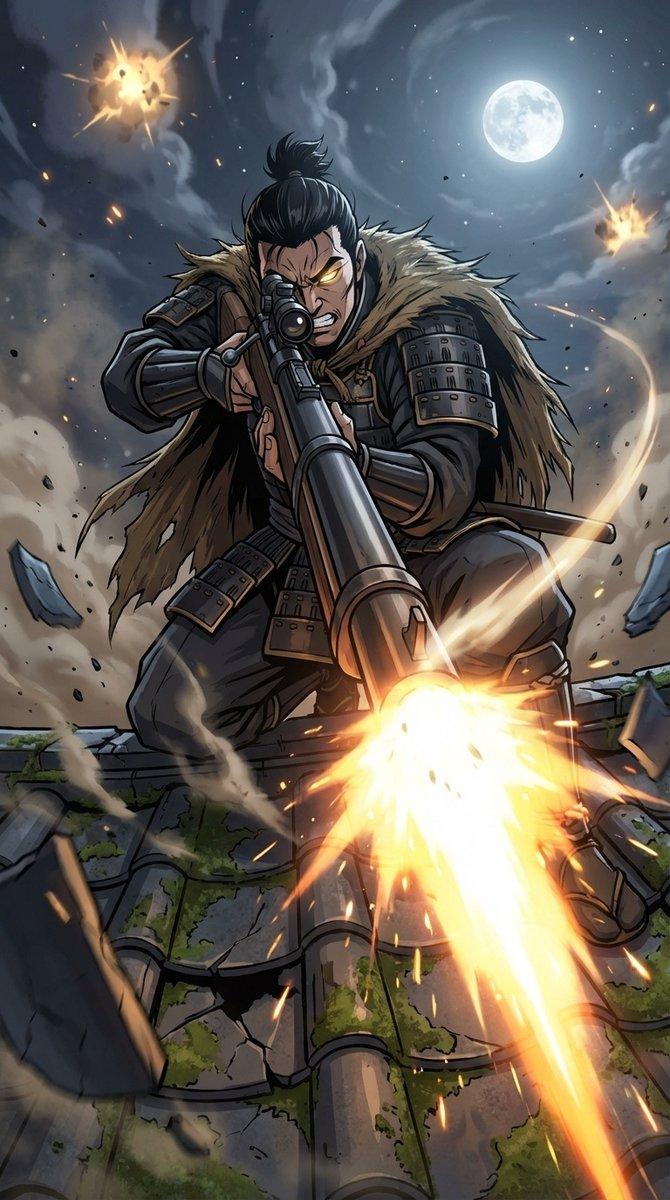
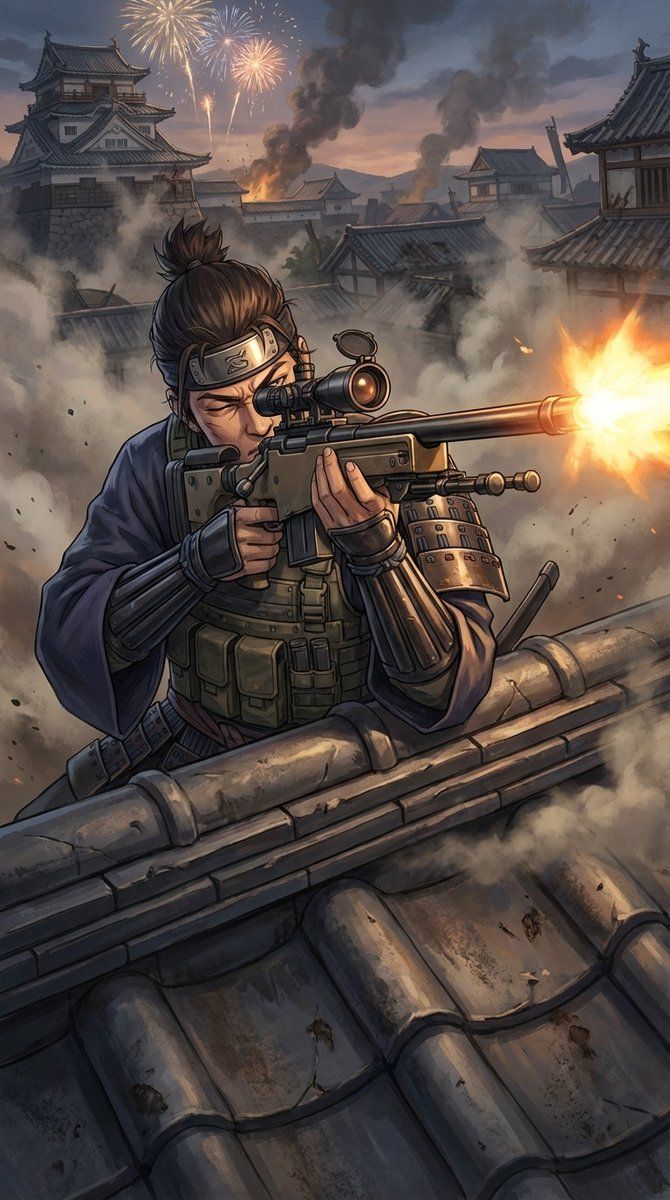
Masterpiece quality, theatrical anime-scale dynamic battle scene. A samurai character is the main subject (preserving a traditional samurai feel, optionally blended with subtle modern gear elements). Prone firing pose (low-profile/propped close to the roof surface), body flattened to the tiles, elbows braced for stability. Cheek pressed to the stock while peering through the scope, one eye narrowed, an intense focused stare and clenched teeth conveying tension and determination.

Composition and angle: the camera is placed almost on the roof tiles—an extreme ground-level ultra low-angle. Wide-angle lens with exaggerated perspective and strong depth. A diagonal composition: the sniper rifle runs from the extreme lower foreground into the midground, leading the viewer’s eye directly to the samurai’s gaze. The muzzle and muzzle flash dominate the extreme foreground, appearing oversized and close enough to “break the screen,” while the face (especially the eyes) stays crisp and sharp.

Action: captured at the exact instant of firing. A large, stylized muzzle flash erupts in the foreground; sparks, glowing embers, and thin smoke burst outward. Ejected brass and scattered casings on the tiles reinforce the sense of ongoing fire. A faint luminous streak suggests the bullet’s path slicing through the night air. Subtle recoil pushes the rifle and shoulder back; dynamic motion blur on the weapon and sleeves, while the eyes and brow remain tack-sharp. The scope glass reflects a cold blue-green sheen; metal surfaces show finely detailed reflections and crisp edge highlights.

Setting: the rooftop of a white Japanese castle keep (white plaster walls), under a clear night sky. Clean moonlight creates strong rim lighting along roof ridges and the samurai’s silhouette. Traditional roof features—curved ceramic tiles, ridge lines, gables, and shachihoko ornaments—read clearly in silhouette and detail. The firing shock and weight shift chip and crack tiles; fragments and dust jump up and arc toward the camera. High-contrast cinematic lighting with a dramatic warm–cool split: warm muzzle flash versus cool moonlight. Filmic particles (dust, embers) in the air.

Vertical cinematic poster composition, 9:16 aspect ratio, no text.
- Category
- 创意图片
- Model
- Nano Banana Pro
- Creator
- kei
- Source ID
- fa6ae2a0-55f4-4c95-85ec-25d3fbdf1375
- Published
- Mar 8, 2026
Views1