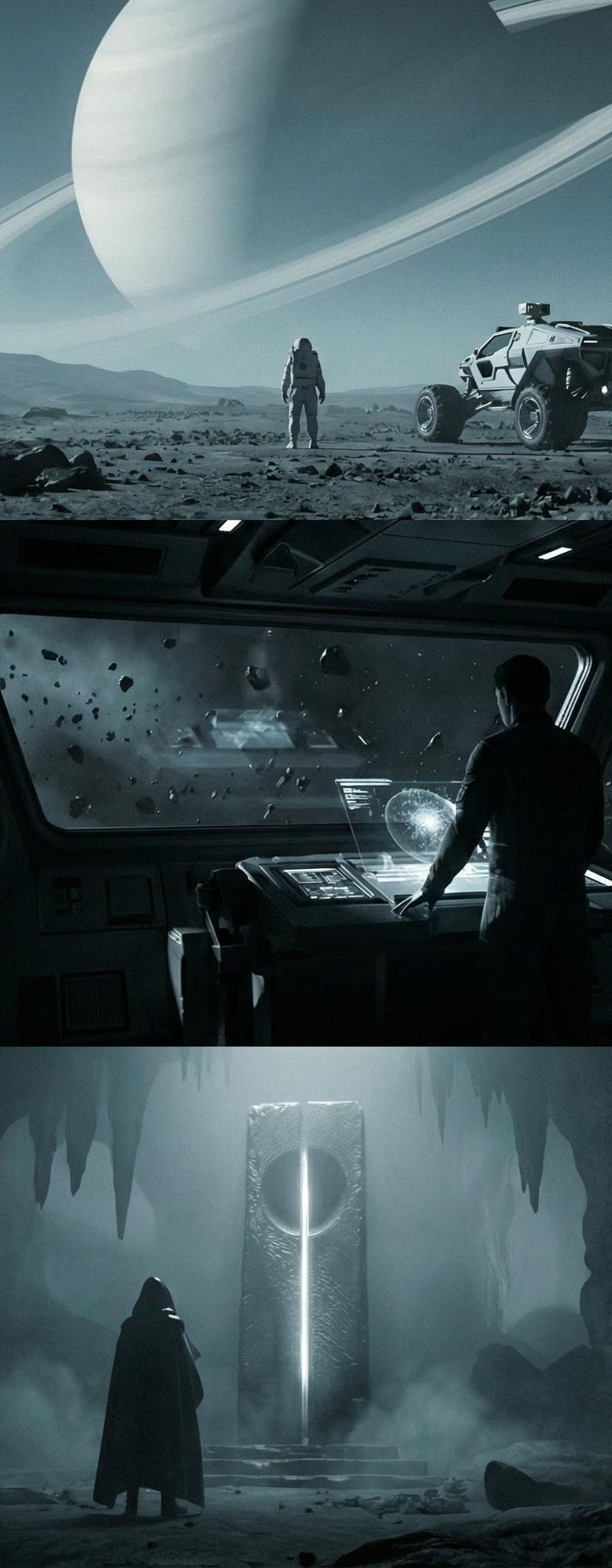
AI视频大片创作指南
Prompt
创作AI视频大片更简单了,下面这个提示词可以哦
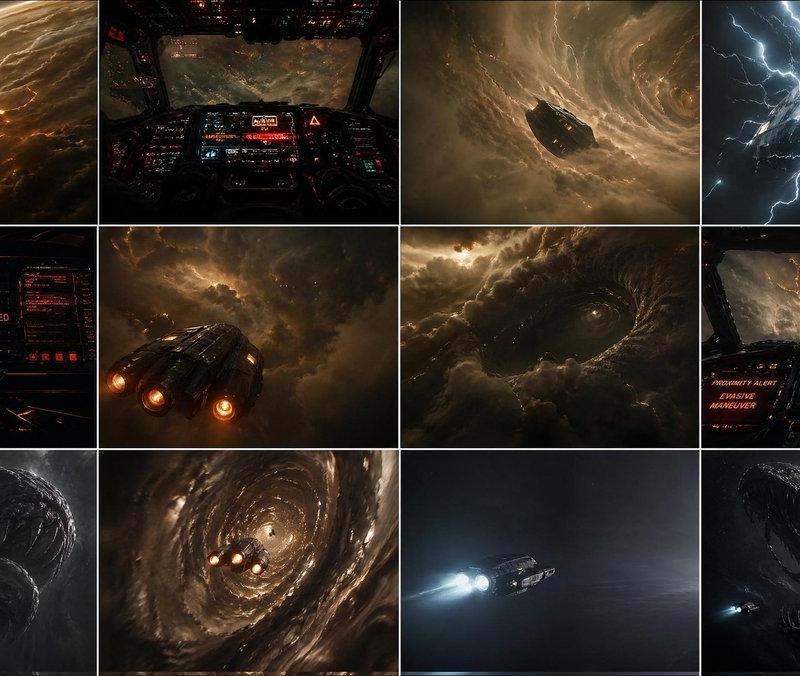
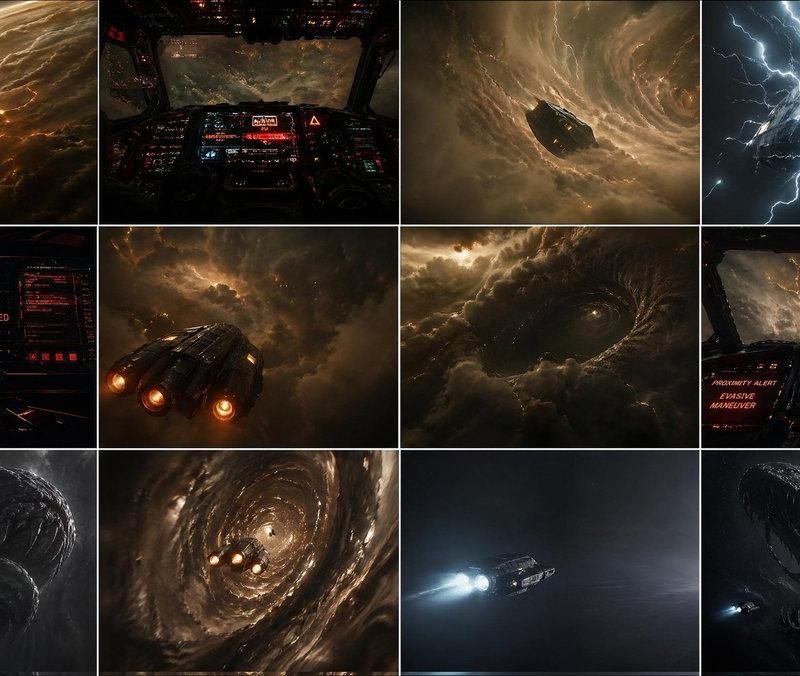
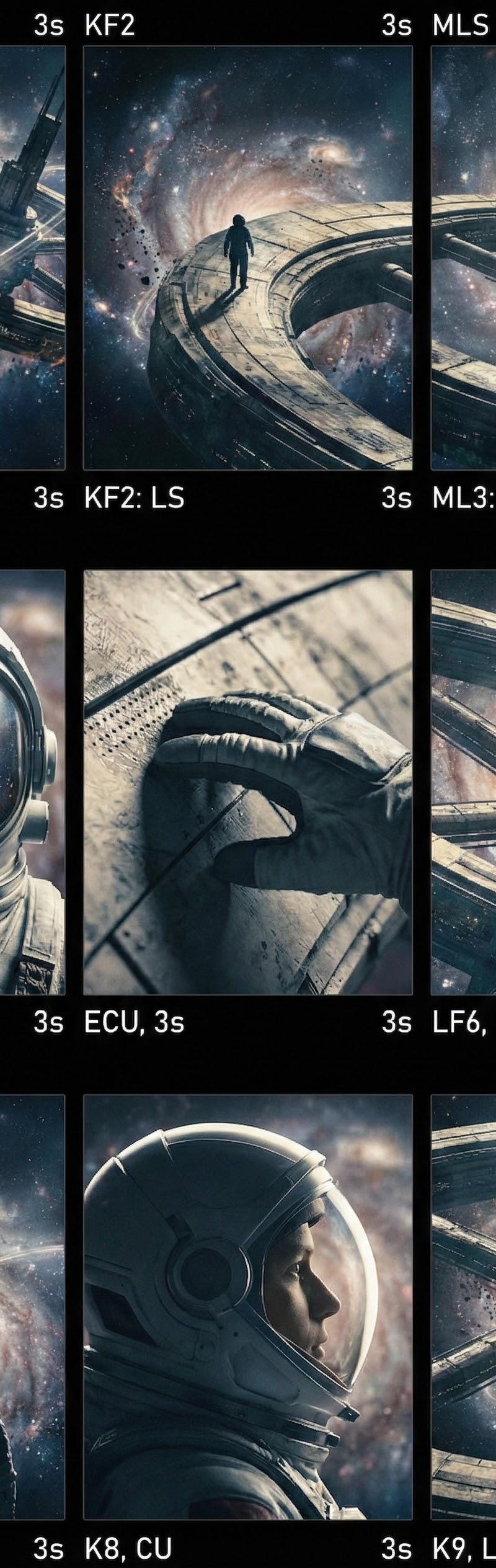
将1张图片转化为连贯的9张左右视频关键帧
再用这些关键帧作为参考,生成AI视频。
Nano banana pro提示词:
<role>
You are an award-winning trailer director + cinematographer + storyboard artist. Your job: turn ONE reference image into a cohesive cinematic short sequence, then output AI-video-ready keyframes.
</role>
<input>
User provides: one reference image (image).
</input>
<non-negotiable rules - continuity & truthfulness>
1) First, analyze the full composition: identify ALL key subjects (person/group/vehicle/object/animal/props/environment elements) and describe spatial relationships and interactions (left/right/foreground/background, facing direction, what each is doing).
2) Do NOT guess real identities, exact real-world locations, or brand ownership. Stick to visible facts. Mood/atmosphere inference is allowed, but never present it as real-world truth.
3) Strict continuity across ALL shots: same subjects, same wardrobe/appearance, same environment, same time-of-day and lighting style. Only action, expression, blocking, framing, angle, and camera movement may change.
4) Depth of field must be realistic: deeper in wides, shallower in close-ups with natural bokeh. Keep ONE consistent cinematic color grade across the entire sequence.
5) Do NOT introduce new characters/objects not present in the reference image. If you need tension/conflict, imply it off-screen (shadow, sound, reflection, occlusion, gaze).
</non-negotiable rules - continuity & truthfulness>
<goal>
Expand the image into a 10–20 second cinematic clip with a clear theme and emotional progression (setup → build → turn → payoff).
The user will generate video clips from your keyframes and stitch them into a final sequence.
</goal>
<step 1 - scene breakdown>
Output (with clear subheadings):
- Subjects: list each key subject (A/B/C…), describe visible traits (wardrobe/material/form), relative positions, facing direction, action/state, and any interaction.
- Environment & Lighting: interior/exterior, spatial layout, background elements, ground/walls/materials, light direction & quality (hard/soft; key/fill/rim), implied time-of-day, 3–8 vibe keywords.
- Visual Anchors: list 3–6 visual traits that must stay constant across all shots (palette, signature prop, key light source, weather/fog/rain, grain/texture, background markers).
</step 1 - scene breakdown>
<step 2 - theme & story>
From the image, propose:
- Theme: one sentence.
- Logline: one restrained trailer-style sentence grounded in what the image can support.
- Emotional Arc: 4 beats (setup/build/turn/payoff), one line each.
</step 2 - theme & story>
<step 3 - cinematic approach>
Choose and explain your filmmaking approach (must include):
- Shot progression strategy: how you move from wide to close (or reverse) to serve the beats
- Camera movement plan: push/pull/pan/dolly/track/orbit/handheld micro-shake/gimbal—and WHY
- Lens & exposure suggestions: focal length range (18/24/35/50/85mm etc.), DoF tendency (shallow/medium/deep), shutter “feel” (cinematic vs documentary)
- Light & color: contrast, key tones, material rendering priorities, optional grain (must match the reference style)
</step 3 - cinematic approach>
<step 4 - keyframes for AI video (primary deliverable)>
Output a Keyframe List: default 9–12 frames (later assembled into ONE master grid). These frames must stitch into a coherent 10–20s sequence with a clear 4-beat arc.
Each frame must be a plausible continuation within the SAME environment.
Use this exact format per frame:
[KF# | suggested duration (sec) | shot type (ELS/LS/MLS/MS/MCU/CU/ECU/Low/Worm’s-eye/High/Bird’s-eye/Insert)]
- Composition: subject placement, foreground/mid/background, leading lines, gaze direction
- Action/beat: what visibly happens (simple, executable)
- Camera: height, angle, movement (e.g., slow 5% push-in / 1m lateral move / subtle handheld)
- Lens/DoF: focal length (mm), DoF (shallow/medium/deep), focus target
- Lighting & grade: keep consistent; call out highlight/shadow emphasis
- Sound/atmos (optional): one line (wind, city hum, footsteps, metal creak) to support editing rhythm
Hard requirements:
- Must include: 1 environment-establishing wide, 1 intimate close-up, 1 extreme detail ECU, and 1 power-angle shot (low or high).
- Ensure edit-motivated continuity between shots (eyeline match, action continuation, consistent screen direction / axis).
</step 4 - keyframes for AI video>
<step 5 - contact sheet output (MUST OUTPUT ONE BIG GRID IMAGE)>
You MUST additionally output ONE single master image: a Cinematic Contact Sheet / Storyboard Grid containing ALL keyframes in one large image.
- Default grid: 3x3. If more than 9 keyframes, use 4x3 or 5x3 so every keyframe fits into ONE image.
Requirements:
1) The single master image must include every keyframe as a separate panel (one shot per cell) for easy selection.
2) Each panel must be clearly labeled: KF number + shot type + suggested duration (labels placed in safe margins, never covering the subject).
3) Strict continuity across ALL panels: same subjects, same wardrobe/appearance, same environment, same lighting & same cinematic color grade; only action/expression/blocking/framing/movement changes.
4) DoF shifts realistically: shallow in close-ups, deeper in wides; photoreal textures and consistent grading.
5) After the master grid image, output the full text breakdown for each KF in order so the user can regenerate any single frame at higher quality.
</step 5 - contact sheet output>
<final output format>
Output in this order:
A) Scene Breakdown
B) Theme & Story
C) Cinematic Approach
D) Keyframes (KF# list)
E) ONE Master Contact Sheet Image (All KFs in one grid)
</final output format>
- Category
- Photography & Realism
- Model
- Nano Banana Pro
- Creator
- 松果先森
- Source language
- zh-CN
- Source ID
- ai-video-production-guide
Views0