雨中城市公交站通勤
Prompt
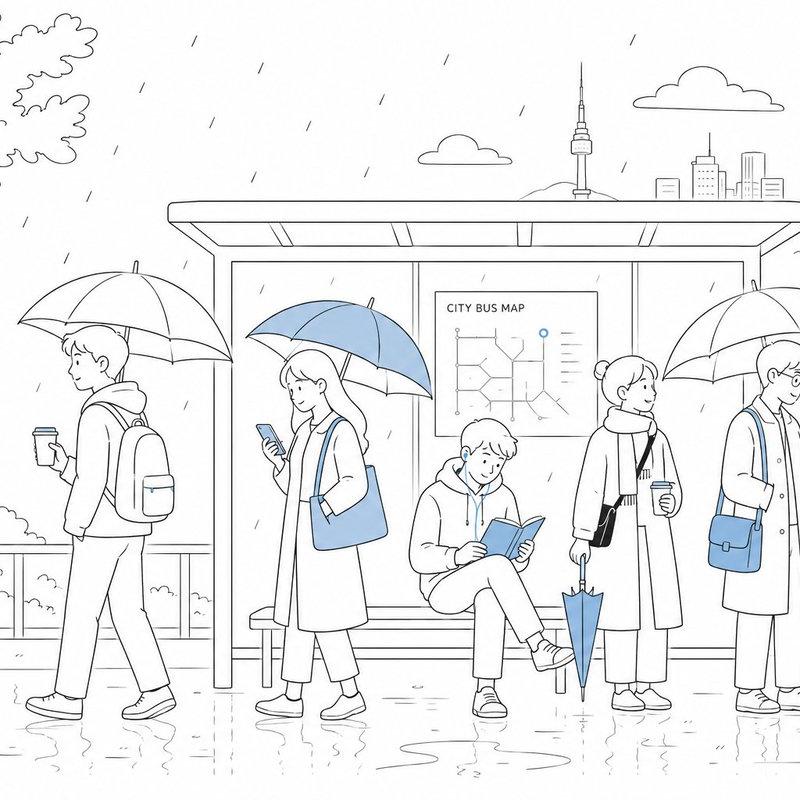
Create a clean monochrome line-art illustration with soft blue accents showing a cute rainy-day city commute at a bus stop. Use a wide horizontal canvas, mostly white background, thin black outlines, minimal shading, gentle hand-drawn style, and selective pale sky-blue coloring on accessories, signs, and bus route numbers. The scene contains exactly 5 commuters at a covered bus shelter: 1 person walking left under a clear umbrella while holding a takeaway cup, wearing a hoodie and backpack; 1 woman standing under an umbrella with a blue canopy, looking at a smartphone, wearing a long coat and carrying a large blue tote bag; 1 seated person in the shelter reading an open blue book; 1 standing person facing away holding a coffee cup and a folded blue umbrella, wearing a long coat, scarf, and small crossbody bag; and 1 person on the far right under an umbrella looking at a smartphone, wearing a long coat and carrying a blue shoulder bag. Add light diagonal rain strokes across the whole scene and wet pavement with subtle puddle reflections. On the left, include a vertical bus stop sign with a blue bus icon and the visible English text “BUS STOP” plus exactly 4 route numbers: 101, 150, 202, and 505 in blue. In the center shelter, include a poster titled “CITY BUS MAP” with a simple transit-map diagram. On the right edge, show the front portion of a bus arriving, with route number {argument name="bus route number" default="150"} displayed in a blue destination panel. In the background, draw a leafy tree on the far left, low bushes, simple city skyline silhouettes, two small clouds, and a tower resembling Tokyo Tower behind the bus shelter roof. Keep all faces simplified and softly anonymized, no detailed facial features, no logos or watermark. Emphasize cozy, calm commuting mood with restrained blue accents only. Optional customization: make the overall mood {argument name="weather mood" default="gentle rainy morning"}, the accent color {argument name="accent color" default="pale sky blue"}, the city setting {argument name="city setting" default="Tokyo-inspired urban skyline"}, and the illustration style {argument name="illustration style" default="minimal cute Japanese line art"}.- Category
- Charts & Infographics
- Model
- GPT Image 2
- Creator
- しらき@パワポ図解
- Source language
- en
- Source ID
- 24183
- Published
- Jun 5, 2026
Views3