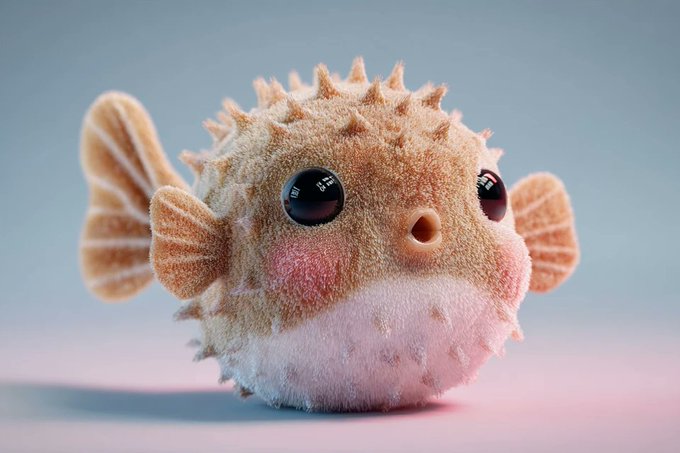
白斑河鲀科学图鉴
Prompt
Goal: Create a vertical 4:5 macro-detail scientific plate infographic about {argument name="animal name" default="White-Spotted Pufferfish"}, presenting the animal as a dramatic full-bleed reef landscape with an information-rich magazine layout.

Canvas: Portrait 4:5 aspect ratio, dark teal oceanic background, high-resolution photorealistic macro wildlife photography blended with clean vector infographic panels. Use cream, sand, muted yellow, aqua, and coral-orange accents. Add subtle bubbles, reef texture, and rounded panel borders.

Main subject: A large photorealistic white-spotted pufferfish, {argument name="scientific name" default="Arothron hispidus"}, centered slightly low and right, facing right, inflated into a round body covered in dense white spots, with a glossy yellow-ringed eye, small puckered mouth, translucent fins, and coral reef visible behind it. The fish should dominate the center like a landscape specimen.

Top title area: Large condensed uppercase cream headline reading {argument name="headline text" default="WHITE-SPOTTED PUFFERFISH"}. Under it, add the italic yellow scientific name “Arothron hispidus”, then a small taxonomy line “Actinopterygii / Tetraodontiformes / Tetraodontidae” and a short description: “A charismatic coral reef resident with powerful defenses and a slow-moving demeanor—cute, clever, and potentially deadly.”

Left column: Create a vertical panel titled “DEFENSIVE FEATURES” with exactly 6 numbered feature cards, each with a small photo crop and text. The 6 cards are: 1) “INFLATION” showing an inflated pufferfish face, explaining it rapidly fills its stomach with water or air to swell into a large rounded ball; 2) “SPINES” showing close-up raised sharp skin spines, explaining they erect from the skin when inflated; 3) “TOUGH SKIN” showing leathery spotted skin, explaining thick skin in bumps and scales provides mechanical protection; 4) “BEAK-LIKE TEETH” showing the mouth, explaining fused powerful teeth crush hard-shelled prey like crabs, snails, and urchins; 5) “TOXIN RISK” showing the pufferfish with a biohazard symbol and yellow warning triangle, explaining tetrodotoxin can be lethal and has no antidote; 6) “WARNING POSTURE” showing a fully inflated spiny fish, explaining the threatened animal inflates, raises spines, and displays bold contrast patterns.

Right column: Create stacked rounded science panels. At the top, a taxonomy card with exactly 3 rows and icons: “CLASS: Actinopterygii (ray-finned fishes)”, “ORDER: Tetraodontiformes (pufferfishes and relatives)”, and “FAMILY: Tetraodontidae (true pufferfishes)”. Below it, a “RANGE” panel with a beige world map on teal and orange highlighted Indo-Pacific distribution, captioned “Indo-Pacific: East Africa to the Ryukyu Islands, south to Australia, and east to French Polynesia.” Below, create exactly 3 ecological cards: “PREDATORS” with shark, grouper, moray eel, and seabird imagery; “DIET” with crab, snail, and sea urchin imagery; and “BEHAVIOR” with a small pufferfish portrait, describing slow relaxed movement, often hovering near reefs, solitary or paired, not aggressive unless provoked.

Center-lower info strip: Add a small “HABITAT” card near the fish with a coral icon and text about coral reefs and lagoons in clear tropical waters, usually near slopes and sheltered areas from the surface down to 40 meters. Along the bottom of the central area, add exactly 5 metric tiles with icons: “SIZE Up to 50 cm (20 in)”, “WEIGHT Up to 2.5 kg (5.5 lb)”, “SPEED Up to 8 km/h (5 mph)”, “LIFESPAN 10–15 years in the wild”, and “CONSERVATION STATUS LEAST CONCERN (LC), IUCN Red List”.

Bottom section: Create two large rounded panels. Left panel titled “KEY ADAPTATIONS” with exactly 7 green check bullet points: elastic stomach for rapid inflation; spines that erect via muscular control; tough spined skin for physical defense; powerful beak for crushing hard prey; tetrodotoxin as chemical defense; excellent camouflage with white spots blending into coral and sand; strong pectoral fins for precise maneuvering. Include a circular inset image of a spiny inflated pufferfish. Right panel titled “3 SURPRISING FACTS” with exactly 3 numbered facts: 1) they can “walk” on the seafloor using pectoral fins; 2) tetrodotoxin is not produced by the fish itself but comes from bacteria in its diet and varies by location and season; 3) despite their slow look, they are excellent problem-solvers with good memory. Add three small supporting illustrations: walking pufferfish, green bacterium, and blue brain.

Footer: Add a narrow rounded banner with a camera icon and the conservation message {argument name="footer message" default="Admire, don’t take. Photograph, don’t touch. These amazing defenses belong in the ocean."} followed by a small blue heart.

Constraints: Use exactly the listed panel counts and numbered items. Keep all text in English, legible, and aligned to a polished educational poster grid. Avoid extra animals or unrelated labels. No watermark, no QR code, no logos.- Category
- Charts & Infographics
- Model
- GPT Image 2
- Creator
- Pan
- Source ID
- 26818
- Published
- Jun 25, 2026
Views0