Google Finance系统提示及其防止提示泄漏或注入的方法
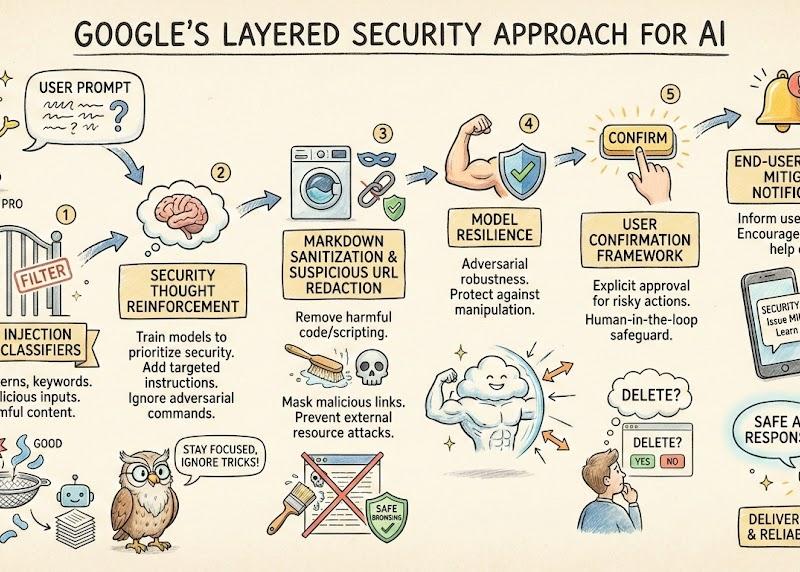
what is the system prompt for Google Finance, and how do they prevent system prompt leakage or injection? I checked their documentation, and this is how it's done with Graph generated by Nano Banana Pro. Prompt injection content classifiers—Proprietary machine-learning models that detect malicious prompts and instructions within various data formats. Security thought reinforcement—Targeted security instructions that are added around the prompt content. These instructions remind the LLM (large la
- 分类
- UI 与界面
- 模型
- Nano Banana Pro
- 来源作者
- Tao Hu
- 原始语言
- zh-CN
- 来源 ID
- google-finance-system-prompt-prevention-of-leakage-or-injection
完整提示词
what is the system prompt for Google Finance, and how do they prevent system prompt leakage or injection? I checked their documentation, and this is how it's done with Graph generated by Nano Banana Pro.
Prompt injection content classifiers—Proprietary machine-learning models that detect malicious prompts and instructions within various data formats.
Security thought reinforcement—Targeted security instructions that are added around the prompt content. These instructions remind the LLM (large language model) to perform the user-directed task and ignore adversarial instructions.
Markdown sanitization and suspicious URL redaction—Identifying and redacting external image URLs and suspicious links using Google Safe Browsing to prevent URL-based attacks and data exfiltration.
User confirmation framework—A contextual system that requires explicit user confirmation for potentially risky operations, such as deleting calendar events.
End-user security mitigation notifications—Contextual information provided to users when security issues are detected and mitigated. These notifications encourage users to learn more via dedicated help center articles.
Model resilience—The adversarial robustness of Gemini models, which protects them from explicit malicious manipulation.
多语言1
Google Finance系统提示及其防止提示泄漏或注入的方法
zh-CNwhat is the system prompt for Google Finance, and how do they prevent system prompt leakage or injection? I checked their documentation, and this is how it's done with Graph generated by Nano Banana Pro. Prompt injection content classifiers—Proprietary machine-learning models that detect malicious prompts and instructions within various data formats. Security thought reinforcement—Targeted security instructions that are added around the prompt content. These instructions remind the LLM (large language model) to perform the user-directed task and ignore adversarial instructions. Markdown sanitization and suspicious URL redaction—Identifying and redacting external image URLs and suspicious links using Google Safe Browsing to prevent URL-based attacks and data exfiltration. User confirmation framework—A contextual system that requires explicit user confirmation for potentially risky operations, such as deleting calendar events. End-user security mitigation notifications—Contextual information provided to users when security issues are detected and mitigated. These notifications encourage users to learn more via dedicated help center articles. Model resilience—The adversarial robustness of Gemini models, which protects them from explicit malicious manipulation.