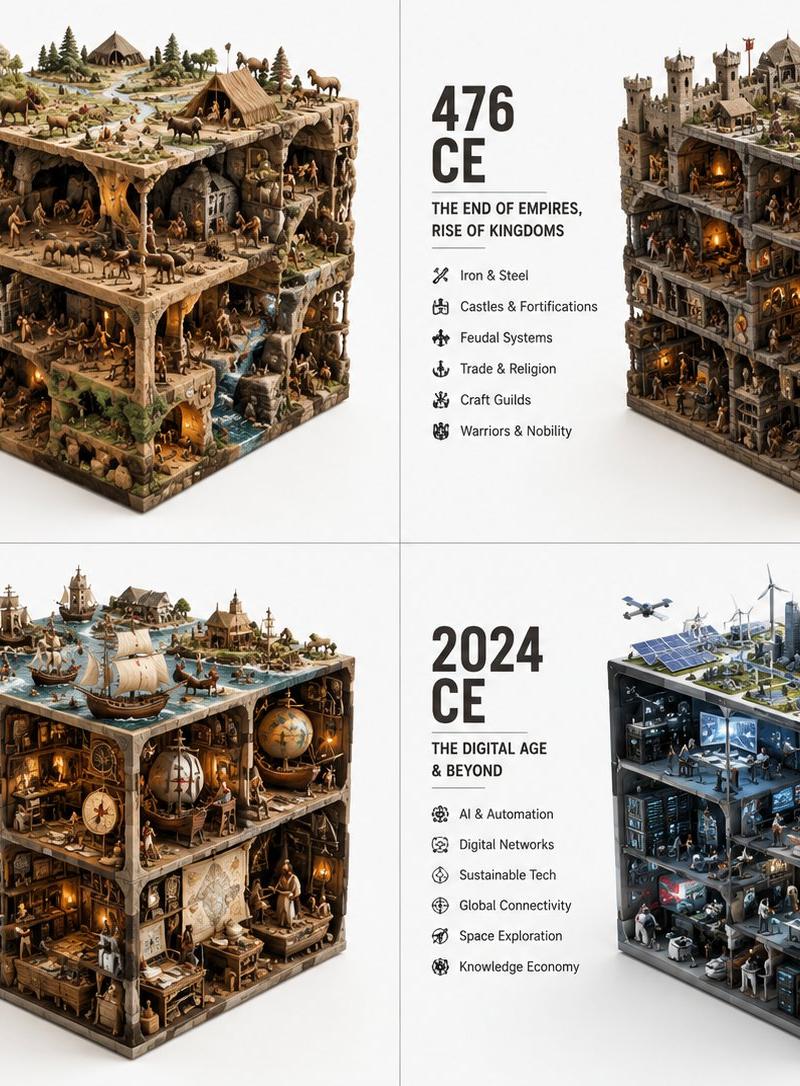
历史时代可视化立方体
一个结构化的工作流提示词,旨在将不同历史时代浓缩并可视化为一个包含代表性 Agent 和文物的 3D 立方体。
- 分类
- 图表信息图
- 模型
- GPT Image 2
- 来源作者
- Gadgetify
- 原始语言
- en
- 来源 ID
- 24267
- 发布时间
- 2026年6月5日
完整提示词
2x2 grid, do this for different years of vastly different eras: {argument name="topic" default="ERA_TO_CUBE_SOLVER"} INPUT ::= [TOPIC], [ERA] STEP_1 :: infer era identity - time period or stage - dominant materials - key tools or artifacts - social/technical/cultural context - built environment or natural environment - representative agents or figures if relevant STEP_2 :: compress into cube - large objects define cuboid edges - medium objects build internal scenes - small objects fill gaps - top, side, and front faces remain visible - everything stays inside a strict rectangular volume STEP_3 :: create module text - large era label - short subtitle - compact bullet list - no fixed facts unless supplied STEP_4 :: repeat across eras - preserve identical visual grammar - increase or transform complexity chronologically多语言2
历史时代可视化立方体
zh-CN2x2 grid, do this for different years of vastly different eras: {argument name="topic" default="ERA_TO_CUBE_SOLVER"} INPUT ::= [TOPIC], [ERA] STEP_1 :: infer era identity - time period or stage - dominant materials - key tools or artifacts - social/technical/cultural context - built environment or natural environment - representative agents or figures if relevant STEP_2 :: compress into cube - large objects define cuboid edges - medium objects build internal scenes - small objects fill gaps - top, side, and front faces remain visible - everything stays inside a strict rectangular volume STEP_3 :: create module text - large era label - short subtitle - compact bullet list - no fixed facts unless supplied STEP_4 :: repeat across eras - preserve identical visual grammar - increase or transform complexity chronologically
Historical Era Visualization Cube
en2x2 grid, do this for different years of vastly different eras: {argument name="topic" default="ERA_TO_CUBE_SOLVER"} INPUT ::= [TOPIC], [ERA] STEP_1 :: infer era identity - time period or stage - dominant materials - key tools or artifacts - social/technical/cultural context - built environment or natural environment - representative agents or figures if relevant STEP_2 :: compress into cube - large objects define cuboid edges - medium objects build internal scenes - small objects fill gaps - top, side, and front faces remain visible - everything stays inside a strict rectangular volume STEP_3 :: create module text - large era label - short subtitle - compact bullet list - no fixed facts unless supplied STEP_4 :: repeat across eras - preserve identical visual grammar - increase or transform complexity chronologically