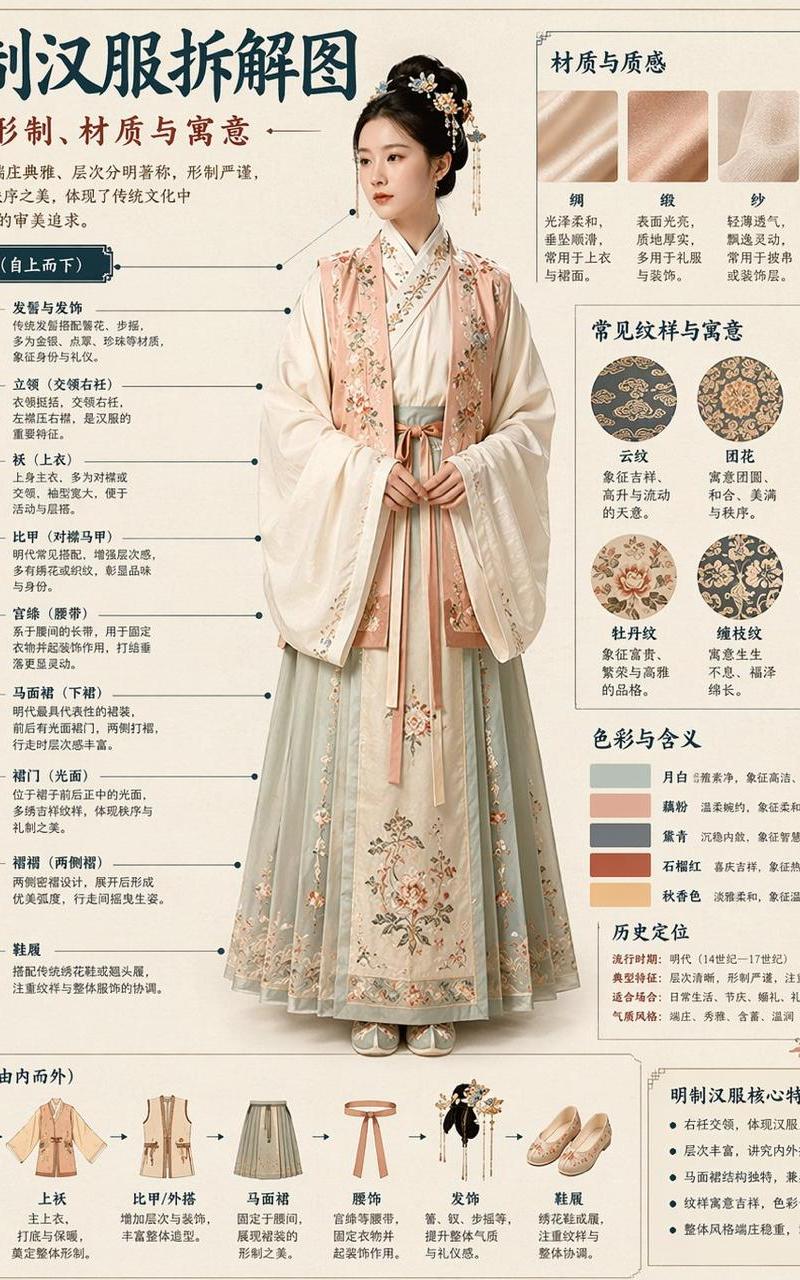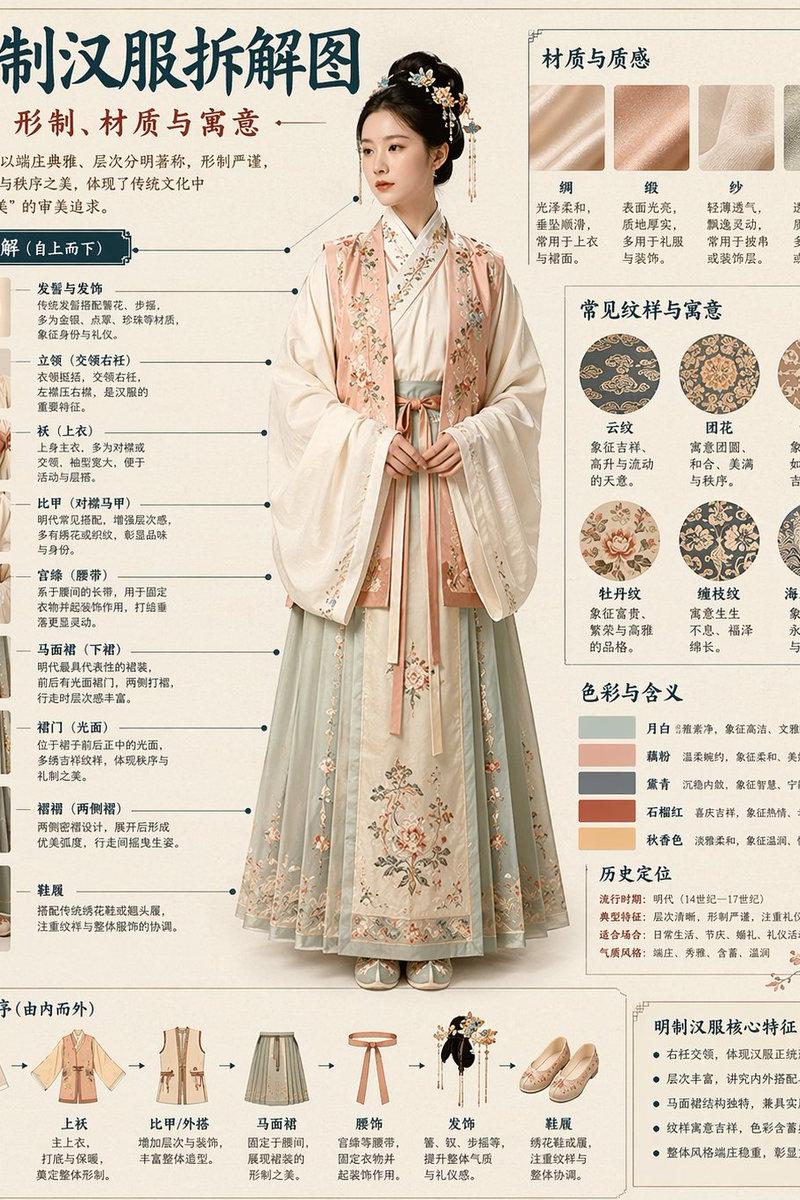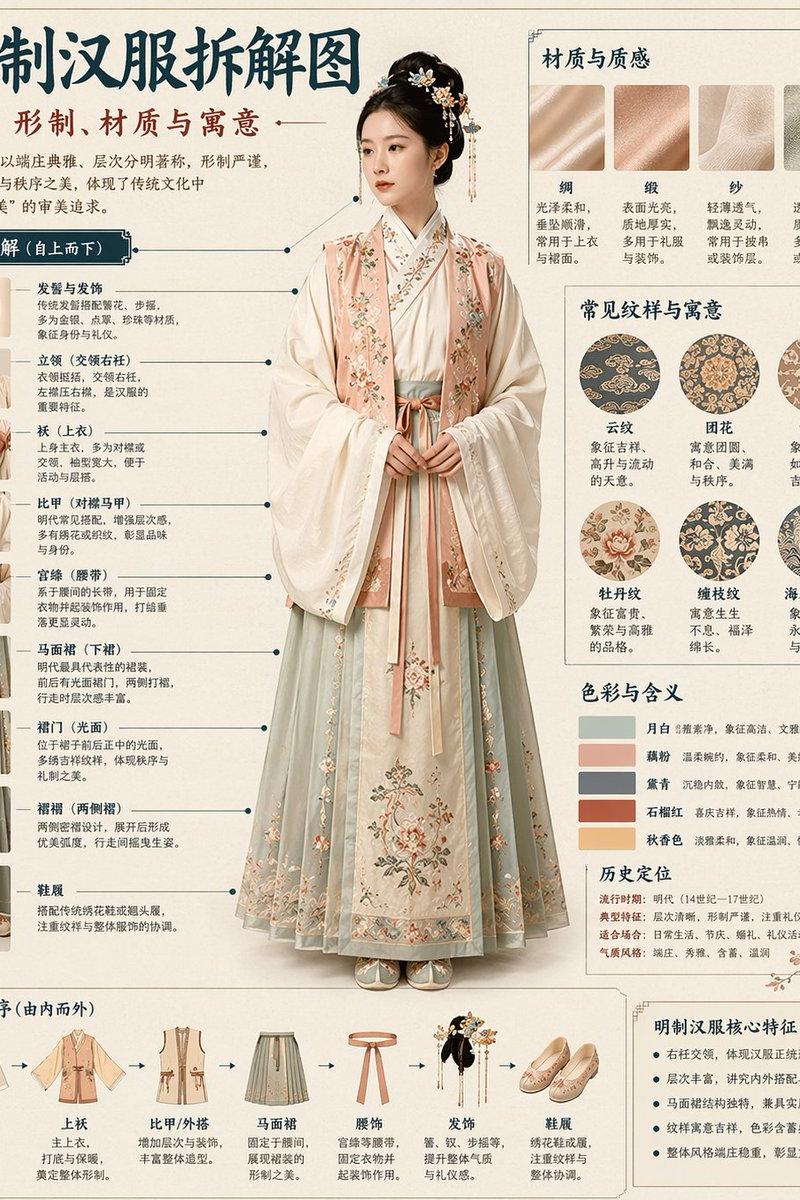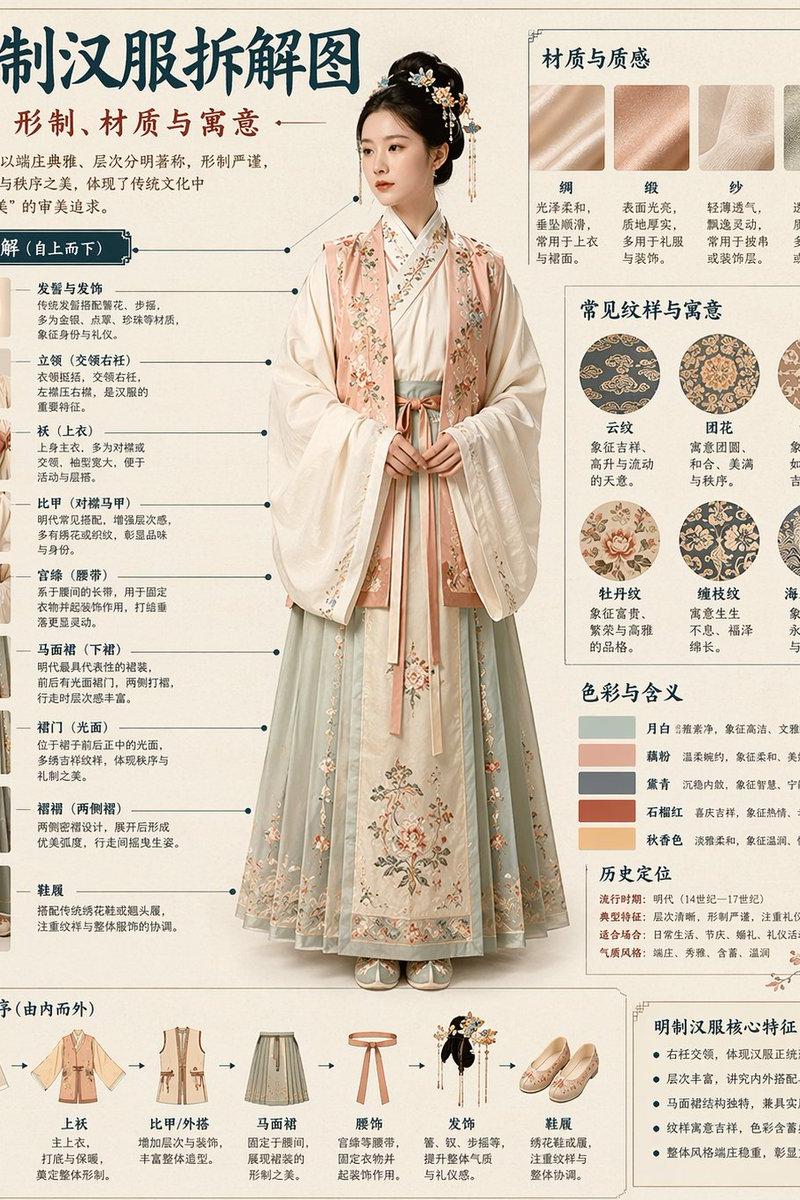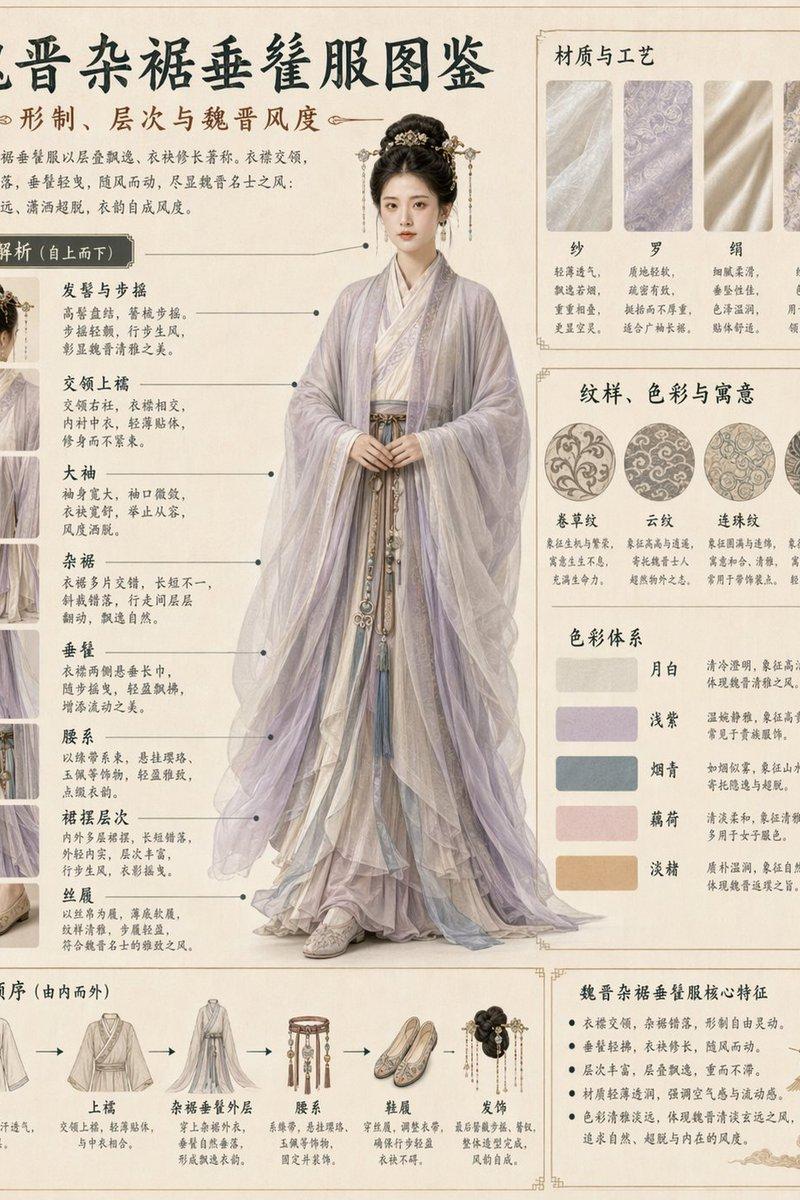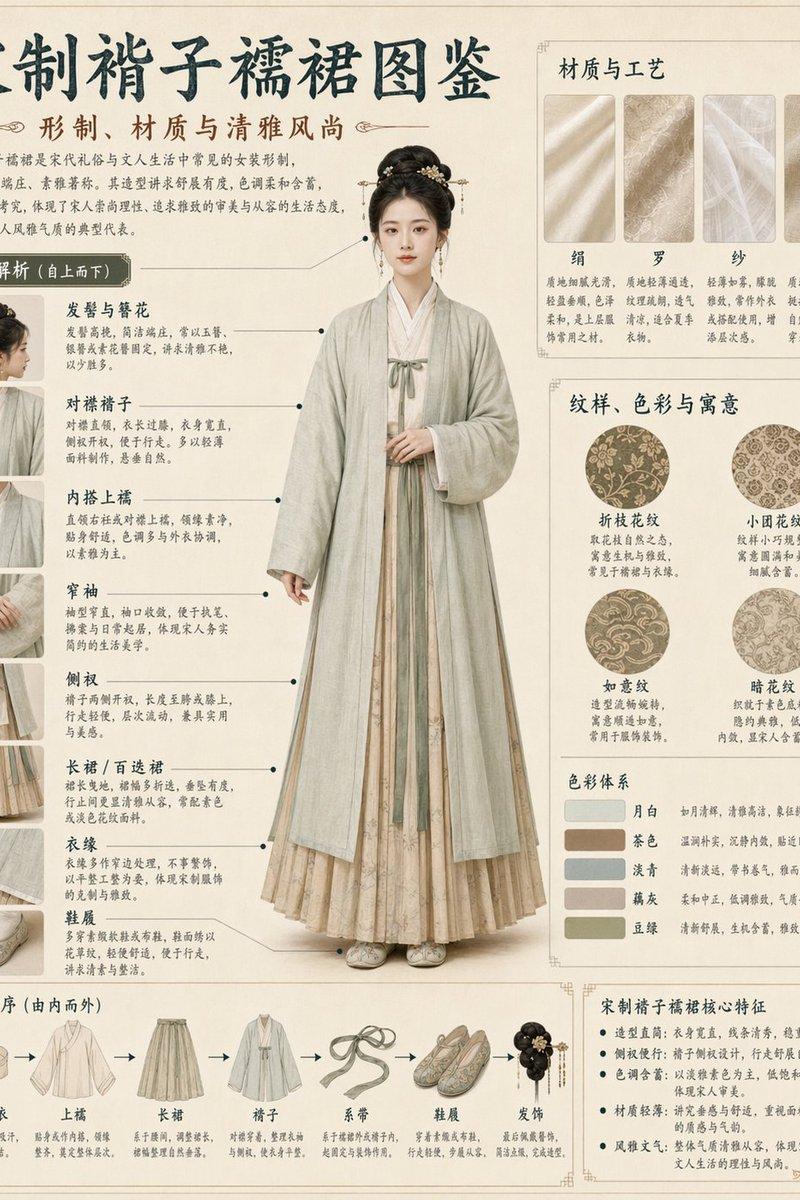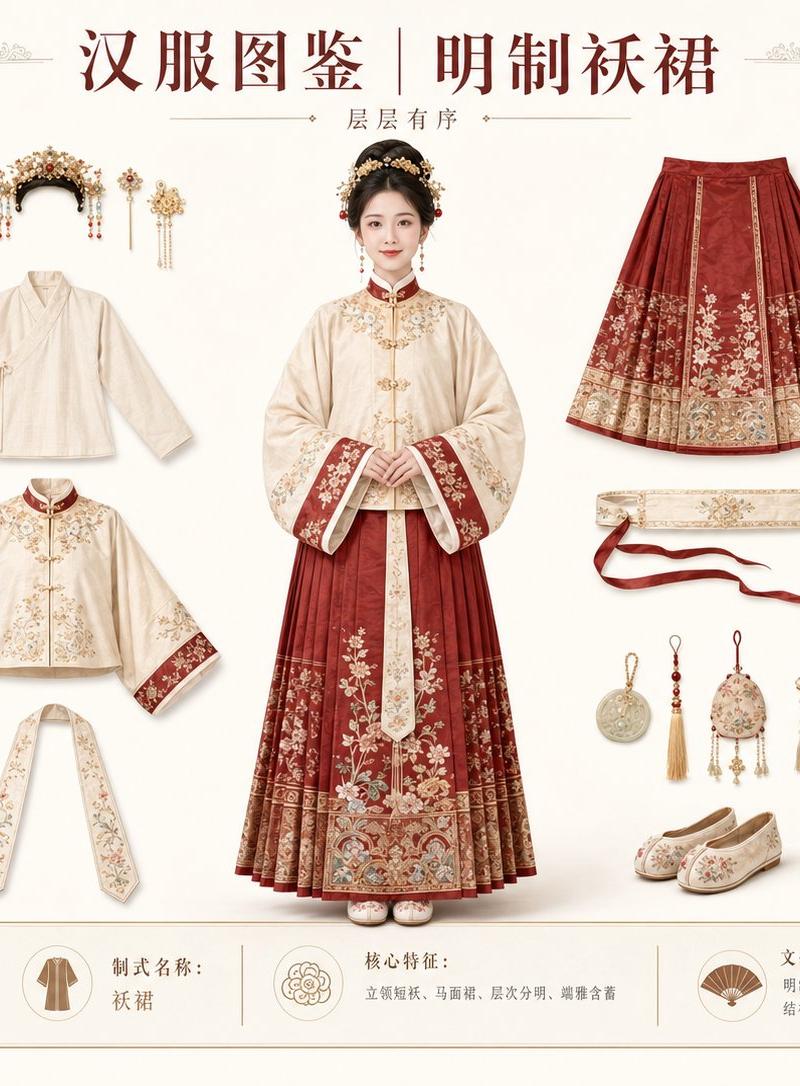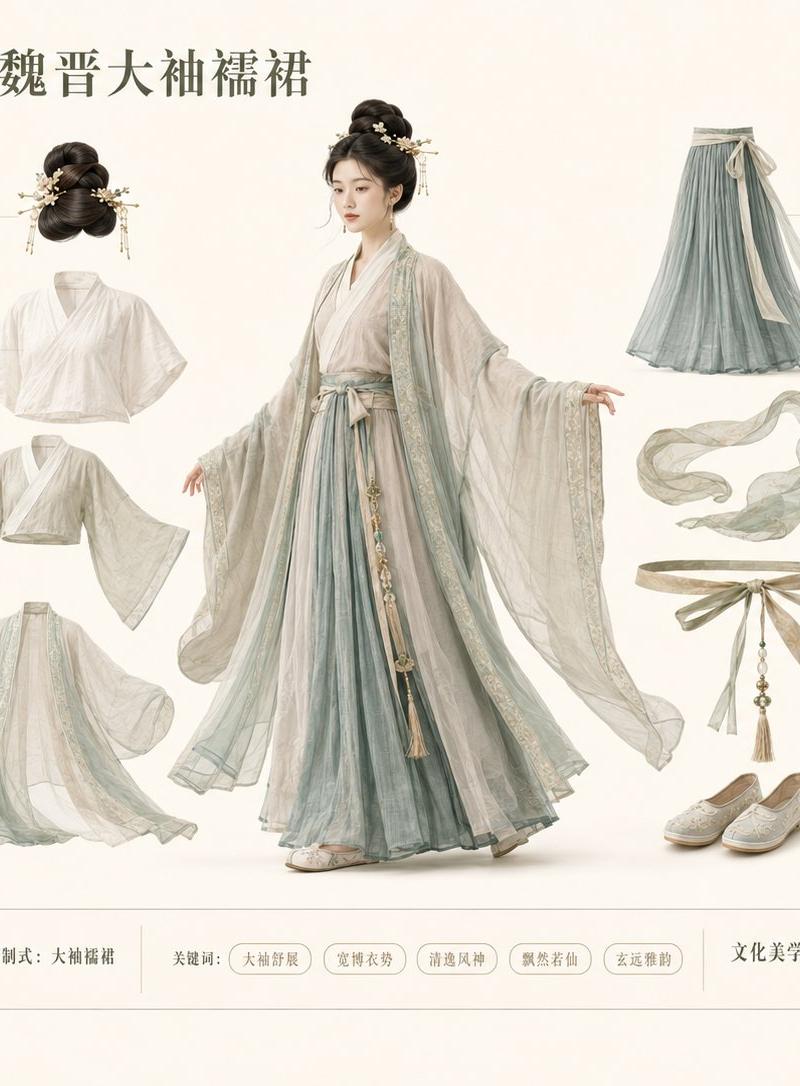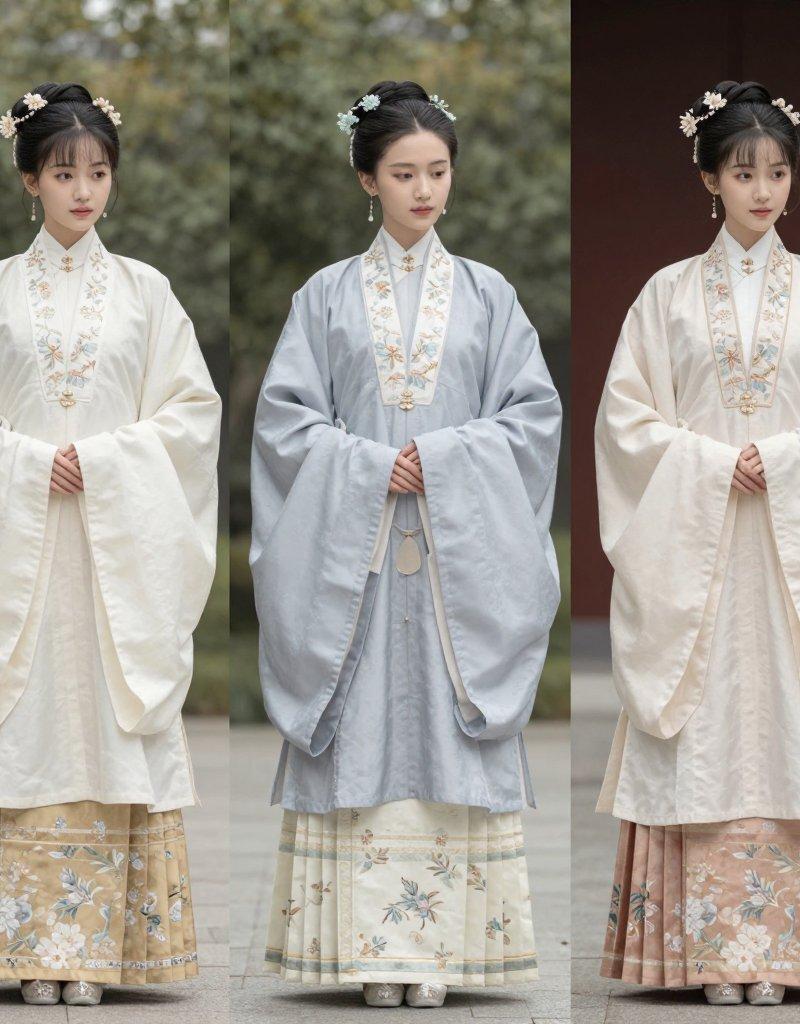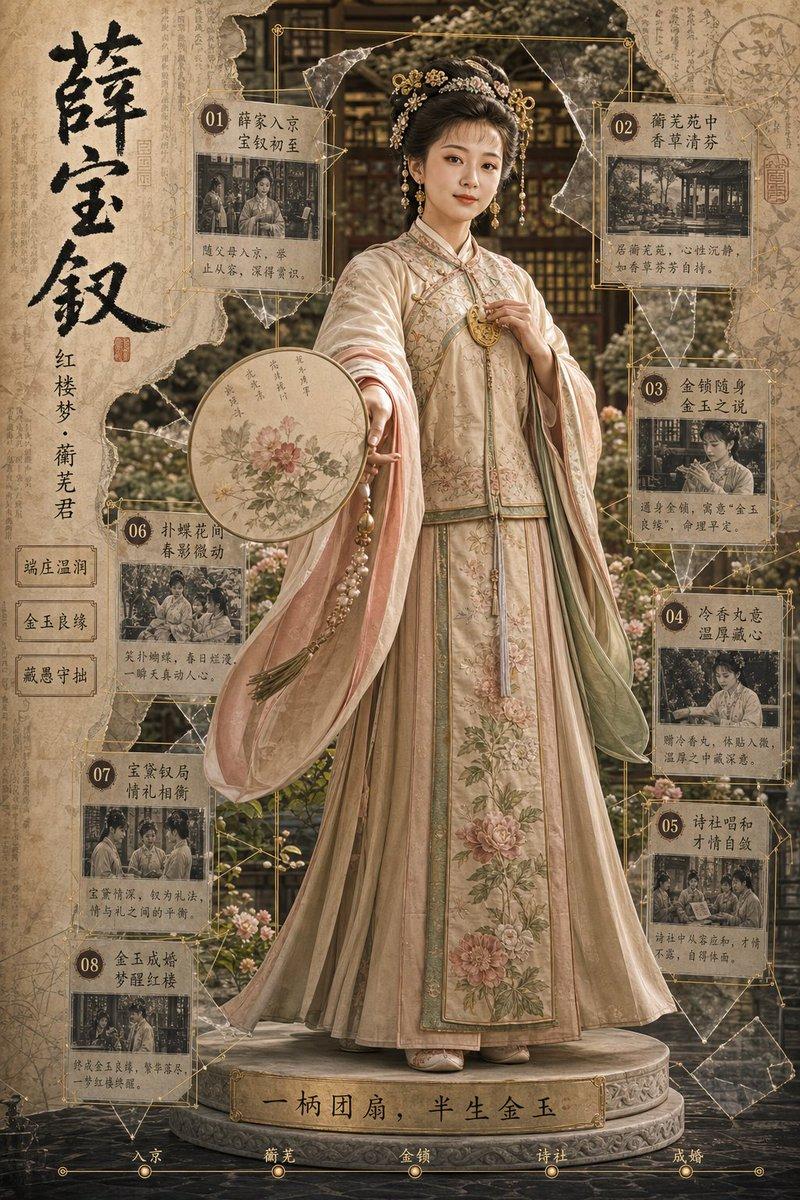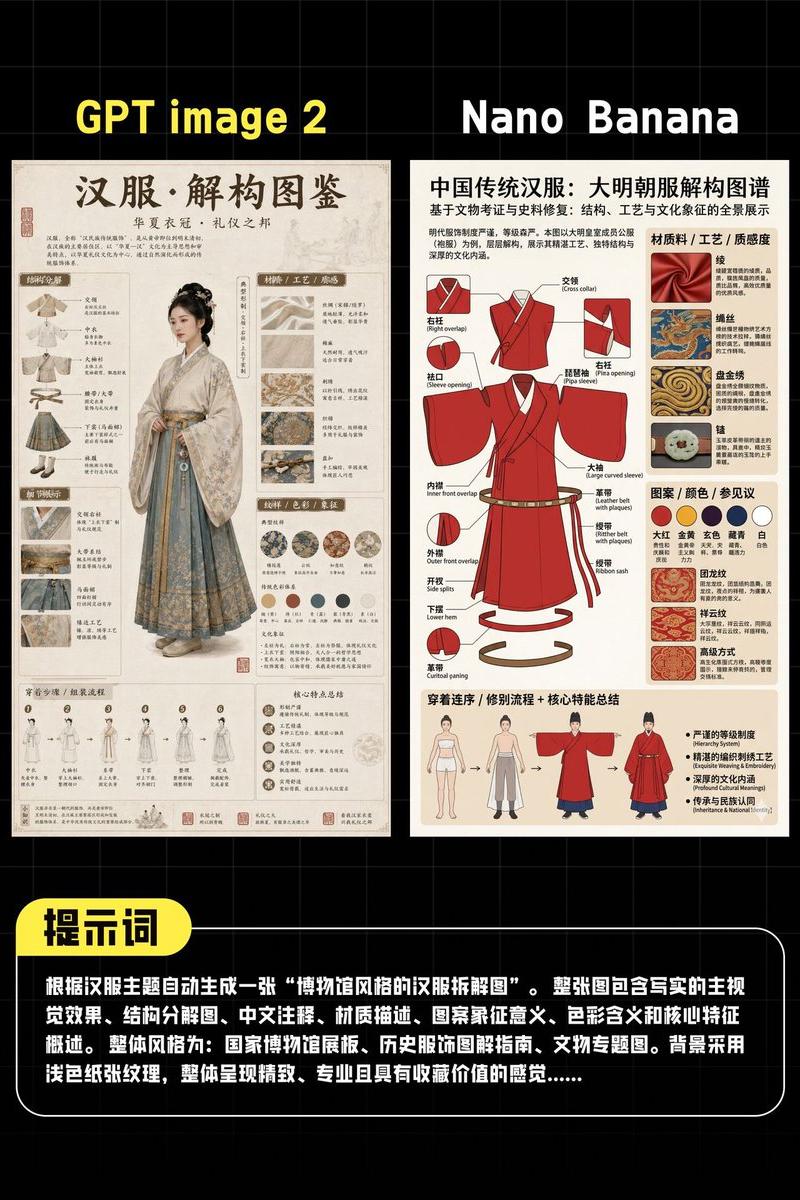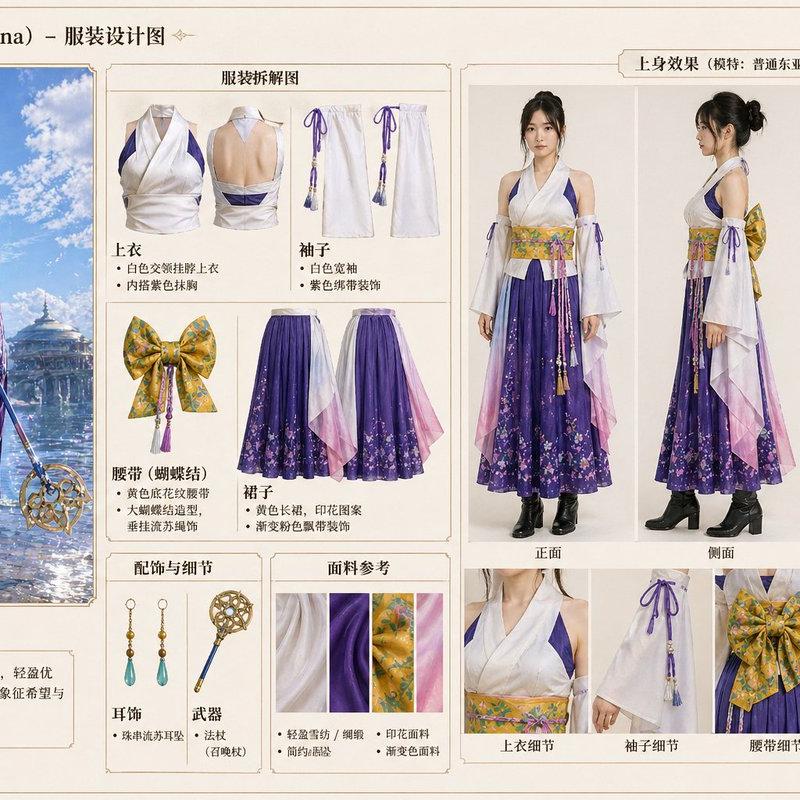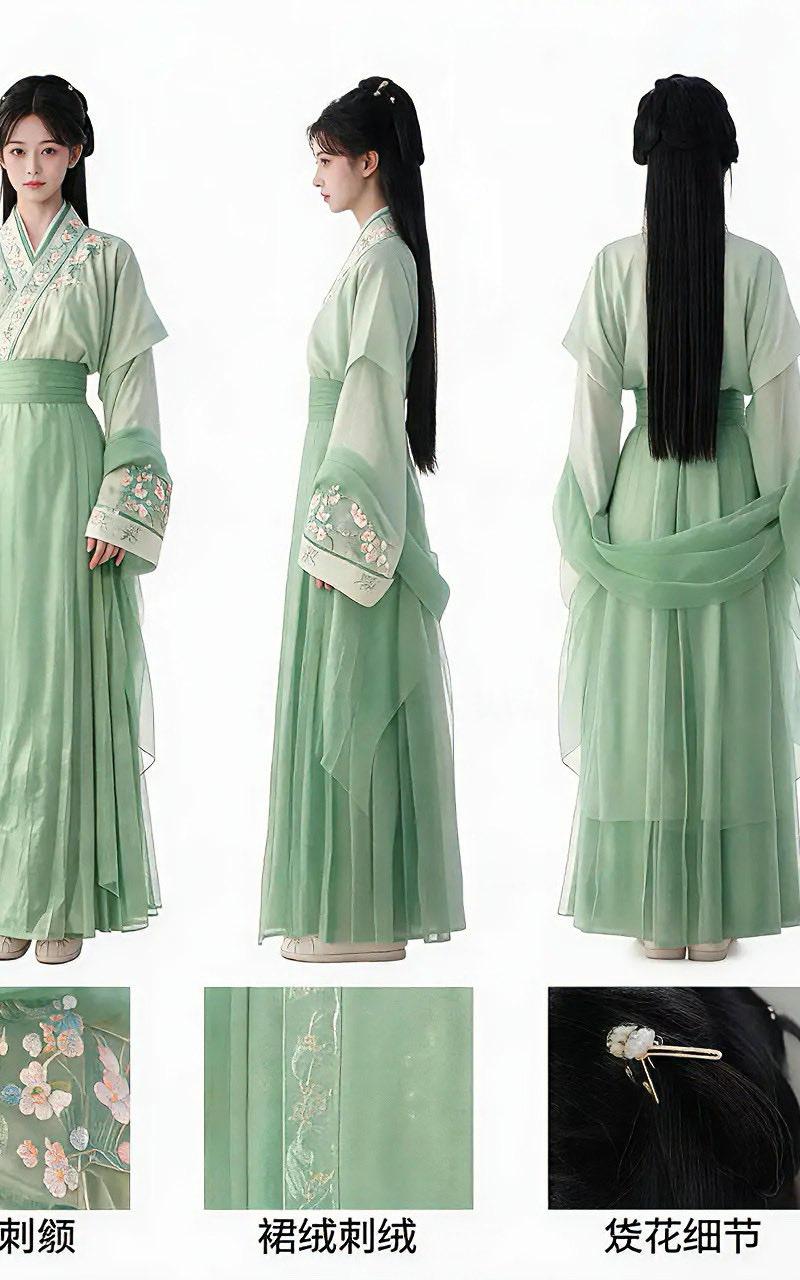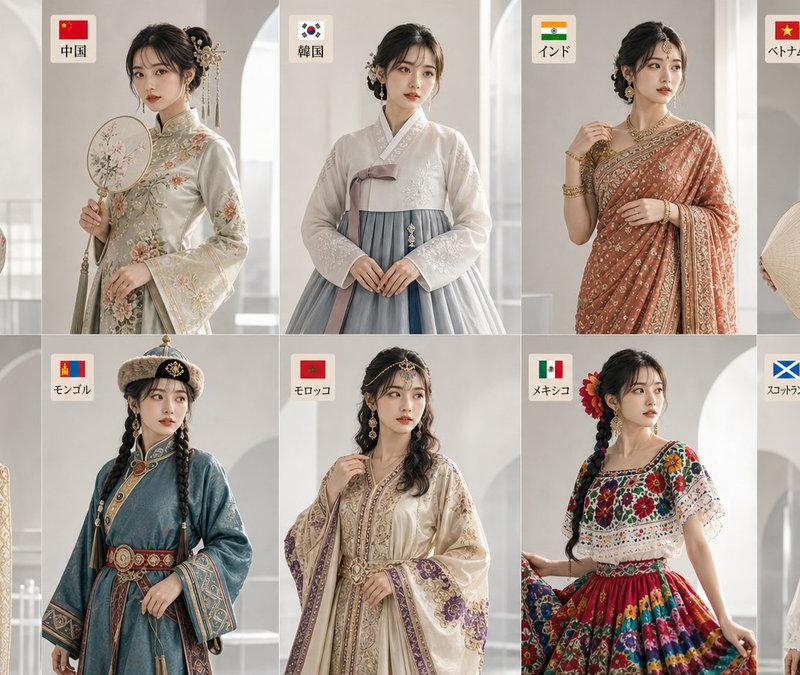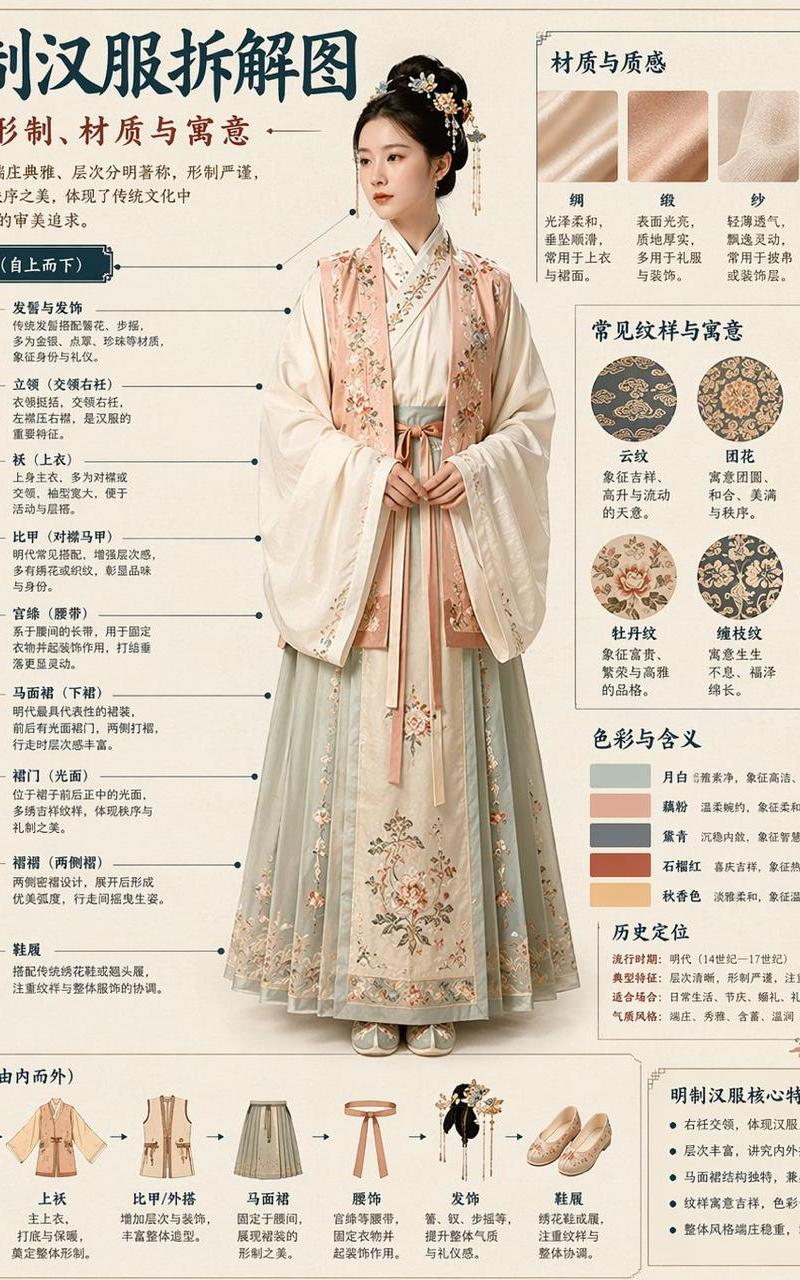
Infographic portrait: GPT Image 2 prompt
Prompt
Please auto-generate a 'museum-encyclopedia-style Chinese deconstruction infographic' based on the [theme].

The entire image should combine a realistic main visual, structural deconstruction, Chinese annotations, material descriptions, pattern symbolism, color meanings, and a summary of core features. Based on the [theme], you should automatically determine the most suitable subject, costume system, object structure, era style, key components, materials and craftsmanship, color scheme, and layout structure — the user does not need to provide any additional information.

The overall style should be: National Museum exhibition board, historical costume encyclopedia, museum special-topic infographic — not an ordinary poster, ancient-style portrait, e-commerce detail page, or anime illustration. The background uses paper textures such as off-white, silk-paper white, or light tea-color, with an overall premium, restrained, professional, and collectible feel.

The layout is fixed as:
- Top: Chinese main title + subtitle + introduction
- Left: structural deconstruction area, with Chinese leader-line annotations on key components and partial close-ups
- Top right: materials / craft / texture area, showing real texture samples with descriptions
- Middle right: pattern / color / symbolism area, showing the main color palette, pattern samples, and cultural explanations
- Bottom: dressing order / composition flowchart + summary of core features

If the theme is suitable for a human display, use a realistic full-body standing figure as the central subject; if it is more suitable for an object or single structure, change to a central deconstruction diagram, but the overall format should remain a complete Chinese infographic. All text must be Simplified Chinese, clear, neat, and readable, with no garbled text, typos, English, or pinyin. Emphasize realistic structure, material differences, cultural explanations, and an encyclopedia-like atmosphere.

Avoid: poster feel, photo-studio feel, e-commerce feel, anime feel, cosplay feel, messy annotations, wrong structure, blurry text, fake materials, excessive decoration.
- Category
- Charts & Infographics
- Model
- GPT Image 2
- Creator
- MrLarus
- Source language
- zh-CN
- Source ID
- awesome-ui-25
- Published
- Apr 29, 2026
Views0