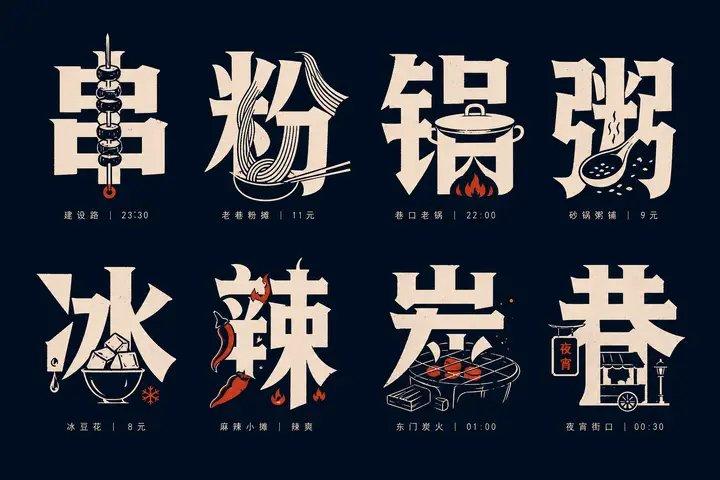
雨天通勤提示矩阵字形图标设计
Prompt
Generate a set of text-graphic integrated glyph icon systems based on any theme: each unit features a large-scale Chinese core character as the main visual. The glyphs maintain readability, weight, hard edges, with a slight sense of manual cutting. Key shapes derived from the theme are embedded inside strokes, replace partial strokes, or are hidden in negative space gaps, allowing the viewer to read the character first and then discover the object within the character, forming a moment where "character meaning and graphic complement each other." The overall layout uses a neat matrix arrangement with stable spacing between units. Beneath each character, tiny auxiliary text is configured, serving only indexing and rhythmic functions; the font weight is light, spacing is tight, alignment is restrained, and it does not compete with the main character. The graphic language consists of high-contrast silhouettes, simplified line engraving, partial line drawing, and solid block surfaces. Embedded objects must fit the stroke flow, appearing both as illustrations and as part of the character, avoiding an independent sticker feel; the complexity of each unit is similar, but the embedding methods must vary, creating a collection-album style of information density and recognition fun. Colors are extracted from the theme's own materials, emotions, and cultural signals, mapped only as character relationships: a large-area, low-brightness pure background provides support, high-brightness main information colors are responsible for glyph and graphic identification, and a small amount of theme accent colors are used only for key details or rhythmic points; maintain clear color scales, clean boundaries, controlled saturation, and calm, precise emotions. Even if the theme requires dark or vivid colors, maintain optical cleanliness, sharp edges, and background transparency, avoiding dirty grays, aging effects, smoke, or mud-colored overlays. The finished product should look like a systematically designed set of themed typeface specimens, combining text readability, graphic memory points, and a compact, orderly layout rhythm. —————— Target: Vertical 3:4, a "Rainy Day Commute Tips" for property or company groups, main characters can be "伞 (Umbrella), 滑 (Slippery), 迟 (Late), 鞋 (Shoes), 车 (Vehicle), 门 (Door)".
- Category
- Charts & Infographics
- Model
- ChatGPT
- Creator
- @xiaoxiaodong01
- Source language
- zh-CN
- Source ID
- 16365
- Published
- Jun 20, 2026
Views40