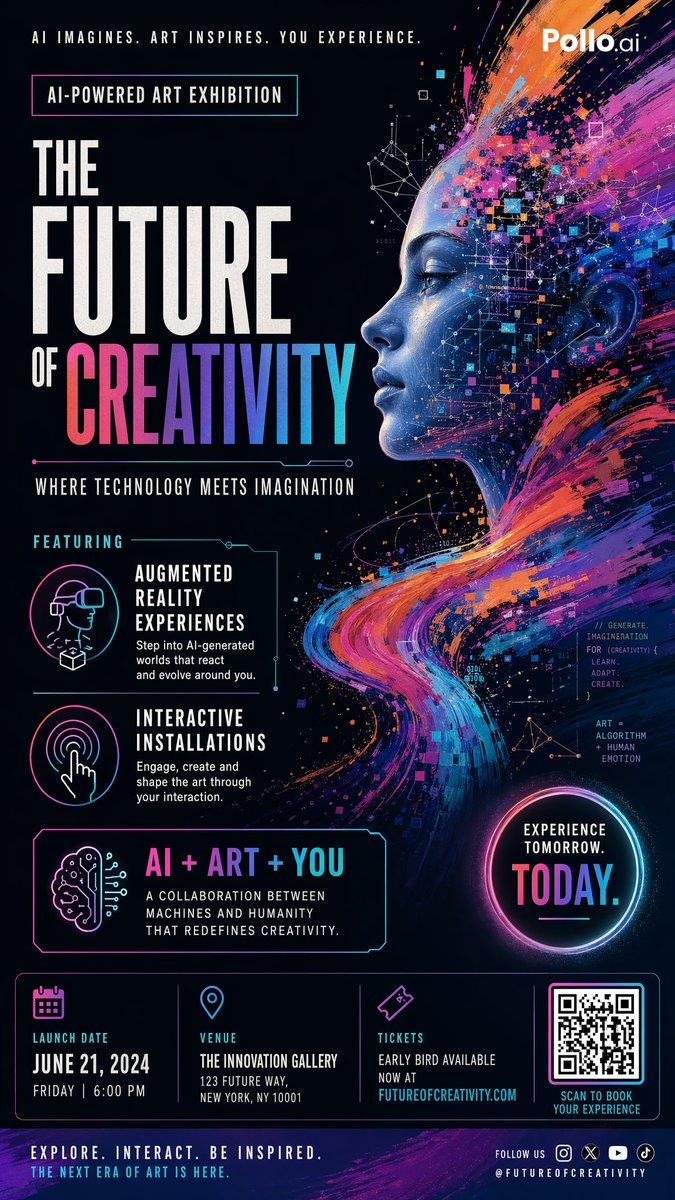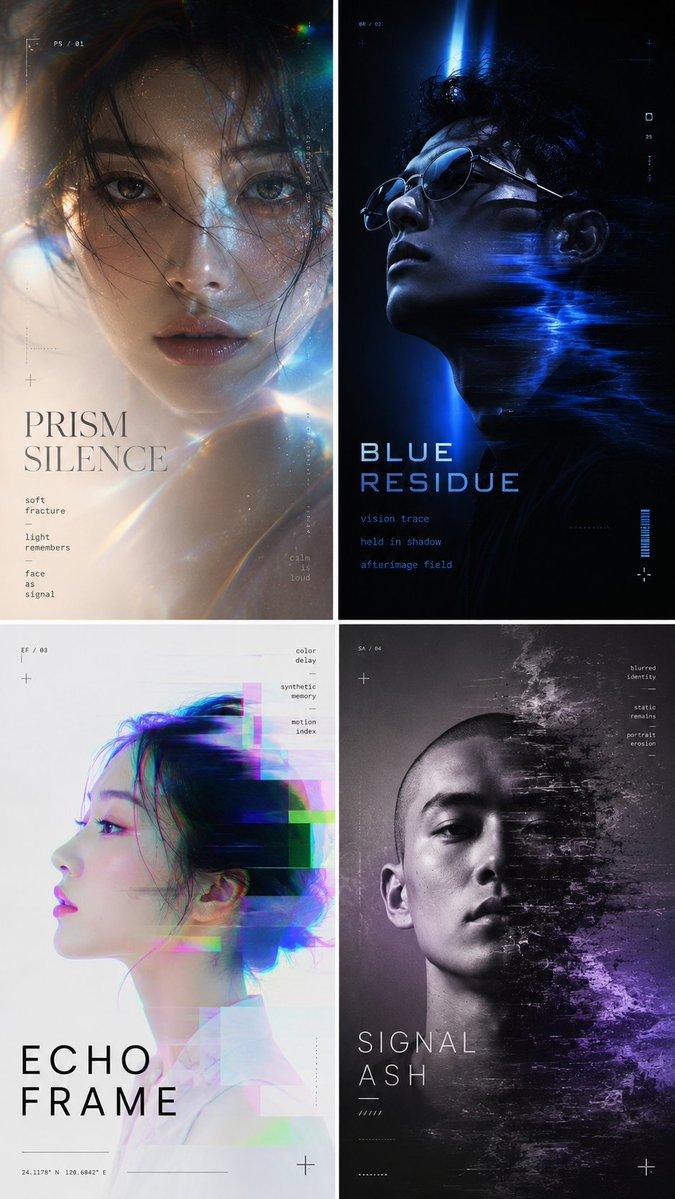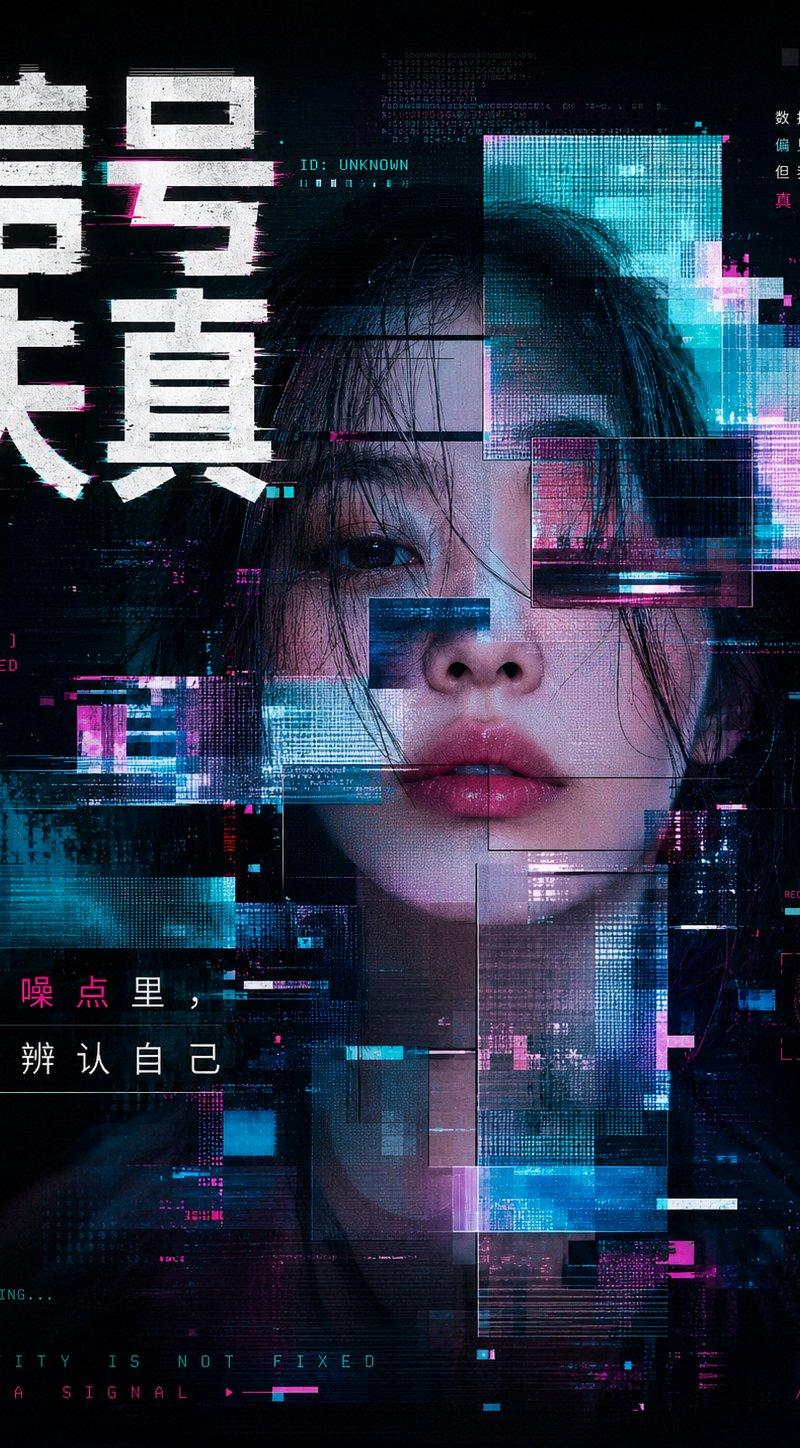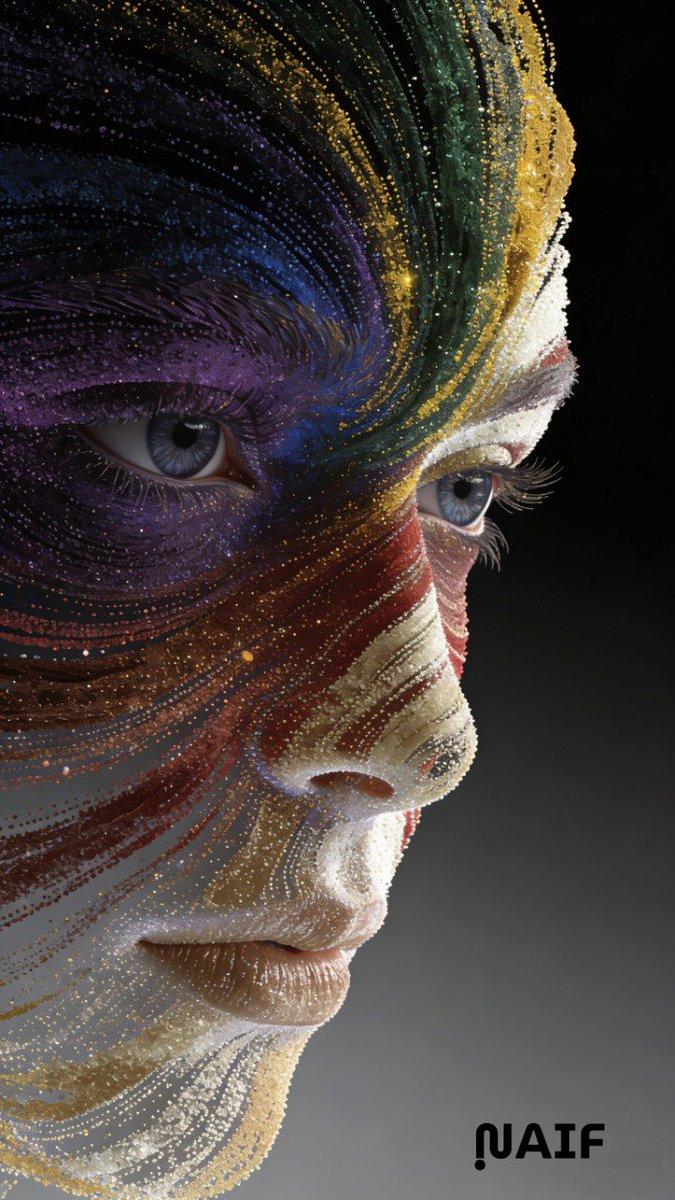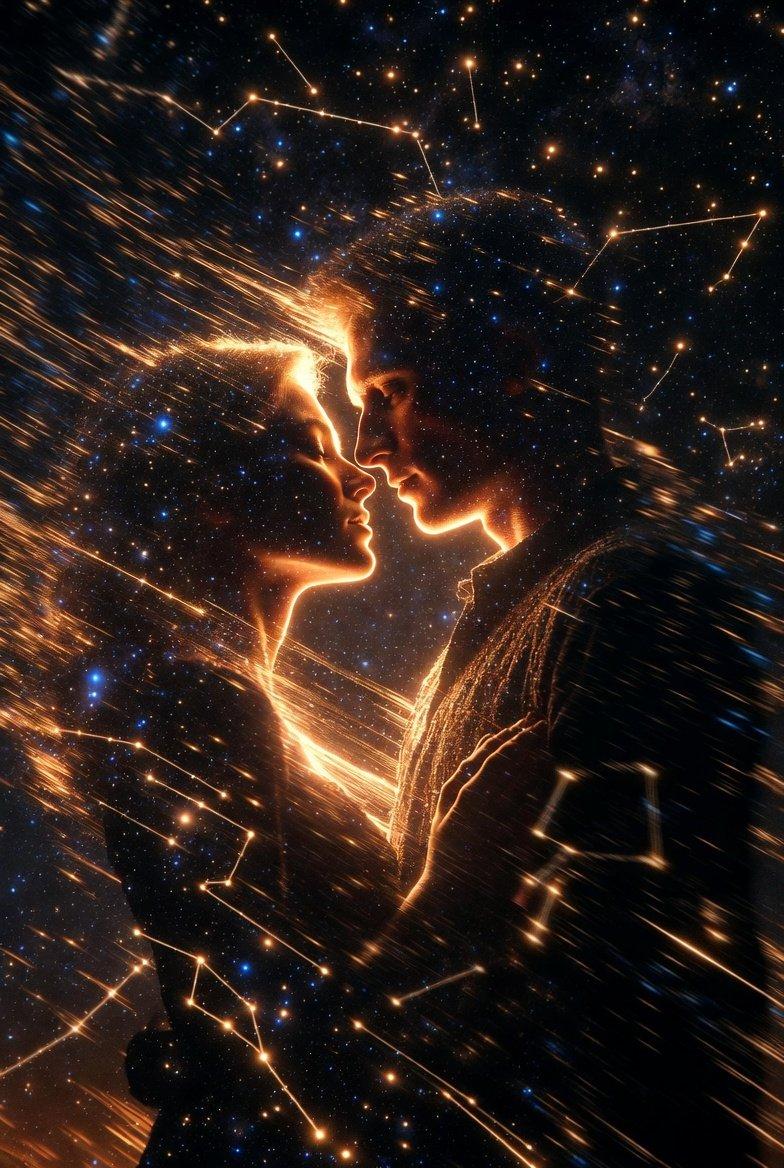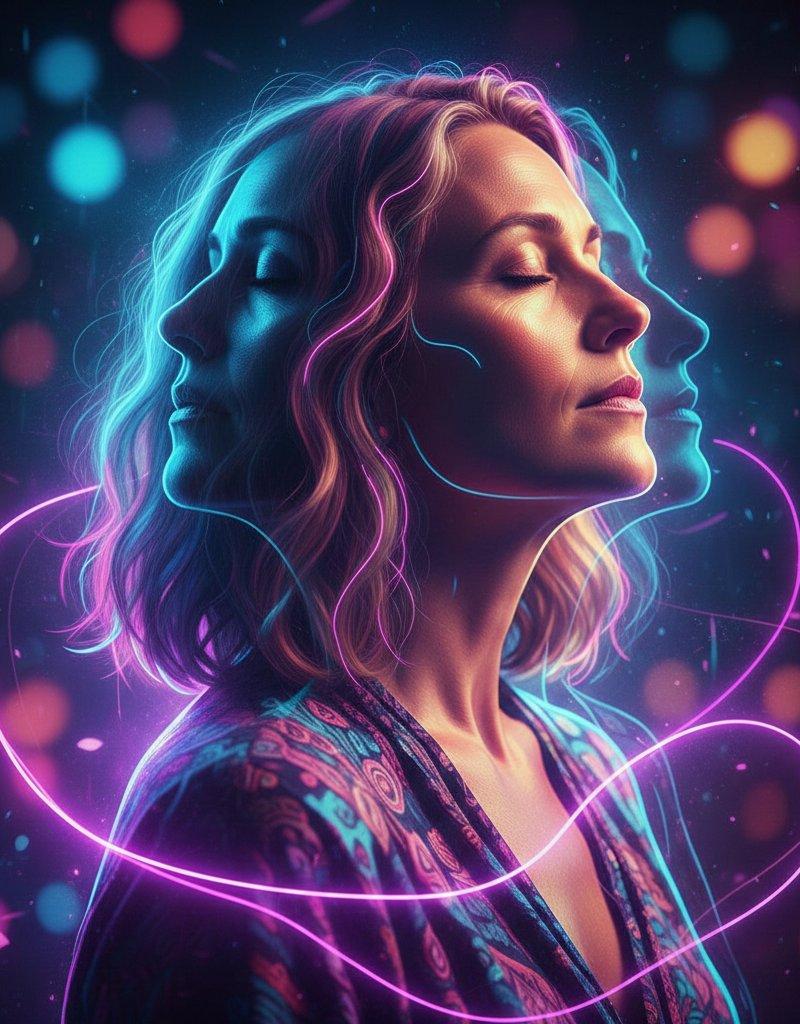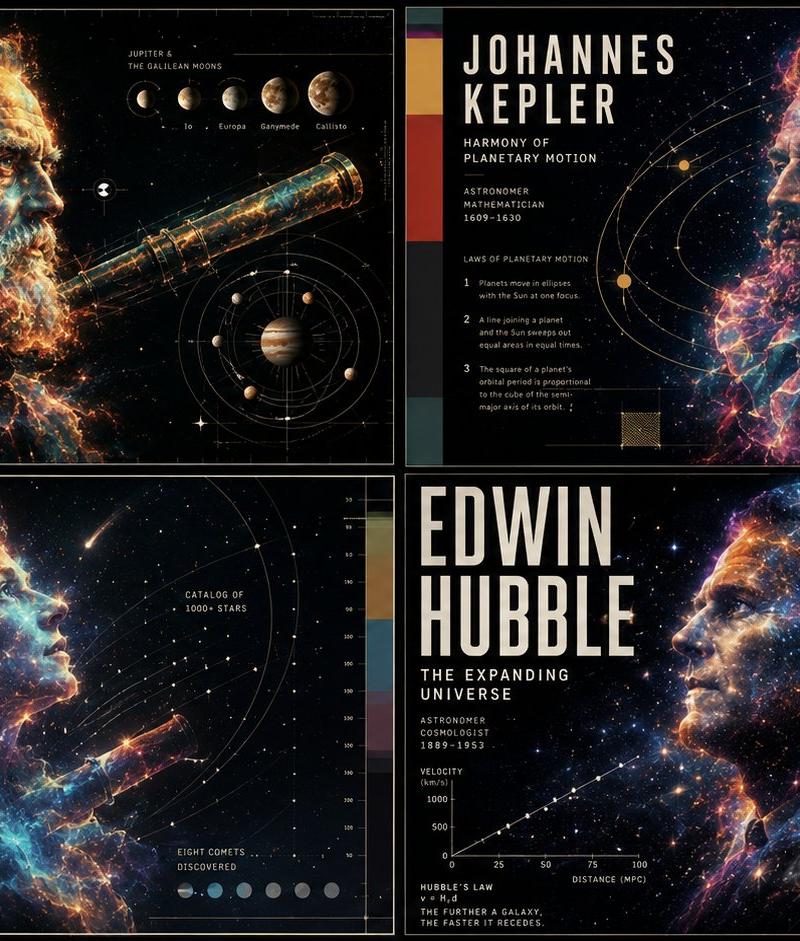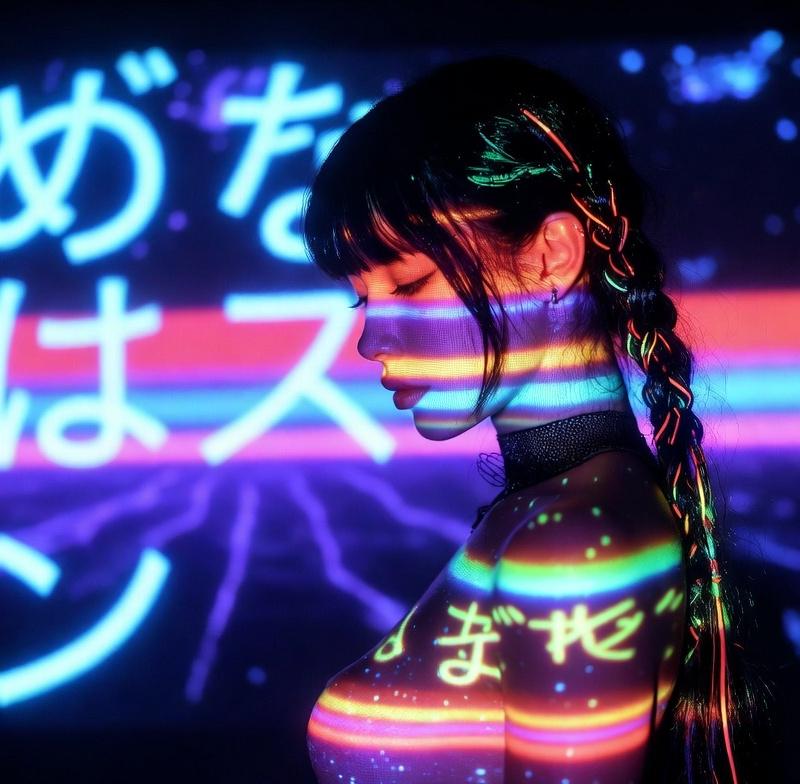
未来主义赛博数字艺术展海报
Prompt
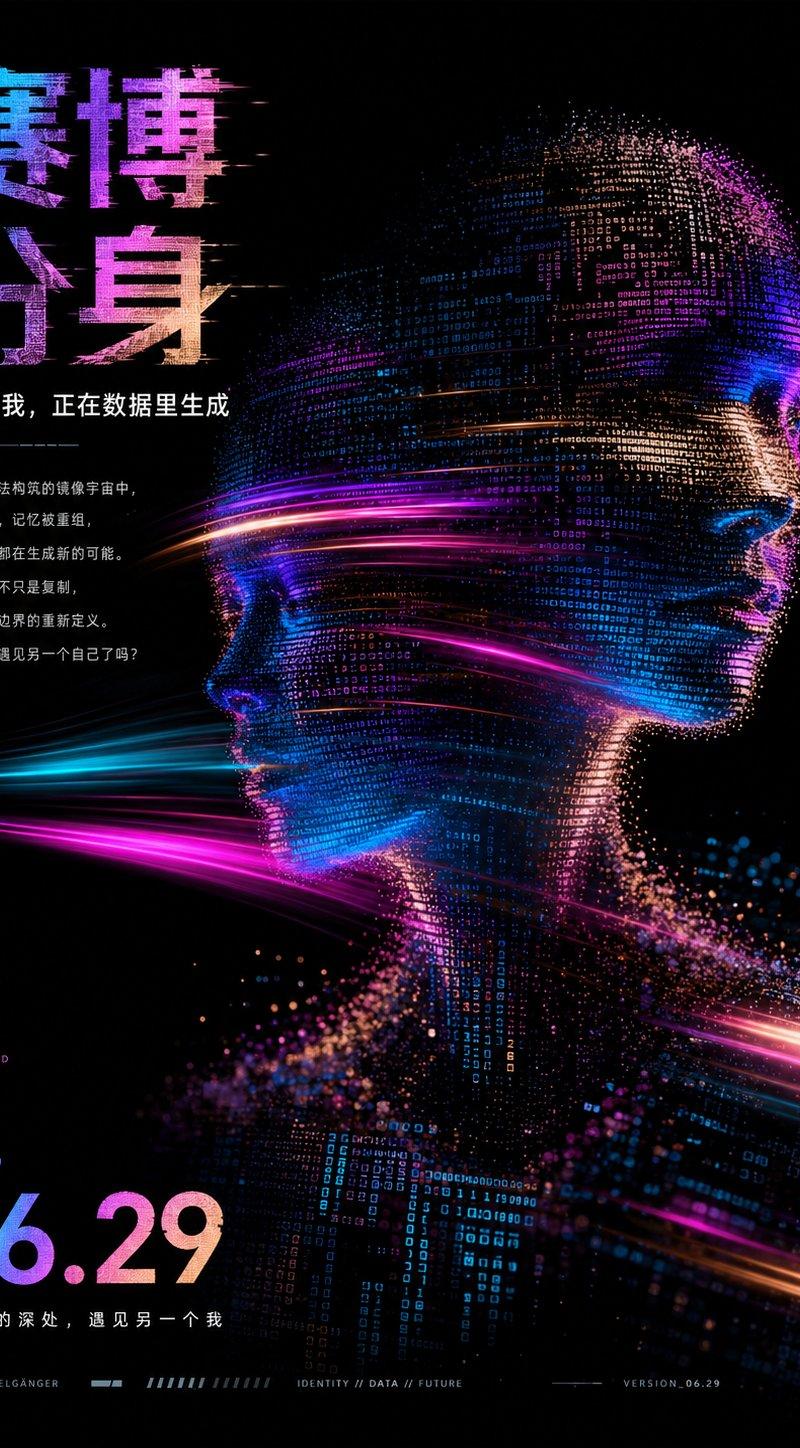
Generate a vertical 3:4 Chinese digital art exhibition poster.
Overall style: Futurism, cyber vision, digital identity, data personality, neon light streams, pixel particles, code matrix, speed motion blur, black background high contrast, Chinese exhibition poster design.

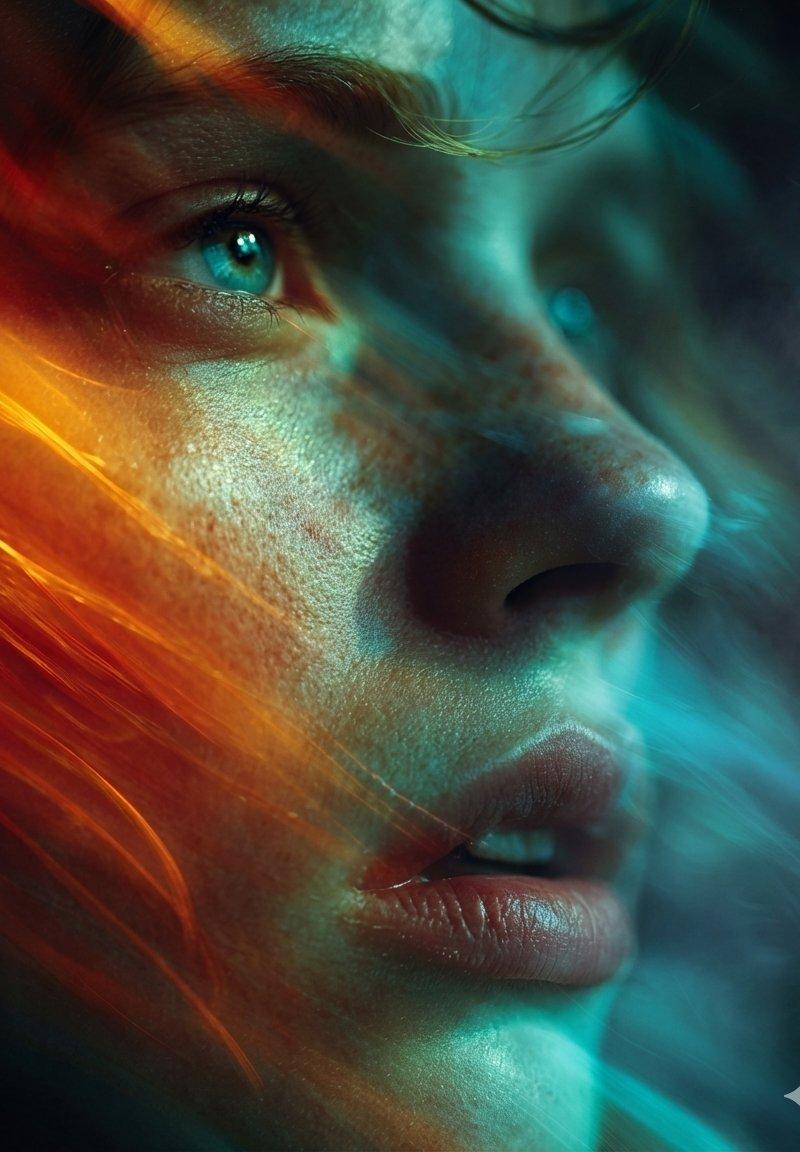
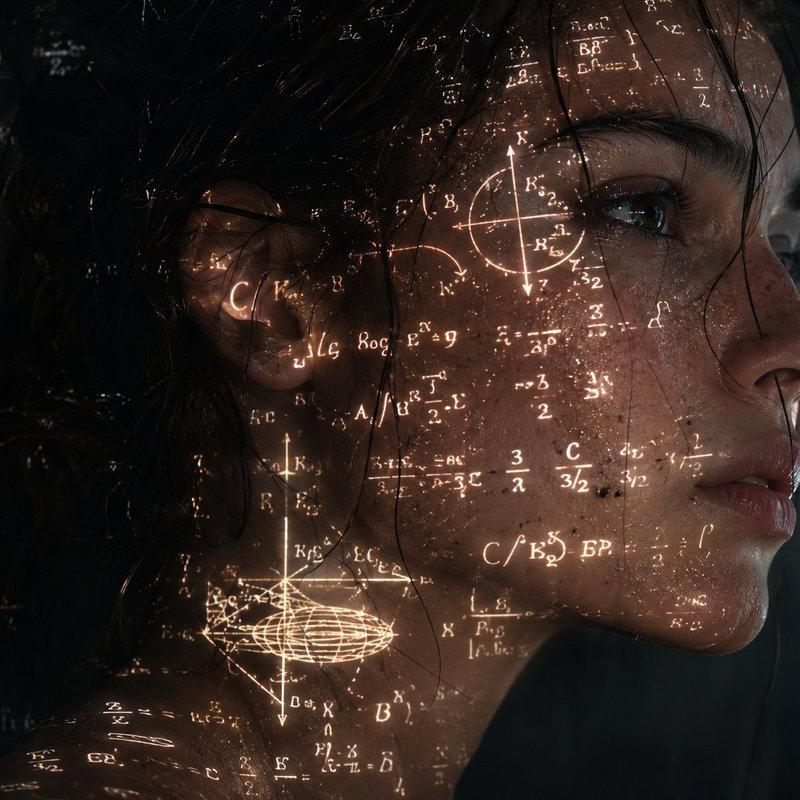
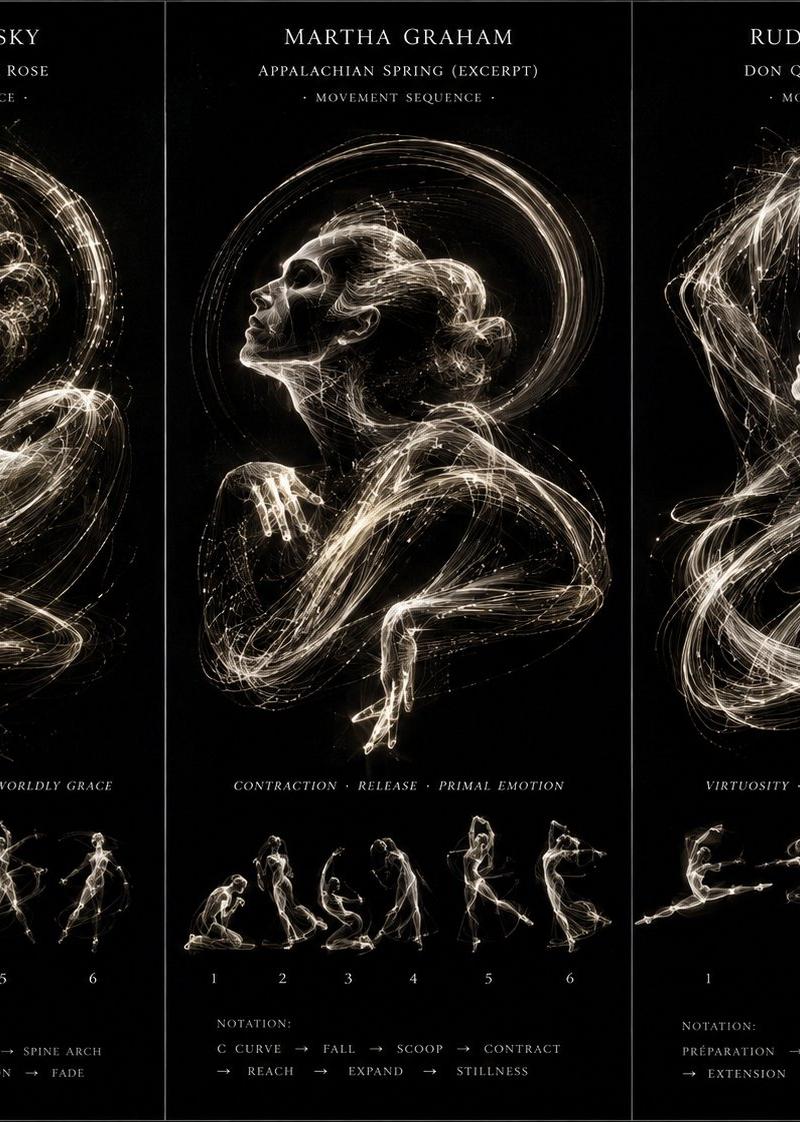
The main subject of the picture is a profile or half-body character silhouette. The character is not a realistic portrait, but is composed of countless tiny data points, digital codes, pixel particles, glowing grids, and information fragments. The character's outline is clear but the edges are dissipating, as if consciousness is being read, uploaded, reorganized, or split. Blue, purple, magenta, cyan, and warm gold data light points are visible inside the character's face and body.

Multiple neon light streams crossing horizontally from the character's body or face are added to the scene, like high-speed data streams, light-speed motion blurs, memory tracks, and signal beams. The colors of the light streams are mainly blue, pink, purple, cyan, and orange-gold, with a sense of speed and energy. Around the character are code waterfalls, digital matrices, particle diffusion, lattice dissipation, and weak glowing noise.

The background is deep black or near-pure black, leaving enough dark space to make the character's light streams and text layout more prominent. The overall image should have the feel of an art exhibition poster, rather than an ordinary sci-fi wallpaper.

The layout must be complete, including:
Main Title "[Main Title]"
Subtitle "[Subtitle]"
A paragraph of Chinese description text
Date "[Date]"
Exhibition Location "[Location]"
Hashtags / info bars / small caption text
Credits can be written as "Visuals: Yang Ge", "Planning: Yang Ge", "Generated by: Yang Ge"

The main title can use a large Chinese font with a slight glitch effect, scanlines, neon gradients, or light-speed motion blur. The body text and information bars should be clear, restrained, like a real exhibition poster. The overall Chinese text must be clear and accurate, not garbled. Small amounts of English can be added as support, but English should not dominate.

Visual temperament keywords:
Digital identity, data skin, light-speed personality, memory motion blur, signal confession, electronic soul, cyber avatar, future consciousness, pixel body, sea of data, consciousness reconstruction, identity upload.
- Category
- Charts & Infographics
- Model
- ChatGPT
- Creator
- @YangOnchain
- Source language
- zh-CN
- Source ID
- 16992
- Published
- Jun 29, 2026
Views13