Infographic / Edu Visual · All Styles · All Ratios
Sort by: Most Relevant
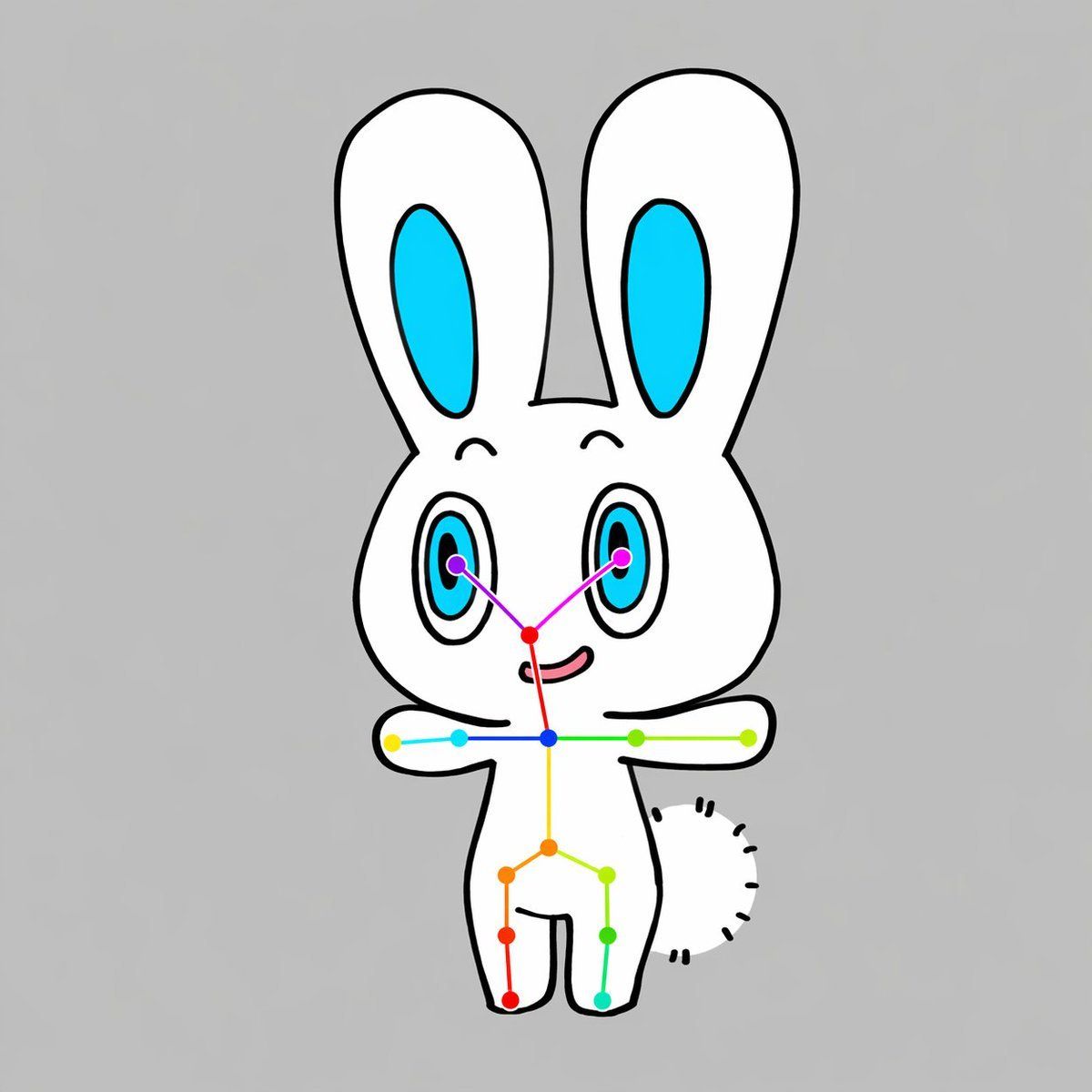
Infographic / Edu Visual - Chibi Character Pose Overlay

Infographic / Edu Visual - Chibi Character Pose Overlay

A simple flat-style illustration prompt for a chibi character with a technical pose-estimation skeleton overlay.

Template

A simple centered full-body illustration of a cute chibi {argument name="animal type" default="rabbit"} character on a plain {argument name="background color" default="light gray"} background, drawn in a flat cartoon style with thick clean black outlines and minimal shading. The character has a white body, a large rounded head, 2 tall upright ears with bright cyan inner ear shapes, 2 large oval eyes with cyan irises, black pupils, and small highlights, tiny curved eyebrows, a small red-pink nose area, and a slight smiling mouth. The pose is front-facing with both arms stretched straight out horizontally to the sides, legs apart in a simple standing pose, and a short fluffy tail visible on the right side of the body as a curved semicircle made of short black dash marks. Overlay a clear OpenPose-style skeleton marker system on top of the character: 2 purple eye keypoints, 1 red nose keypoint, 1 blue neck keypoint, 2 shoulder keypoints, 2 elbow keypoints, 2 wrist keypoints, 1 yellow spine or pelvis center point, 2 hip keypoints, 2 knee keypoints, and 2 ankle keypoints, for a total of 17 colored points connected by thin colored lines across the face, shoulders, torso, arms, and legs. Use vivid point colors including purple, magenta, red, blue, cyan, green, yellow, orange, and teal so the pose overlay is clearly visible. Keep the composition vertically centered, symmetrical, clean, and diagram-like, with the cute mascot character and pose-estimation overlay as the sole subject.

Infographic / Edu Visualawesome-gpt-image-2GPT Image 2Infographic / Edu VisualUse template
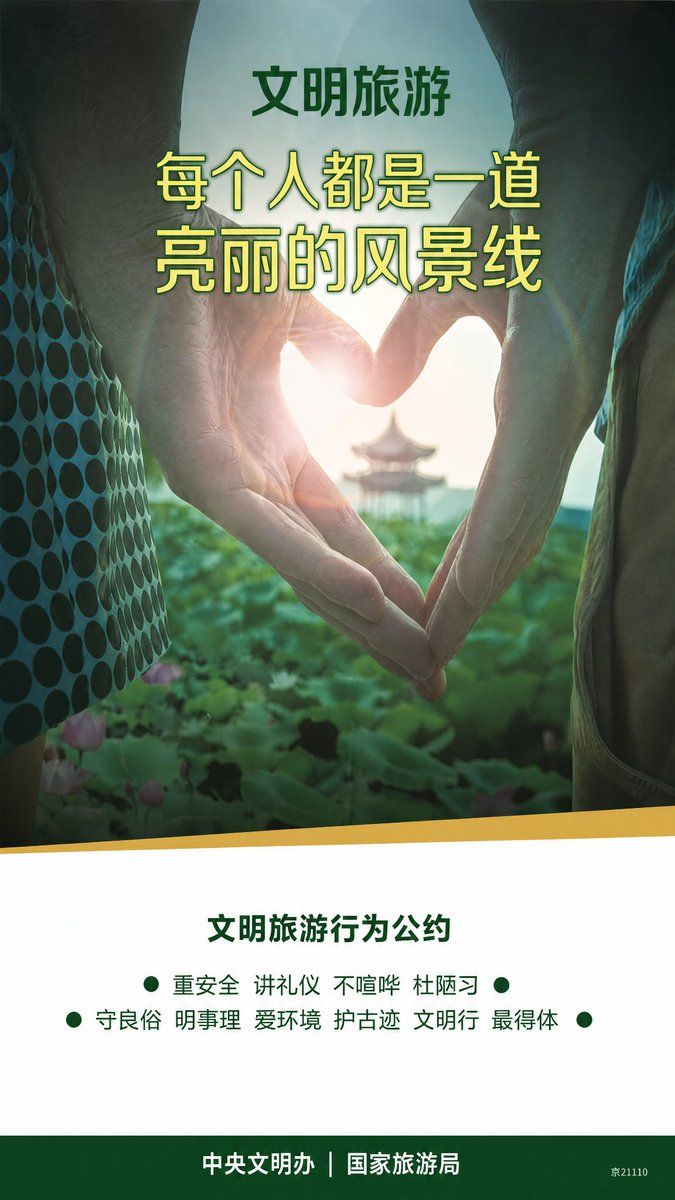
Infographic / Edu Visual - Clean Subway Tourism Poster Recreation

Infographic / Edu Visual - Clean Subway Tourism Poster Recreation

Creates a straightened, polished digital version of a photographed Chinese subway tourism poster for reuse as a clean public-service poster design.

Template

Using REFERENCE_0 as the source, extract and recreate only the transit poster artwork as a clean, front-facing digital poster, removing the subway wall, frame, glass glare, perspective distortion, wrinkles, reflections, and surrounding train interior. Preserve the original poster design and Chinese copy, but make it look like a professionally typeset vertical public-service poster. Canvas: vertical 9:16 poster, full bleed, straight-on view. Image treatment: keep the same central tourism photo concept from the reference: two hands forming a heart shape around the sun, with a soft pavilion and green lotus scenery in the distance. Make the photo cleaner, brighter, more cinematic, and centered, while retaining the same overall crop and mood. Layout: top image section fills most of the poster; lower white information panel with a slightly diagonal yellow divider at the top; dark green footer bar at the bottom. Text to preserve and typeset clearly: - Top small heading: {argument name="top heading" default="文明旅游"} - Main headline in two large yellow-green lines: {argument name="main headline" default="每个人都是一道\n亮丽的风景线"} - Lower section title: {argument name="section title" default="文明旅游行为公约"} - Lower pledge items: use exactly 10 items, arranged in two centered rows with green bullet dots: {argument name="pledge items" default="重安全、讲礼仪、不喧哗、杜陋习、守良俗、明事理、爱环境、护古迹、文明行、最得体"} - Footer text: {argument name="footer text" default="中央文明办|国家旅游局"} Typography and color: bold dark green Chinese heading, large yellow headline with green outline/shadow, clean dark green lower text, white panel, yellow accent stripe, dark green footer. Keep the small code “京21110” at the lower right. Do not add extra text, logos, people, borders, or mockup environment.

Infographic / Edu Visualawesome-gpt-image-2GPT Image 2Infographic / Edu VisualUse template
Infographic / Edu Visual - Codex Jigsaw Puzzle Tech Banner

Infographic / Edu Visual - Codex Jigsaw Puzzle Tech Banner

A wide editorial tech banner using interlocking puzzle pieces, bold Chinese headline typography, and small AI workflow UI motifs to illustrate Codex as the next missing piece.

Template

Goal: Create a wide editorial hero banner about {argument name="headline topic" default="Codex的下一块拼图"}, showing a jigsaw-puzzle metaphor for AI coding, visual design, and missing capabilities. Canvas: Ultra-wide horizontal banner, approximately 5:2 aspect ratio, dark charcoal technical background with faint grid lines, subtle blueprint marks, tiny dots, and thin circuit-like guide lines. Center the artwork with a large off-white paper/cardboard jigsaw puzzle assembly casting soft shadows. Layout: Use exactly 15 visible puzzle elements: 13 off-white connected puzzle pieces forming a rectangular mosaic, 1 vivid cobalt-blue puzzle piece inserted at the bottom-right edge, and 1 dashed-outline empty missing-piece slot immediately to the right of the blue piece. The puzzle should look physical, with rounded tabs and sockets, slight bevels, paper texture, seams, grime, and realistic shadowing. Text content: The main typography dominates the puzzle surface. Use huge bold black sans-serif Chinese type reading {argument name="main title text" default="Codex的"} across the top row and {argument name="subtitle text" default="下一块拼图"} across the middle row. Make the letters oversized, cropped slightly by puzzle seams, and integrated into the tile layout. Keep the text crisp and high contrast. Visible graphic elements: Include exactly 7 small embedded UI/diagram motifs on puzzle pieces: 1 dark code editor panel in the lower-left with short colored code lines and a small </> symbol; 1 pie chart combined with a small bar chart along the lower middle; 1 simple node-and-connector flow diagram near the lower center-right; 1 bullet-list panel with three round bullets to the right of the flow diagram; 1 user profile card in the upper-right with avatar icon and horizontal text lines; 1 small spreadsheet/dashboard grid in the top-right corner with gray cells and one blue highlighted cell; 1 document/image card on the right side with small mountain thumbnail lines, overlapped by a blue chat bubble containing two white dots and two white horizontal lines. Visual style: Premium tech editorial illustration, cinematic lighting, tactile paper puzzle texture, muted monochrome palette of black, warm off-white, gray, and accent cobalt blue {argument name="accent color" default="cobalt blue"}. Add subtle scratches, dust, and paper grain. Use realistic shadows between pieces, but keep the whole image clean and readable. Constraints: No people, no extra logos, no watermark, no random English words beyond tiny unreadable code strokes, and no additional large text. The blue puzzle piece should feel like the key missing component that completes the system, while the dashed empty slot hints that another piece is still absent.

Infographic / Edu Visualawesome-gpt-image-2GPT Image 2Infographic / Edu VisualUse template
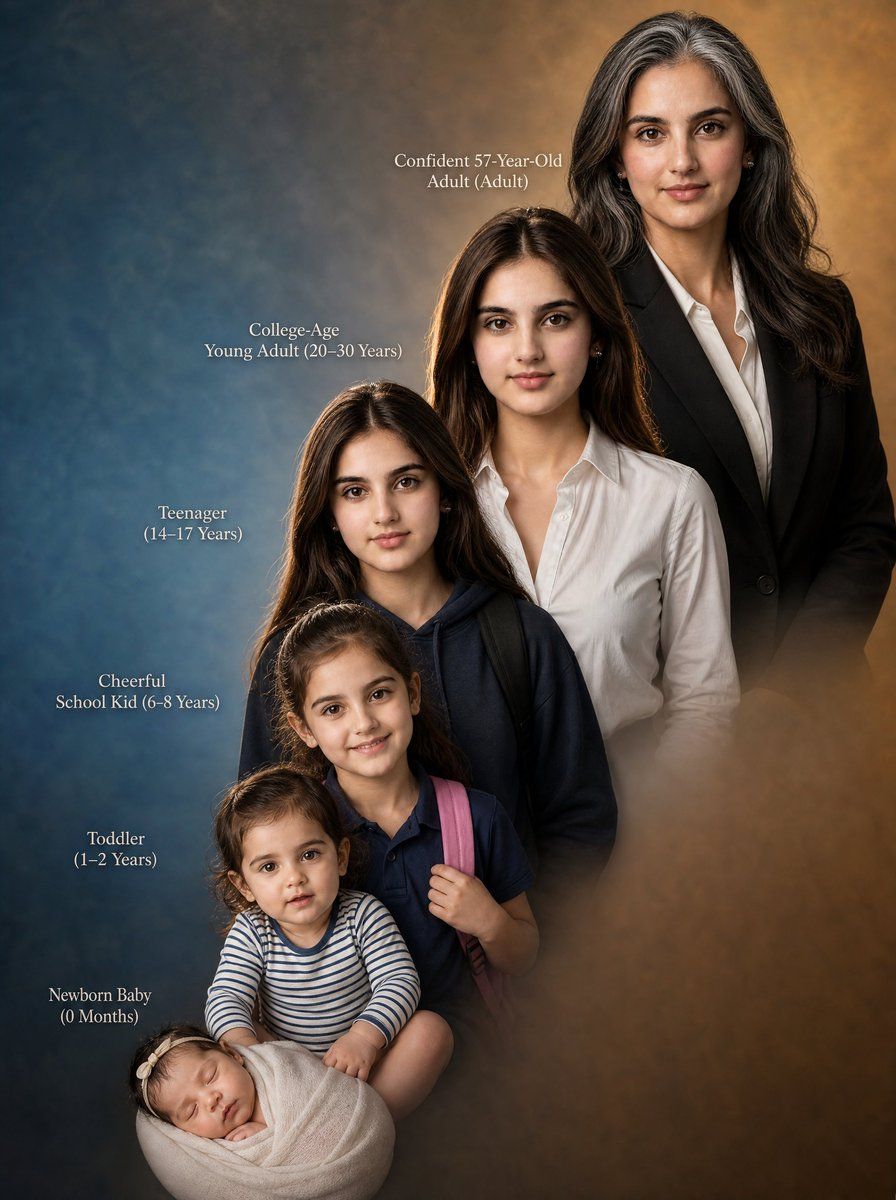
Infographic / Edu Visual - Female Life Progression Portrait

Infographic / Edu Visual - Female Life Progression Portrait

A vertical cinematic composite portrait showing one woman across six life stages from newborn to mature adult, useful for viral age-progression imagery.

Template

Create a meticulously detailed vertical composite studio photograph showing the life progression of the same {argument name="gender" default="female"} person from birth to mature adulthood, with all ages sharing the same recognizable identity, facial structure, eyes, nose, lips, skin tone, and family resemblance. Canvas: portrait orientation, about 3:4, cinematic fine-art photography. Composition: arrange exactly 6 versions of the same person in a diagonal ascending timeline from the lower left foreground to the upper right background, each progressively larger and older, partially overlapping like a layered generational portrait. The 6 labeled stages must be: 1) “Newborn Baby (0 Months)” at the bottom left, swaddled in a soft white blanket and lying curled in a shallow nest-like wrap; 2) “Toddler (1–2 Years)” seated just above, wearing a navy-and-white striped long-sleeve shirt, curly dark hair, small bare legs visible; 3) “Cheerful School Kid (6–8 Years)” standing behind the toddler, wearing a navy polo shirt and carrying a pink backpack strap over one shoulder; 4) “Teenager (14–17 Years)” behind the school kid, with long dark hair, wearing a dark navy hoodie; 5) “College-Age Young Adult (20–30 Years)” behind and to the right, wearing a crisp white button-up blouse, confident neutral pose; 6) “Confident 57-Year-Old Adult (Adult)” tallest at the upper right, with long wavy salt-and-pepper hair, wearing a black blazer over a white collared shirt. Add small elegant white serif labels beside each figure on the left or near the corresponding head, matching the exact stage text above. Lighting and mood: dramatic Rembrandt-style studio light from the upper right, warm golden rim light on the right side, cool blue shadow tones on the left, soft haze and brown smoky atmosphere rising from the lower right. Background: painterly textured gradient backdrop transitioning from deep blue on the left to warm amber-brown on the right, with subtle vignette. Faces should be visible, realistic, and consistent across ages, with natural skin texture and age-appropriate hair, proportions, and clothing. Use photorealistic detail, shallow depth of field, premium portrait retouching, no extra people, no watermark, no border, no additional text beyond the 6 labels.

Infographic / Edu Visualawesome-gpt-image-2GPT Image 2Infographic / Edu VisualUse template
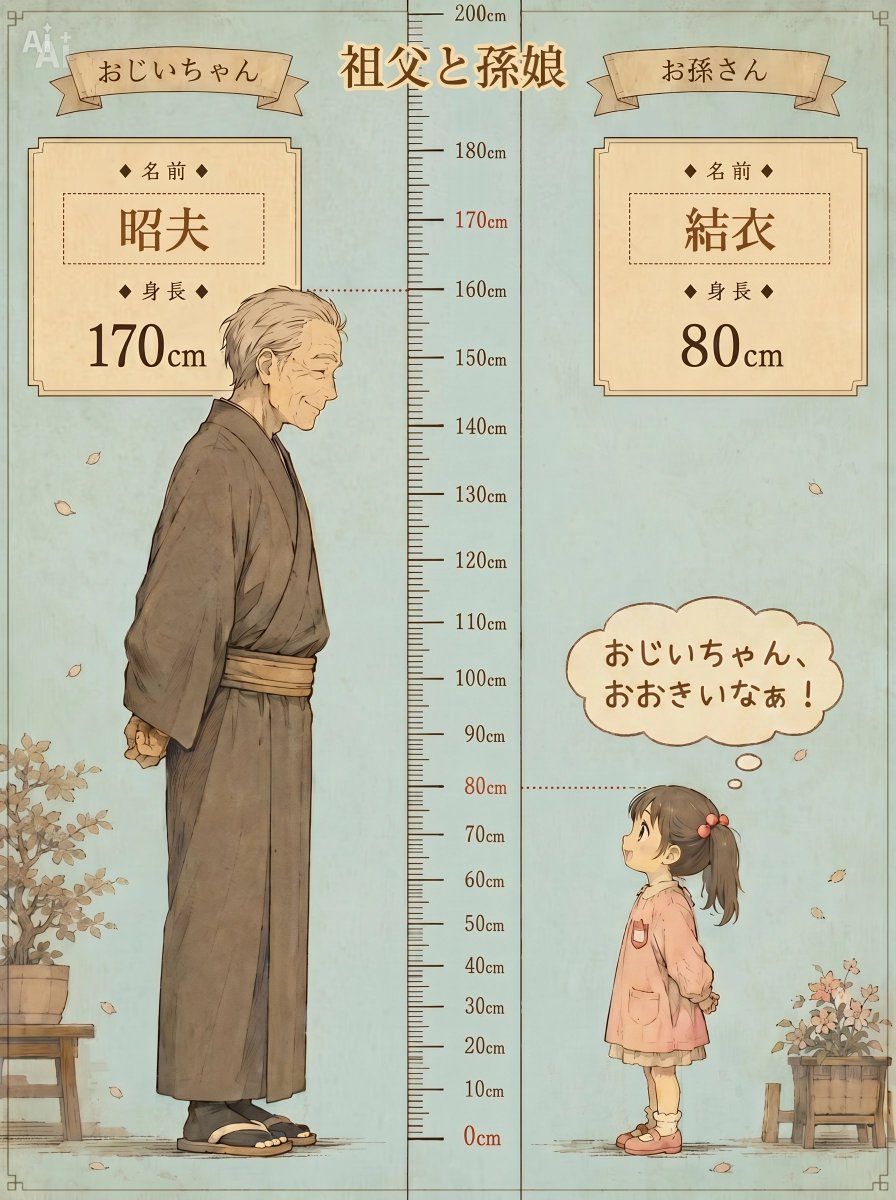
Infographic / Edu Visual - Grandfather and Granddaughter Height Chart

Infographic / Edu Visual - Grandfather and Granddaughter Height Chart

A vintage Japanese watercolor poster comparing the height of a grandfather and granddaughter with labeled cards and a central ruler.

Template

Create a nostalgic Japanese illustrated height-comparison poster titled {argument name="main title" default="祖父と孫娘"}, showing exactly two characters standing in profile facing each other across a central measuring ruler. The left character is an elderly grandfather labeled {argument name="grandfather name" default="昭夫"}, height 170 cm, wearing a muted brown traditional kimono with obi belt, tabi socks and sandals, slightly stooped, hands clasped behind his back, gray swept-back hair, calm gentle expression; place him on the left with a dotted horizontal guide line reaching the 170 cm mark. The right character is a small granddaughter labeled {argument name="granddaughter name" default="結衣"}, height 80 cm, wearing a soft pink smock dress over a cream skirt, pink shoes, dark brown ponytail tied with a red bow, hands behind her back, looking up at him; place her on the right with a dotted guide line reaching the 80 cm mark. Use a vertical 3:4 canvas with pale blue-green aged paper background, thin decorative border corners, sepia ink linework, warm watercolor wash, soft grain, and an old children’s book / vintage family record style. Put a tall central height scale from 0 cm to 200 cm with black tick marks and labels every 10 cm; emphasize 0 cm, 80 cm, and 170 cm in reddish brown. Add two parchment ribbon banners at the top: left reads 「おじいちゃん」 and right reads 「お孫さん」. Add two ornate cream information cards near the top: left card contains exactly 2 labeled fields, 「名前」 with the grandfather name and 「身長」 with 「170cm」; right card contains exactly 2 labeled fields, 「名前」 with the granddaughter name and 「身長」 with 「80cm」. Add one rounded thought/speech cloud above the granddaughter reading {argument name="speech bubble text" default="おじいちゃん、おおきいなぁ!"}. Include exactly 2 potted plant props: one leafy potted plant on a wooden stool at bottom left, and one small flowering plant in a wooden box at bottom right; scatter a few falling autumn leaves around the scene. Keep faces softly stylized and family-friendly, preserve all Japanese text exactly where specified, avoid modern UI elements, photorealism, extra characters, extra labels, or watermarks.

Infographic / Edu Visualawesome-gpt-image-2GPT Image 2Infographic / Edu VisualUse template
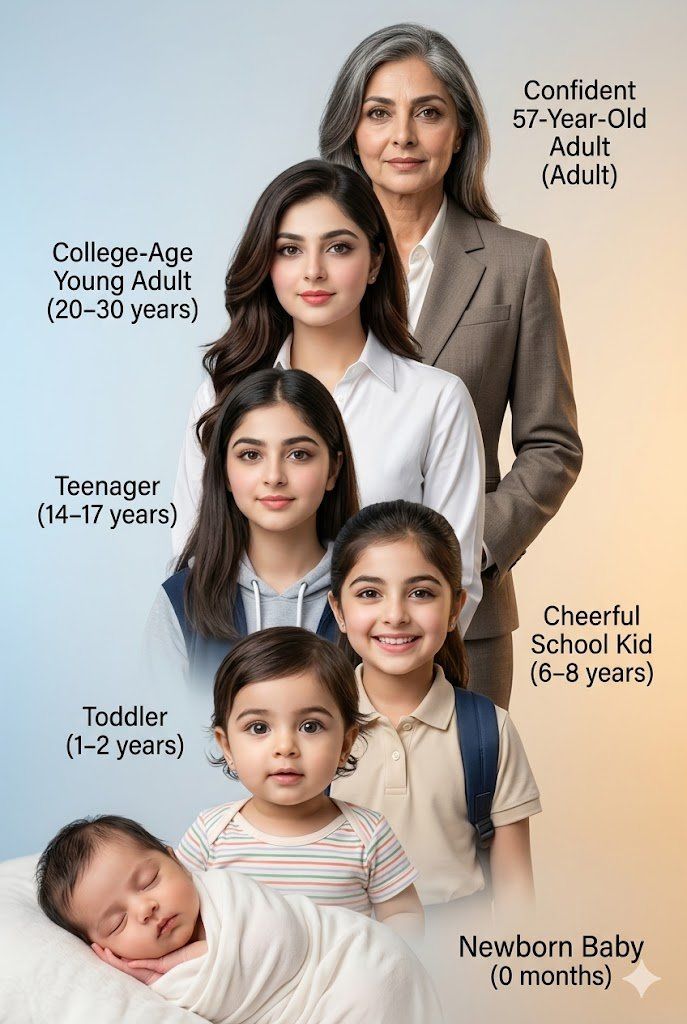
Infographic / Edu Visual - Human Life Progression Composite

Infographic / Edu Visual - Human Life Progression Composite

A complex prompt for generating a vertical composite image showing the life stages of a person from newborn to senior while maintaining facial identity.

Template

Generate a meticulously detailed, vertical composite photograph illustrating the life progression of the {argument name="subject" default="uploaded handsome man"}, specifically maintaining the unique facial structure of the person, age {argument name="original age" default="30"}, which will be provided as an input image. The image is a cascading stack of six distinct individuals, linked by precise feature continuity. Top Layer (Future): 'Confident 57-Year-Old Adult' with salt-and-pepper hair, in a mature suit, features weathered but clearl. Next Layer: 'College-Age Young Adult (20–30 years)'—This is the prime 30-years-old state of the person with stylish hair and well groomed, in a premium crisp white shirt, looking ambitious. Third Layer: 'Teenager (14–17 years)' - A slightly younger person, in a school hoodie, with clear facial structure. Fourth Layer: 'Cheerful School Kid (6–8 years)' As a smiling child with a backpack, in a polo shirt. Fifth Layer: 'Toddler (1–2 years)' As an inquisitive toddler in a striped onesie. Sixth Layer: 'Newborn Baby (0 months)' The base layer, as a sleeping infant swaddled in soft fabric. The entire composition has a smooth, {argument name="background" default="soft-light gradient background from cool blue to warm amber"}. Each age label is precisely typeset next to its figure, using the exact text like 'Confident 57-Year-Old Adult (Adult)'. Features must remain identical across ages, just aged or de-aged. Organise each photo from bottom left to top right. Shot with a professional studio finish, hyper-realistic, 8k. Use provided photo as reference for the 25 years old me. Aspect ratio 2:3

Infographic / Edu Visualawesome-gpt-image-2GPT Image 2Infographic / Edu VisualUse template
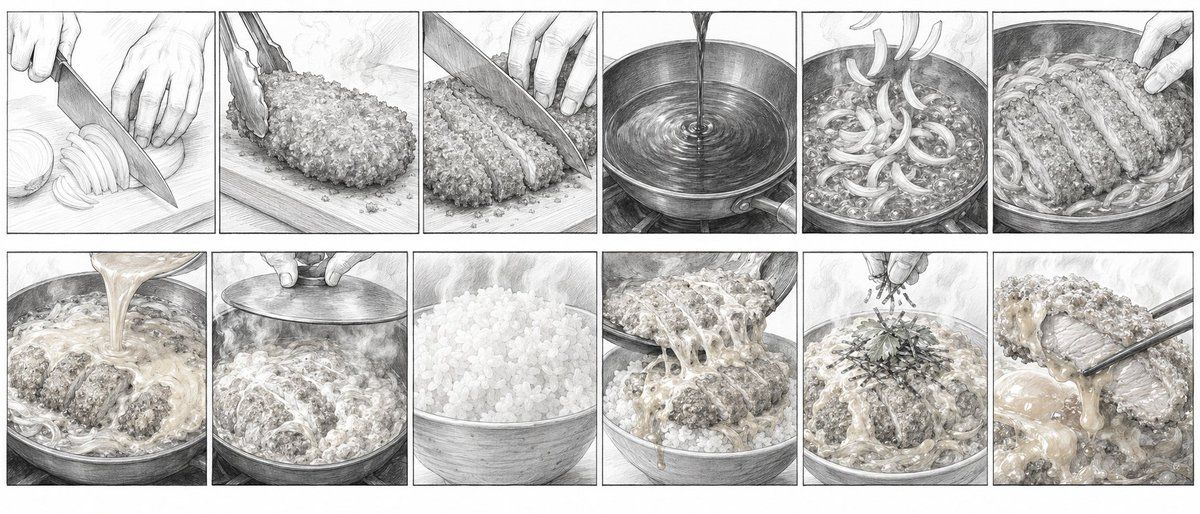
Infographic / Edu Visual - Katsudon Cooking Storyboard

Infographic / Edu Visual - Katsudon Cooking Storyboard

A detailed 12-panel manga-style recipe storyboard showing the full cooking process for katsudon from onion slicing to serving.

Template

Goal: Create a monochrome cooking storyboard illustration showing the preparation and serving of a Japanese-style katsudon rice bowl, drawn like a detailed manga storyboard or recipe process sheet. Canvas: Wide horizontal aspect ratio, about 2.4:1, white background, arranged as exactly 12 rectangular panels in a clean grid: 6 panels across the top row and 6 panels across the bottom row. Thin black borders separate every panel. No captions, no speech bubbles, no logos, no watermark. Visual style: Highly detailed pencil sketch and light watercolor-wash look, mostly grayscale with subtle warm beige tones in the egg sauce and fried cutlet. Fine crosshatching, visible paper texture, realistic hand-drawn food textures, steam, highlights on oil and sauce, cinematic close-up framing in every panel. Subject: A step-by-step cooking sequence for {argument name="dish name" default="katsudon"}, featuring sliced onion, breaded pork cutlet, simmering egg sauce, rice, and garnish. Use realistic adult hands when hands appear, cropped close to the food. Panel layout and exact panel count: Show exactly 12 panels, ordered left to right, top row then bottom row: 1. Close-up of hands slicing a pale onion into thin crescent slices on a cutting board with a large kitchen knife. 2. Close-up of a breaded pork cutlet on a cutting board, held with tongs, covered in coarse crispy crumbs. 3. Close-up of the fried cutlet being cut into thick strips with a knife, fingers holding it steady. 4. Top-down close-up of clear liquid or broth being poured into a round metal pan, creating circular ripples. 5. Close-up of sliced onions simmering in bubbling broth in the pan, steam rising. 6. Close-up of the sliced cutlet being placed on top of the onions in the pan by hand. 7. Close-up of beaten egg mixture being poured over the cutlet and onions, creamy ribbons spreading through the pan. 8. Close-up of a metal lid covering the pan while steam surrounds the edges. 9. Close-up of a large bowl filled with fluffy white rice, rice grains clearly defined. 10. Close-up of the cooked cutlet, onion, and soft egg mixture being slid from the pan onto the rice bowl, strands of egg stretching. 11. Close-up of the finished bowl being sprinkled with thin dark seaweed strips and green garnish on top, steam rising. 12. Close-up serving shot of chopsticks lifting one saucy slice of cutlet with soft egg dripping, the rice bowl visible underneath. Composition constraints: Keep each panel tightly framed and food-focused; maintain consistent lighting and hand-drawn pencil shading across all panels; make the sequence readable as a recipe storyboard; do not add text labels, numbers, extra panels, utensils not described, or colorful modern graphics.

Infographic / Edu Visualawesome-gpt-image-2GPT Image 2Infographic / Edu VisualUse template
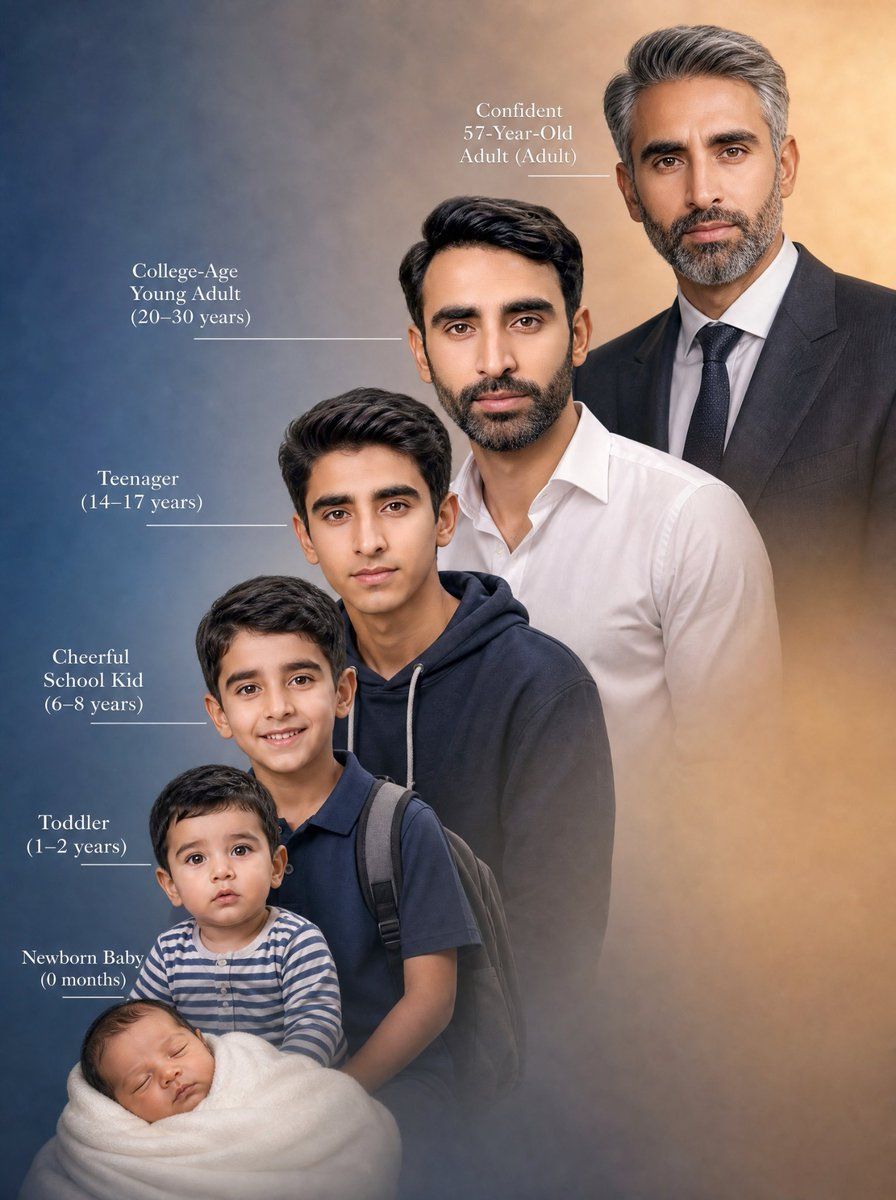
Infographic / Edu Visual - Life Stages Composite Portrait

Infographic / Edu Visual - Life Stages Composite Portrait

Generates a cinematic photorealistic portrait showing one person from newborn to older adult in a single labeled timeline image.

Template

Create a vertical cinematic composite portrait showing the same male person across exactly 6 life stages in one seamless family-lineage style image, arranged diagonally from lower left to upper right as if time is progressing upward. Use {argument name="person description" default="a South Asian male with dark hair, medium skin tone, and similar facial features at every age"}. Canvas: 3:4 portrait orientation, photorealistic, studio-quality, soft painterly background gradient from deep blue on the left to warm amber beige on the right, subtle mist/vignette around the lower edges. Composition: six full or half-body age versions overlap in depth, with the youngest in front at the bottom left and the oldest behind at the top right; each older version is larger and positioned slightly higher/right. The six visible stages must be: 1) Newborn Baby (0 months), swaddled in a thick white blanket at the bottom left, tiny head visible; 2) Toddler (1–2 years), sitting just above the baby, wearing a blue-and-white striped long-sleeve shirt; 3) Cheerful School Kid (6–8 years), standing behind the toddler, wearing a navy polo shirt and a dark backpack with visible shoulder straps; 4) Teenager (14–17 years), standing behind him, wearing a dark navy hoodie with light drawstrings; 5) College-Age Young Adult (20–30 years), standing behind and higher, wearing a crisp white button-up shirt with open collar; 6) Confident 57-Year-Old Adult (Adult), tallest in the back upper right, salt-and-pepper hair, wearing a dark suit jacket, white dress shirt, and dark tie. Add elegant white serif labels on the left side with thin horizontal leader lines pointing to each corresponding figure, except the oldest label placed near the upper center-left with a short line toward the suited adult. Text must read exactly: "Newborn Baby\n(0 months)", "Toddler\n(1–2 years)", "Cheerful\nSchool Kid\n(6–8 years)", "Teenager\n(14–17 years)", "College-Age\nYoung Adult\n(20–30 years)", and "Confident\n57-Year-Old\nAdult (Adult)". Use {argument name="overall mood" default="emotional, nostalgic, inspiring"}, natural studio lighting, realistic skin and hair texture, cohesive facial resemblance across all ages, shallow depth-of-field, no logos, no watermark, no extra people, no extra text.

Infographic / Edu Visualawesome-gpt-image-2GPT Image 2Infographic / Edu VisualUse template
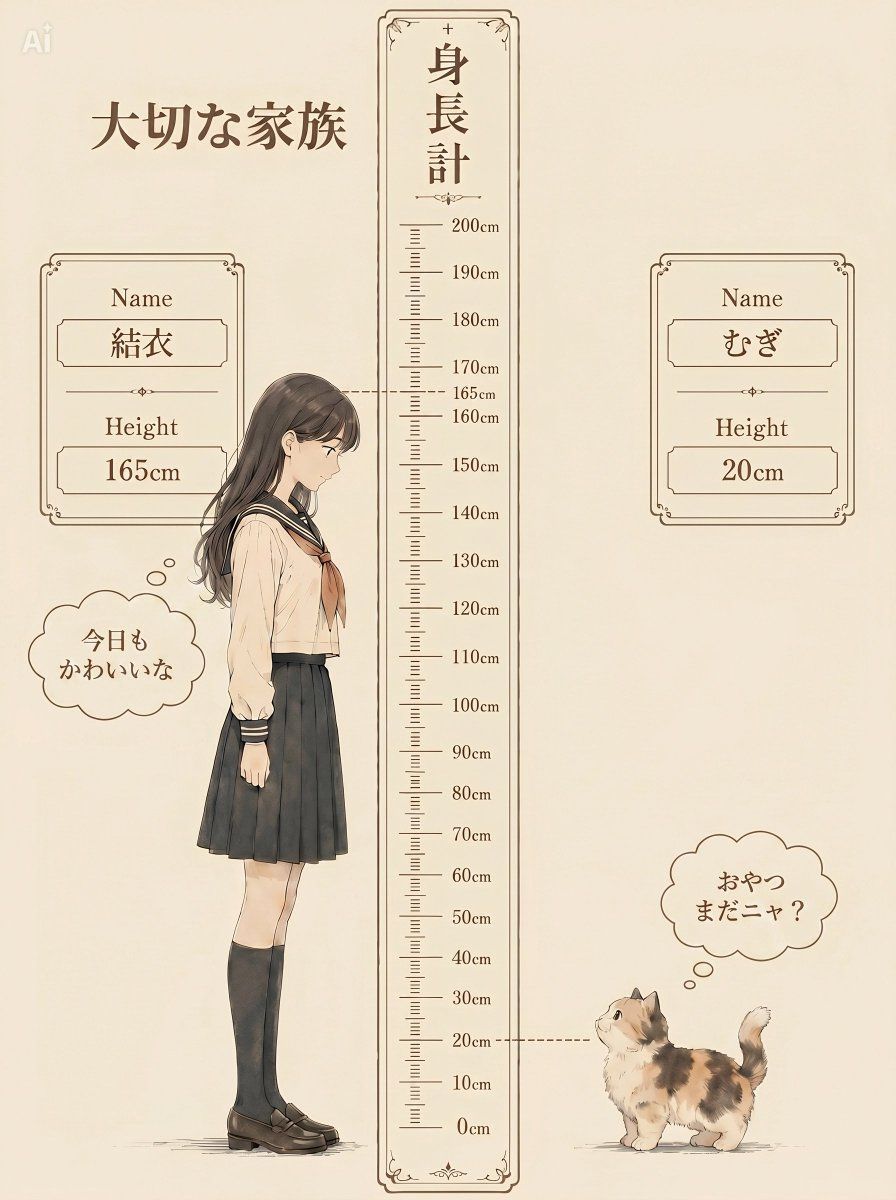
Infographic / Edu Visual - Nostalgic Height Chart Family Poster

Infographic / Edu Visual - Nostalgic Height Chart Family Poster

A vintage Japanese-style height difference poster comparing a schoolgirl and a tiny kitten, ideal for cute family or pet illustration concepts.

Template

Goal: Create a nostalgic Japanese height-difference illustration titled {argument name="headline text" default="大切な家族"}, showing a beloved family pairing measured on a vintage height chart: a schoolgirl and a tiny calico kitten facing each other with a cute emotional gap-moe feeling. Canvas: Vertical portrait poster, warm cream parchment background, soft sepia ink linework, delicate watercolor shading, no harsh shadows. Use an elegant antique stationery style with thin brown decorative borders, small flourishes, and a faint “AI” mark in the upper-left corner. Layout: Place a tall central measuring ruler from bottom to near top, framed by a narrow ornate border. The ruler is labeled vertically in Japanese as 「身長計」 at the top, with centimeter marks from 0cm to 200cm; show major labels every 10cm and include visible labels around 160cm, 165cm, and 170cm. Add two dotted horizontal guide lines: one at 165cm extending left to the girl’s head, and one at 20cm extending right to the kitten. Subjects: On the left of the ruler, draw {argument name="tall character" default="a gentle Japanese schoolgirl"} in side profile facing right. She is exactly 165cm tall, standing upright with a shy, affectionate posture, long dark brown hair, blurred/featureless face, cream sailor-style school blouse with dark collar and cuffs, brown necktie, black pleated skirt, black knee-high socks, and brown loafers. On the right of the ruler near the bottom, draw {argument name="small character" default="a fluffy calico kitten"} at exactly 20cm tall, facing left and looking up, with white, orange, and dark patches, round body, short legs, and curled raised tail. Information cards: Include exactly 2 ornate framed profile cards. Left card beside the girl: label “Name”, value {argument name="tall character name" default="結衣"}, label “Height”, value “165cm”. Right card beside the kitten: label “Name”, value {argument name="small character name" default="むぎ"}, label “Height”, value “20cm”. Use brown serif English labels and Japanese name text inside inset boxes. Speech/thought bubbles: Include exactly 2 cloud-shaped bubbles. Left bubble near the girl reads 「今日もかわいいな」 with two small thought circles leading toward her. Right bubble above the kitten reads 「おやつまだニャ?」 with two small thought circles leading toward the kitten. Visual style: Soft anime-inspired storybook illustration, clean fine outlines, muted beige and brown palette with subtle black uniform accents and natural calico colors. Keep the composition symmetrical around the measuring chart, with generous empty space and a calm sentimental mood. Constraints: Preserve all visible Japanese text exactly as written, keep the scale relationship clear and humorous, include only the two characters and the two profile cards, avoid photorealism, avoid extra animals or objects, and do not add modern UI elements.

Infographic / Edu Visualawesome-gpt-image-2GPT Image 2Infographic / Edu VisualUse template
Infographic / Edu Visual - Notebook Slides With Reference Character

Infographic / Edu Visual - Notebook Slides With Reference Character

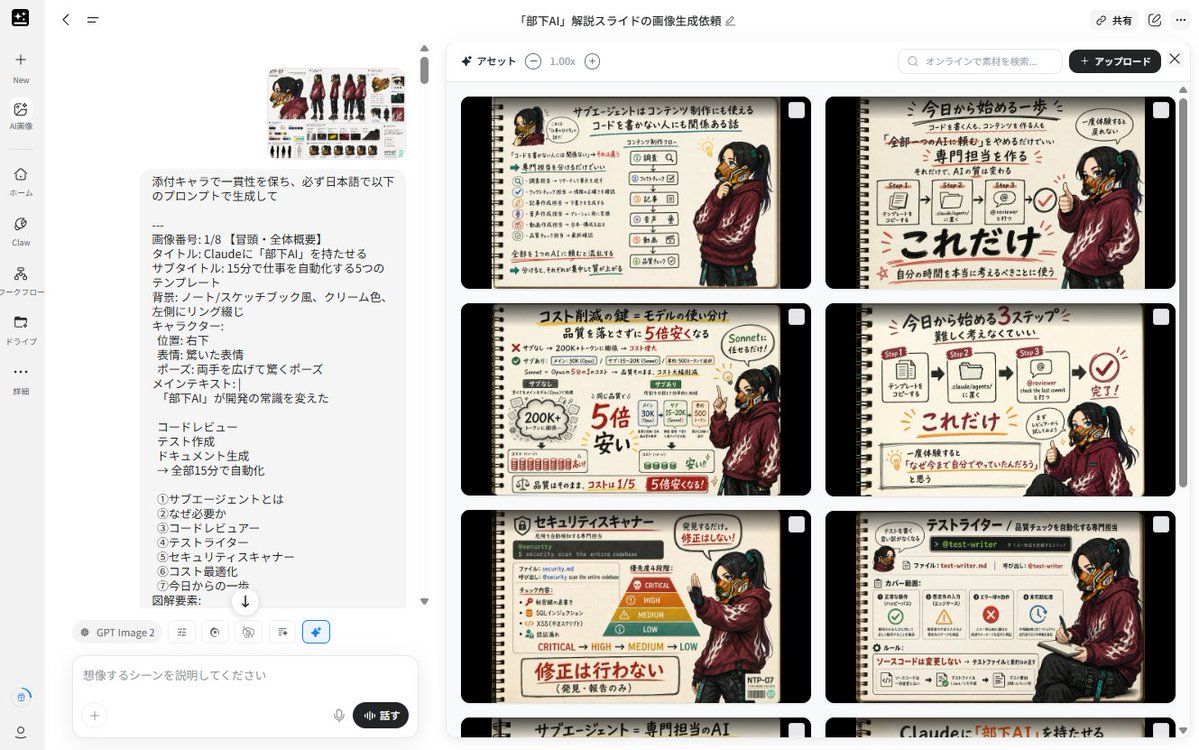
Creates an 8-slide Japanese notebook-style educational deck using a provided character sheet as a consistent presenter mascot.

Template

Using REFERENCE_0 as the character base, create a consistent set of exactly 8 Japanese educational slide images about {argument name="topic" default="Claudeに『部下AI』を持たせる"}. Keep the character design, outfit, mask, hairstyle, and cyberpunk details consistent with the reference, but redraw the character in new poses and expressions for each slide. Overall format: Each slide should look like a hand-drawn notebook/sketchbook page with a cream paper background, black rounded outer frame, left-side spiral binding, marker-style Japanese handwriting, red emphasis marks, arrows, check marks, small icons, and simple workflow diagrams. Use a warm analog note-taking style rather than a clean corporate deck. Maintain the same slide design language across all 8 images. Character placement: Place the character as a presenter/mascot on the right side or lower-right area of most slides. Vary the pose naturally: surprised with both hands open, pointing at diagrams, holding a clipboard, sitting while reviewing, making an OK/check gesture, or explaining with one raised finger. Preserve the reference character’s identity and clothing. Generate exactly these 8 slide topics: 1. Opening / overall overview: Title text {argument name="headline text" default="Claudeに『部下AI』を持たせる"}; subtitle {argument name="subtitle text" default="15分で仕事を自動化する5つのテンプレート"}; main message: 「部下AI」が開発の常識を変えた; include the five automation examples: コードレビュー, テスト作成, ドキュメント生成, 全部15分で自動化, and a simple checklist-like layout. 2. What is a sub-agent: Explain 「サブエージェントとは」 as a reusable AI role or specialist assistant. Include small role cards and arrows showing a main Claude agent delegating tasks. 3. Why it is needed: Explain 「なぜ必要か」 with a before/after comparison, emphasizing that repeatedly asking AI for the same tasks is inefficient and can be turned into templates. 4. Code reviewer: Title 「コードレビュー」; show a GitHub/code review style flow with files, comments, bugs, and a check mark. 5. Test writer: Title 「テストライター」; show a test-generation workflow with steps, file names, unit tests, and pass/fail style icons. 6. Security scanner: Title 「セキュリティスキャナー」; show risk levels CRITICAL, HIGH, MEDIUM, LOW and emphasize that the agent detects issues but does not automatically fix them. 7. Cost optimization: Title 「コスト削減の鍵:モデルの使い分け」; show a comparison that cheaper/smaller models can handle simple checks and that costs can become much cheaper, with bold red savings notes. 8. Start today / summary: Title 「今日から始める一歩」; show a simple 3-step process: create a template, place it in a Claude agents folder or workflow, ask for review/automation, then mark it complete with a big check. Text style: Use Japanese text throughout. Make headlines large and bold, with red underlines and handwritten annotations. Keep diagrams simple and readable. Use only the listed 8 slide topics and do not add extra slides. Constraints: Keep the same notebook layout, cream color palette, black border, left spiral binding, and consistent character identity across every image. Avoid photorealism, avoid 3D rendering, avoid watermarks, and do not change the character into a different person.

Infographic / Edu Visualawesome-gpt-image-2GPT Image 2Infographic / Edu VisualUse template
Infographic / Edu Visual - Pastel Height Difference Best Friends

Infographic / Edu Visual - Pastel Height Difference Best Friends

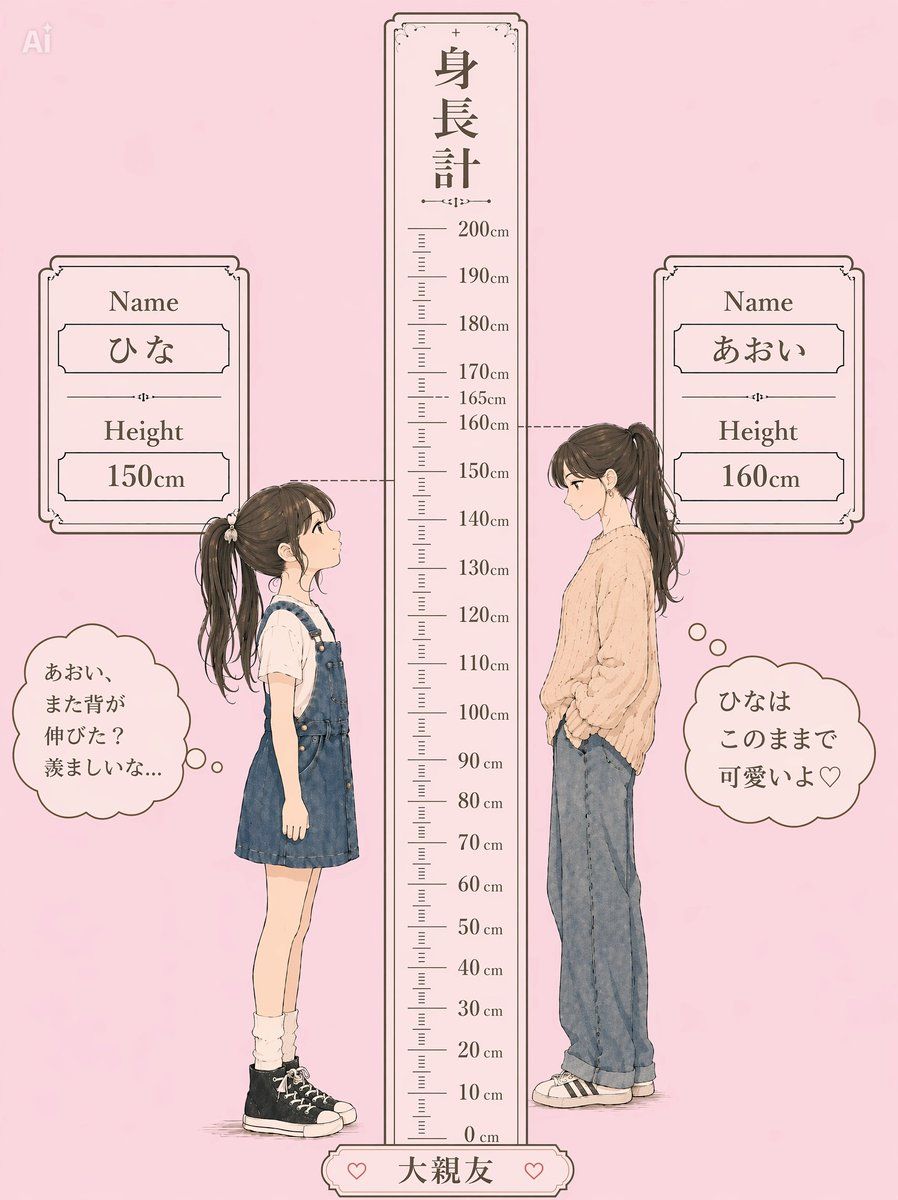
Generates a cute Japanese-style height comparison illustration of two best friends with name cards, a central ruler, and thought bubbles.

Template

Goal: Create a nostalgic pastel Japanese height-difference comparison illustration for two best friends, with a central measuring ruler and cute profile poses. Canvas: Vertical portrait image, soft pale pink paper-textured background, delicate brown line art, watercolor/anime fashion illustration style, gentle vintage stationery aesthetic. Add a faint small “Ai” mark in the upper-left corner. Layout: Center a tall decorative height ruler from 0 cm to 200 cm, topped with the vertical Japanese title 「身長計」. Place exactly 2 full-body girls in side profile facing each other: the shorter girl on the left and the taller girl on the right. Draw dashed horizontal guide lines from each girl’s head to the ruler. Add exactly 2 ornate name-and-height cards near the top, one left and one right. Add exactly 2 cloud-shaped thought bubbles near the lower sides, one for each girl. Add a small bottom plaque centered under the ruler. Central height ruler details: A narrow cream-colored vertical ruler with ornate corners and thin brown border. Mark every 10 cm from 0 cm to 200 cm with labels: 0 cm, 10 cm, 20 cm, 30 cm, 40 cm, 50 cm, 60 cm, 70 cm, 80 cm, 90 cm, 100 cm, 110 cm, 120 cm, 130 cm, 140 cm, 150 cm, 160 cm, 165 cm, 170 cm, 180 cm, 190 cm, 200 cm. Include small tick marks between labels. The shorter girl’s dashed line aligns at 150 cm, and the taller girl’s dashed line aligns at 160 cm. Left character: A petite girl named {argument name="left character name" default="ひな"}, height {argument name="left character height" default="150cm"}. She stands in profile facing right, hands relaxed at her sides, wearing a white short-sleeve blouse under a dark blue denim overall dress, loose white socks, and black high-top sneakers. She has long dark brown hair in a high ponytail with soft strands and a small scrunchie. Her face is intentionally obscured with a soft square blur. Right character: A taller girl named {argument name="right character name" default="あおい"}, height {argument name="right character height" default="160cm"}. She stands in profile facing left with a relaxed posture, hands in pockets, wearing an oversized beige knit sweater, loose faded blue jeans, and black-and-white low-top sneakers. She has long dark brown hair tied in a high ponytail with wispy bangs and flowing strands. Her face is intentionally obscured with a soft square blur. Text content: Use Japanese text exactly as visible. Left top card has “Name”, 「ひな」, “Height”, “150cm”. Right top card has “Name”, 「あおい」, “Height”, “160cm”. Left thought bubble says 「あおい、まだ背が伸びた?羨ましいな…」. Right thought bubble says 「ひなはこのままで可愛いよ♡」. Bottom plaque says {argument name="relationship label" default="大親友"}, with a small heart icon on each side. Style constraints: Keep the illustration delicate, soft, and feminine; use muted browns for outlines and text, cream panels, and pastel pink background. Maintain clean readable typography with a Japanese serif feel. Do not add extra characters, extra cards, extra speech bubbles, or additional decorative objects beyond the hearts and simple ornamental borders.

Infographic / Edu Visualawesome-gpt-image-2GPT Image 2Infographic / Edu VisualUse template
Infographic / Edu Visual - Six-Stage Life Progression Portrait

Infographic / Edu Visual - Six-Stage Life Progression Portrait

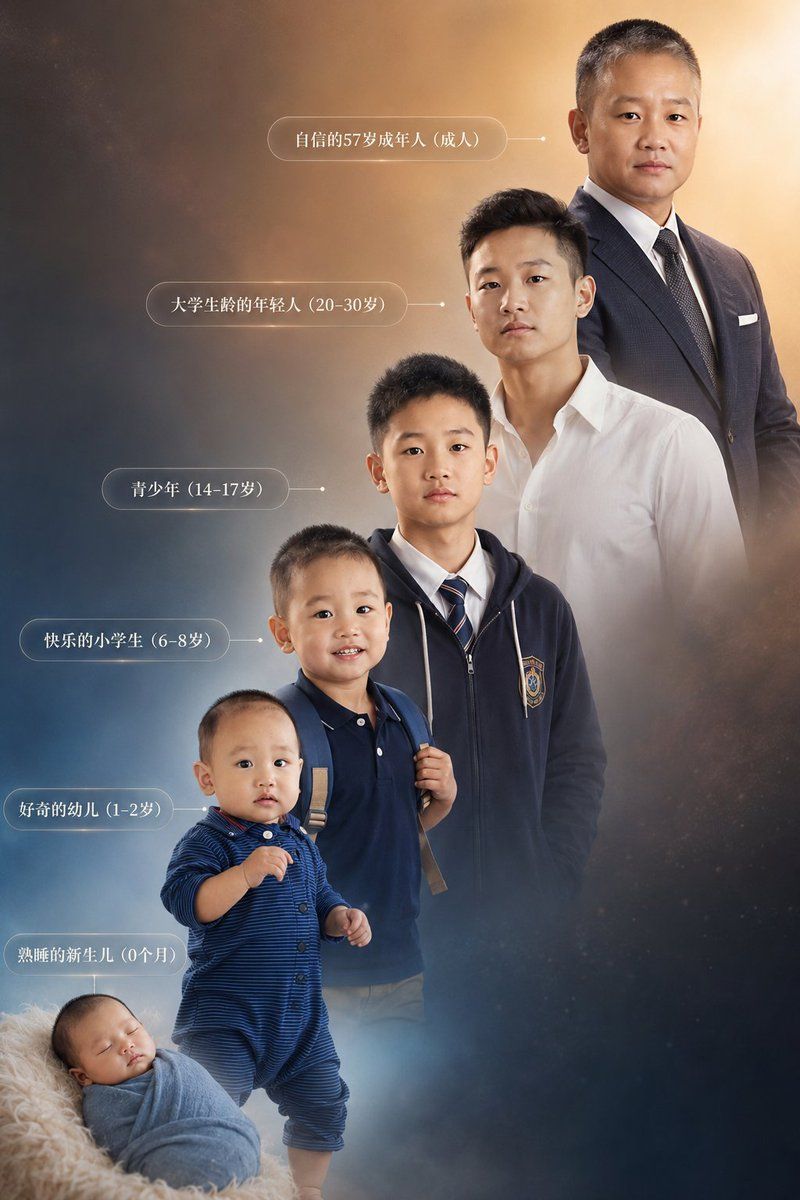
Creates a vertical photorealistic timeline composite showing one male subject from newborn to mature adult with Chinese age-stage labels.

Template

Goal: Create a highly detailed vertical composite photo showing the life progression of {argument name="subject description" default="the same Chinese male"} from birth to adulthood, with six separate age-stage figures arranged in a rising diagonal timeline. Maintain strong facial-structure continuity across all six versions of the same person, while making age, body size, clothing, posture, and hairstyle appropriate for each stage. Canvas: Vertical 2:3 portrait composition, cinematic studio-photography quality, warm golden light in the upper right fading into cool blue-gray mist in the lower left, subtle starry dust and smoky atmospheric background, soft depth of field, elegant inspirational tone. Layout: Arrange exactly 6 figures from bottom-left to top-right, increasing in age and height. The youngest baby is at the bottom-left foreground, the toddler stands above and slightly right, the elementary-school child stands behind, the teenager stands higher in the center, the young adult is upper-right center, and the mature adult is tallest at the top-right. Use overlapping bodies and scale changes to create a continuous life staircase. Subjects: Exactly 6 visible versions of the same male: 1. Newborn, 0 months: sleeping infant wrapped in a pale blue swaddle, lying on a fluffy cream blanket at the bottom-left. 2. Curious toddler, 1–2 years: standing child in a dark blue striped one-piece outfit, small hands raised slightly, short black hair. 3. Happy elementary-school student, 6–8 years: child wearing a navy polo shirt and backpack straps, standing confidently. 4. Teenager, 14–17 years: school-age boy wearing a navy zip-up hoodie with a school crest, white shirt, striped tie, neat short hair. 5. College-life young adult, 20–30 years: young man wearing a crisp white open-collar shirt, modern short black hair, relaxed posture. 6. Confident mature adult, 57 years: tall mature man in a dark business suit, white shirt, tie, pocket square, standing upright and dignified. Text content: Add exactly 6 translucent rounded-rectangle Chinese labels on the left side, each connected to the matching figure by a thin horizontal line and small dot. Use white serif-style Chinese text. The labels must read, from top to bottom: 「自信的57岁成年人(成人)」, 「大学生络的年轻人(20-30岁)」, 「青少年(14-17岁)」, 「快乐的小学生(6-8岁)」, 「好奇的幼儿(1-2岁)」, 「熟睡的新生儿(0个月)」. Visual style: Photorealistic composite portrait, high-end commercial retouching, soft rim light, realistic clothing texture, natural skin tones, coherent lighting across all age stages, gentle mist around the lower figures, warm halo around the adult at the top-right. Constraints: Keep exactly six figures and exactly six matching labels. Do not add extra people, panels, borders, logos, watermarks, or unrelated objects. The faces should be visible and consistent unless intentionally anonymized with {argument name="face treatment" default="plain skin-tone rectangular blur masks over each face"}.

Infographic / Edu Visualawesome-gpt-image-2GPT Image 2Infographic / Edu VisualUse template
Infographic / Edu Visual - Steampunk Height Difference Poster

Infographic / Edu Visual - Steampunk Height Difference Poster

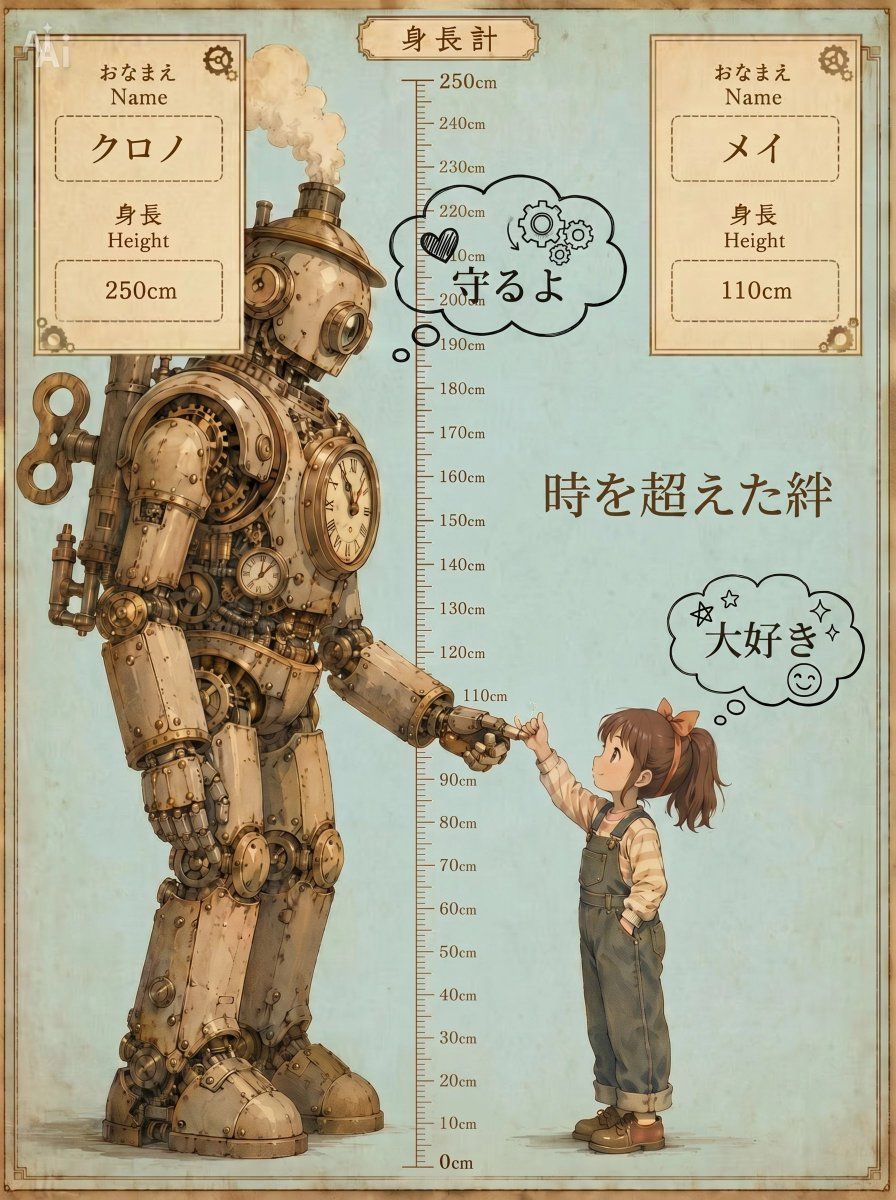
Creates a nostalgic Japanese-style height chart poster featuring a towering steampunk robot and a small child in a tender height-gap scene.

Template

Goal: Create a nostalgic vertical height-difference character poster in a warm steampunk anime storybook style, showing an enormous gentle robot and a small child standing beside a central measuring ruler. Canvas: Vertical portrait poster, 3:4 ratio, aged parchment texture with a pale blue-green background, sepia stains, thin decorative brown border, slightly worn corners, soft watercolor-and-ink illustration finish. Layout: Place a full-body steampunk robot on the left, towering to about 250 cm, and a small young girl on the right, about 110 cm tall. A vertical height ruler runs down the exact center from 0 cm at the bottom to 250 cm at the top, with centimeter tick marks and labeled increments every 10 cm. At the top center, add a small vintage label plaque reading 「身長計」. The robot gently bends or reaches down, and the girl reaches up so their fingers touch around the 110 cm mark, creating a tender height-gap scene. Subject details: The left character is {argument name="tall character" default="a 250 cm antique brass steampunk robot named クロノ"}, bulky but kind, covered in riveted metal plates, exposed gears, pipes, gauges, clock faces, round glass lenses, a large wind-up key on its back, and a small smokestack releasing a soft puff of steam. The right character is {argument name="short character" default="a 110 cm little girl named メイ"}, cute anime style, wearing rolled dark green overalls, a cream striped long-sleeve shirt, brown shoes, and an orange hair ribbon tying a side ponytail. Keep the child’s face softly simplified or obscured, with the body language expressing affection and trust. Text content: Include exactly 2 top character information cards, one at upper left and one at upper right. Left card text: 「おなまえ」, “Name”, 「クロノ」, 「身長」, “Height”, “250cm”. Right card text: 「おなまえ」, “Name”, 「メイ」, 「身長」, “Height”, “110cm”. Add the large Japanese phrase {argument name="main phrase" default="時を超えた絆"} in brown calligraphy on the right-center area. Add exactly 2 comic thought bubbles: one near the robot around the upper center saying {argument name="robot bubble text" default="守るよ"} with a small heart and gear doodles, and one near the girl on the right saying {argument name="girl bubble text" default="大好き"} with stars, sparkles, and a smiling face doodle. Visual style: Nostalgic Japanese illustrated poster, whimsical steampunk fantasy, delicate linework, muted browns, brass, cream, and faded teal tones, softly shaded, textured paper grain, hand-drawn measuring scale, warm emotional atmosphere. Constraints: Use exactly 2 characters, exactly 2 information cards, exactly 2 thought bubbles, and one central height scale labeled 0–250 cm. Keep all typography vintage brown, preserve the Japanese text exactly where specified, avoid modern UI elements, avoid photorealism, no extra characters, no watermark.

Infographic / Edu Visualawesome-gpt-image-2GPT Image 2Infographic / Edu VisualUse template